Avocado pits and skins on cotton

I’ve been saving avocado pits and skins for a number of months, but the contribution from a colleague (thanks, Rhonda!) far outweighed – literally – the amount that I got through over the summer.

The pits were halved, sliced, then either dried or frozen; the skins were ripped into smaller piece, then dried. The dye liquor was made by soaking the relevant parts in water, then adding either bicarb or ammonia, then steeping the cotton yarn in this for a few days.

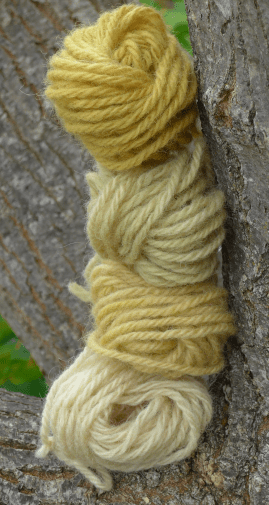
The photo, as always, doesn’t really show the true colours, especially as we’re in autumn and the sky is overcast, but the bottom row were all attained by adding bicarb to draw out the red. The yarns all turned out various depths of pale pink.

avocados

With the two on top, the left was from 20g dried skins (purple ones) soaked for a few days, then for a few days more with ammonia, then a few more again with the yarn. In real life, it’s slightly darker.

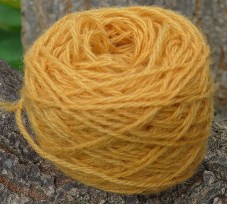
The one on the right was from 100g frozen, sliced pits following the same method above. The ammonia definitely brings out a deeper shade.

Now, what to do with with five balls of cotton in antique pink? Actually, I’ve thought of one use, but that’ll have to wait.

Heliopsis

Heliopsis helianthoides, hélops, Sonnenaugen, girasol falso

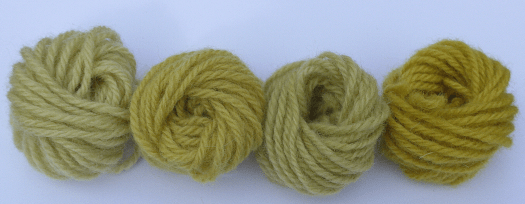
And there’s more… The bright, sunshine yellow flowers of the heliopsis were definitely worth saving, retaining the colour even when dried; the petals tend to wrinkle without browning. I’m not sure how many grams went into the pot (following the same procedure as the dahlias, zinnias and yarrow below), maybe about 60g?heliopsis

The only shade that really stands out is number 4, so as with the zinnias, future use will depend on light- and wash-fast testing . As garden plants, however, these take the summer heat and dryness well. I originally had doubles, but then a single appeared in the clump, so maybe they reverted. Either way, the colour’s still there.

Yarrow

Achillea millefolium, achillée, Schafgarbe, milenrama, athair thalún

I had to pull most of the yarrow out as it was taking over, and growing under the rose bush meant any attempt to keep it tidy was quite a prickly experience, so out it came leaving plenty of dye material to play with!

yarrow2

The stalks dried well and were chopped, stored in an old coffee jar and forgotten for a while. I didn’t bother weighing them, but estimate there was at least 200% wof. It was simmered for about an hour, strained, then the yarn was added. Similar to the other recent experiments the skeins were, left to right: no mordant, 8%/7% alum/CoT, no mordant + alkaline modifier, alum/CoT mordant + alkaline modifier.

The modifier (bicarb) turned the green skeins yellow, similar to many other garden dye plants. The original green (without mordant), however, is one colour I’ve never attained before and one to try again soon using a higher %wof to get a deeper shade.

Zinnias

zinniasAnother bumper crop came from my first (successful) attempt to grow zinnias: these were dark pink and pink/apricot. In the height of summer, these dried to about 1/5 of their size and lost most of the colour. Those picked at the end of summer lost about 1/2 of their size and retained most of their colour. I chose the latter to experiment with and used about 100g; I’ll try with the faded ones at a later date.
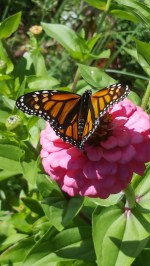
As with the dahlias, the alum/CoT brought out the yellow, and the bicarb modifier intensifiedmonarch the shade.

Would I use zinnias again over other dye plants that give yellows? This’ll depend on the results of the wash-fast and light-fast tests to come. As for growing them, the monarch butterflies love them and they tolerate the summer heat admirably.

Dahlias 2

I bought a punnet of bedding dahlias two summers ago (and again this summer just gone); they turned out light pink, dark pink, cerise, yellow and bronze, and produced an abundance of flowers even on plants only 1′ – 2′ high, so will stick to these in future rather than growing the taller varieties that need staking and perhaps more shade.

Thanks to a generous harvest, I was able to dye with both flowers (dried) and heads (minus the petals) to see if there is any difference – it’s stated in The Woolcraft Book that the colour is in the centre of the flowers.

dahliasx3

The top row are the flowers (100g dried), the bottom row the heads only (200g fresh). From left to right: no mordant, alum/Cot 8%/7%, no mordant plus alkaline modifier (bicarb), alum/Cot mordant plus alkaline modifier. The yarn was pure white, triple knit (never heard of that before) NZ virgin wool – a lucky find in a local op shop. The skeins weighed about 5g each.

The flowers clearly produced deeper shades, but maybe the quantity of viable dyestuff was greater considering how much % of the heads was water.

I’m often asked by fellow Guild members, “What about tree dahlias?” I tried experimenting with the leaves last year after one of the canes blew down, but with disappointing results. However, I’d saved the flowers from that cane and they’d been hanging in a bag on the washing line for the best part of a year – dried, shrivelled and light brown.

tree dahliaX2They produced a tea-coloured liquor after simmering for about 3/4 hour, so I decided to go ahead. Had I mordanted the yarn? Couldn’t remember, so I just dropped a skein in the pot. After about 30 mins I added a pinch of alum, and the yarn turned visibly darker. That answered my question. Then some bicarb turned the yarn a rich orange-yellow (deeper than in the photo). So, that answers the other question and I shall be saving as many flowers/heads as I can this year.
Dock seeds

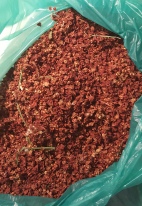
I finally got round to dyeing the skein of yarn to contribute to the Ethel Mairet project at the Ditchling Museum. I’d already tried dyeing with dock roots, but the yarn came out muddy yellow withdockseeds added patches of mud (next time I’ll peel the roots). For the project I decided to try the seeds. I’d read in The colour cauldron (Su Grierson) that a red colour could be obtained by boiling the seeds successively over a few days. Tempting…
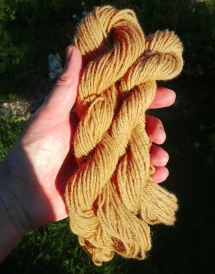
I managed to pick 70g of seeds whilst out walking on one of the many local reserves. The seeds were boiled for about an hour at a time for 4 days in total. The water didn’t change colour much, but I keep reminding myself that what you see is not usually what you get. The yarn was sheep’s wool, dockyarnmordanted with 8% alum/7% CoT wof, boiled for an hour or so, then left to cool overnight.
The picture shows the yarn (right, together with another woollen yarn) several shades lighter than reality (we’ll go for medium-dark beige), but still not the red I was hoping to get. Maybe tap water + (sub-)species + soil + rainfall + other variables? I’ll try again, but maybe with some copper added to the water and later in the season. Still, a worthwhile experiment.

Alkanet

I came across this completely by chance in an Indian grocery (ratan jot रतन जोत in Hindi) a while ago and bought two bags of it, then grabbed two more bags for fellow Guild members. It was only $2.50 a bag, maybe 100g, so too good to miss. That particular shop has stopped selling it, and I’m wondering if it’s since become a prohibited food item: it’s banned for such purposes in the UK.

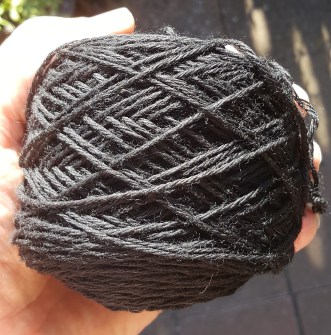
Anyway, back to the alkanet… I steeped the root in alcohol for five days – a whole bottle of meths, to be precise. This didn’t make it a very cheap experiment, but I had fun.alkanet

Alum-mordanted yarn was then heated in the strained liquor plus enough water to make a dye bath for an hour, then left overnight to cool. The resulting yarn was blacker than black – a blackboard after it’s been washed at the end of the year, hands after they been sorting through the coal scuttle, fingers after they’ve finished blackening the grate (someone else will have to verify the last two – London was already a smokeless zone by the time I was born). The photo was taken in the evening sun on a 42oC day, so doesn’t really reflect the blackness of the yarn.

I have yet to test for lightfastness, which I understand isn’t high, but will start with a pair of socks if the two balls will stretch to a pair of size 12’s.

Nocino yarn

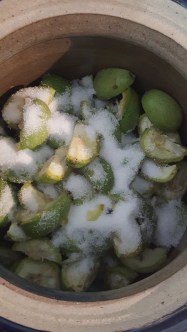
nocino3After coming across some walnut trees a few years ago, I decided to try pickling the unripe fruits, then discovered a recipe for nocino. The fruits are cut up, then steeped in vodka, sugar, lemon zest and spices for a month. It only takes a few days for the mixture to start turning black, which got me thinking; if the walnuts can stain anything in sight (hands, chopping boards, counter-tops, etc), maybe they can also dye yarn?
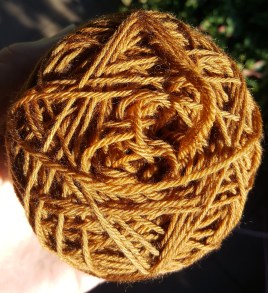
After the four weeks were up, I strained and bottled the mixture, then put the leftover walnuts and spices to good use. They were boiled for about an hour, then alum-mordanted yarn was added. I didn’t bother weighing or measuring as it seemed futile. The walnuts were added to the original mixture by number, not weight, and there was naturally some difference in size.

The yarn was heated for another hour, then left overnight before rinsing. Thnocinoe smell was like Christmas cake from the start of the process to the very end, and one year later the yarn still smells yummy. I might try making something with it if I can bear to stop smelling it.
And the colour? A deep, honey-brown… the colour of Christmas cake mixture in the mixing bowl, when it’s just ripe for dipping the finger in for a taste… The resulting liqueur is pretty good, I have to say. Viscous and deep black-green with just the right amount of bitterness. It’s best left for a year to mature, and has now become a yearly ritual.

Autumn beanie

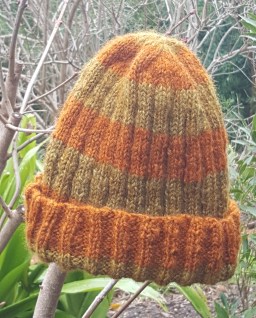
autumnbeanieSomeone pointed out that this could very well be the colours of a hitherto-unknown footie team. Better not wear it down the Port, then. Or to a quidditch match.
It was actually a thank-you for the many kilos of dahlia flowers mentioned in a previous post. I had some balls from a grey, crossbreed fleece spun many moons ago that had already made one serviceable beanie, so I decided to put the rest of that part of the never-decreasing stash to good use.

The yarn was over-dyed with dahlia flowers (orange) modified with bicarb, and dried Tagetes minuta tops. I think I prefer these particular colours on white yarn, but after the workshop surprises, I might just do my next lot of natural dyeing at the Guild. There’s magic in them there pipes…

Natural dyeing workshop

After spending some weeks deciding on what exactly we were going to dye with, and then worrying on more than one occasion that the dyes weren’t going to p

table1

erform, last Saturday’s workshop was full of pleasant surprises…

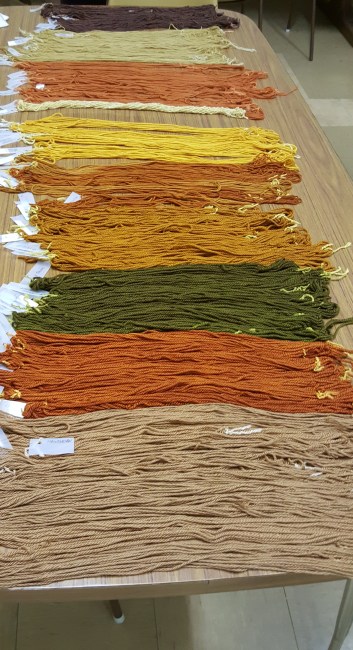
There were seven participants, all friendly and enthusiastic, and all with interesting tales, information and tips to add to the proceedings. The dyes used were (from bottom to top): hawthorn berries, brown onion skins, red onion skins, Tagetes minuta, dahlia flowers, Tagetes lemonii (dried flowers/heads), Eucalyptus cinerea, E. incognita (yep!) and betel nuts.

I didn’t have time to follow Jenny Dean’s recipe (in Wild Colour) for the haws, so boiled up some leaves and twigs for about 40 minutes to get as much tannin in to the dyepot, then added about a kilo of berries and simmered for three-quarters of an hour, then left overnight. This mixture was strained and reheated for the dyeing experiment. They turned the woolen yarn a shade of light brown that I’d never had before, so that’s one for future ref.

onionsall

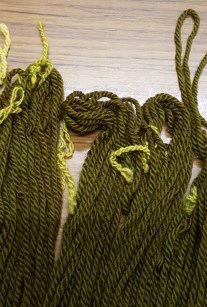
The onion skins were amazing! (right to left: brown onions, red onions, Tagetes lemonii). Even though we used a scant 50% wof, the brown ones dyed a deep copper, while the red ones (close-up below) came out dark, khaki green; the unmordanted ties were lime green, and both without trying. Could it have been the copper pipes at the Guild?

A smaller quantity of dahlia heads than I would have liked gave such a deep colour, and onions2redwhen we dipped half (or more) of the skein back in the liquor with bicarb added, well, even better.

I was concerned that as the tagetes flowers were dry, they’d give muted shades of old gold. Lemonmii gave such a deep sunshine gold that at first I thought it was the brown onions, and the minuta heads could have been fresh – the brightness and intensity of the resulting colour is still a source of amazement.

E. cinerea performed to its usual standard, while the other (maybe a type of peppermint gum?) gave a very pale yellow. Still a good shade to have in the line-up.

The betel nuts? These gave a deeper brown than I’ve ever managed before. None of the pinkish hue, mind. They were, as last time, soaked in water and bicarb for a couple of days.

All in all a successful run of experiments and a great bunch of people to work with!