Basque-style spindle: Txoatile

I’ll start with an excusatory line: note that I’ve written Basque-style spindle. The ones I’ve made are an adapted design (more about that later) and made in Australia… ’nuff said.

I couldn’t actually find much information about the txoatile, but Google tells us “Txoatile” comes from Basque words “txori” (bird) and “artilea” (wool), reflecting its spinning motion.

I was intrigued by the shape and wondered if it had once been made from a bone. Why? Maybe in my mind I was connecting it with the dealgan. Nothing else to suggest bone or any other material. In The World of Spindles by Beatrix Nutz there’s a link to Museotik which has a couple of examples of txatila, both in wood (and interestingly with different spellings in Spanish) and both dating from the early 20th century.

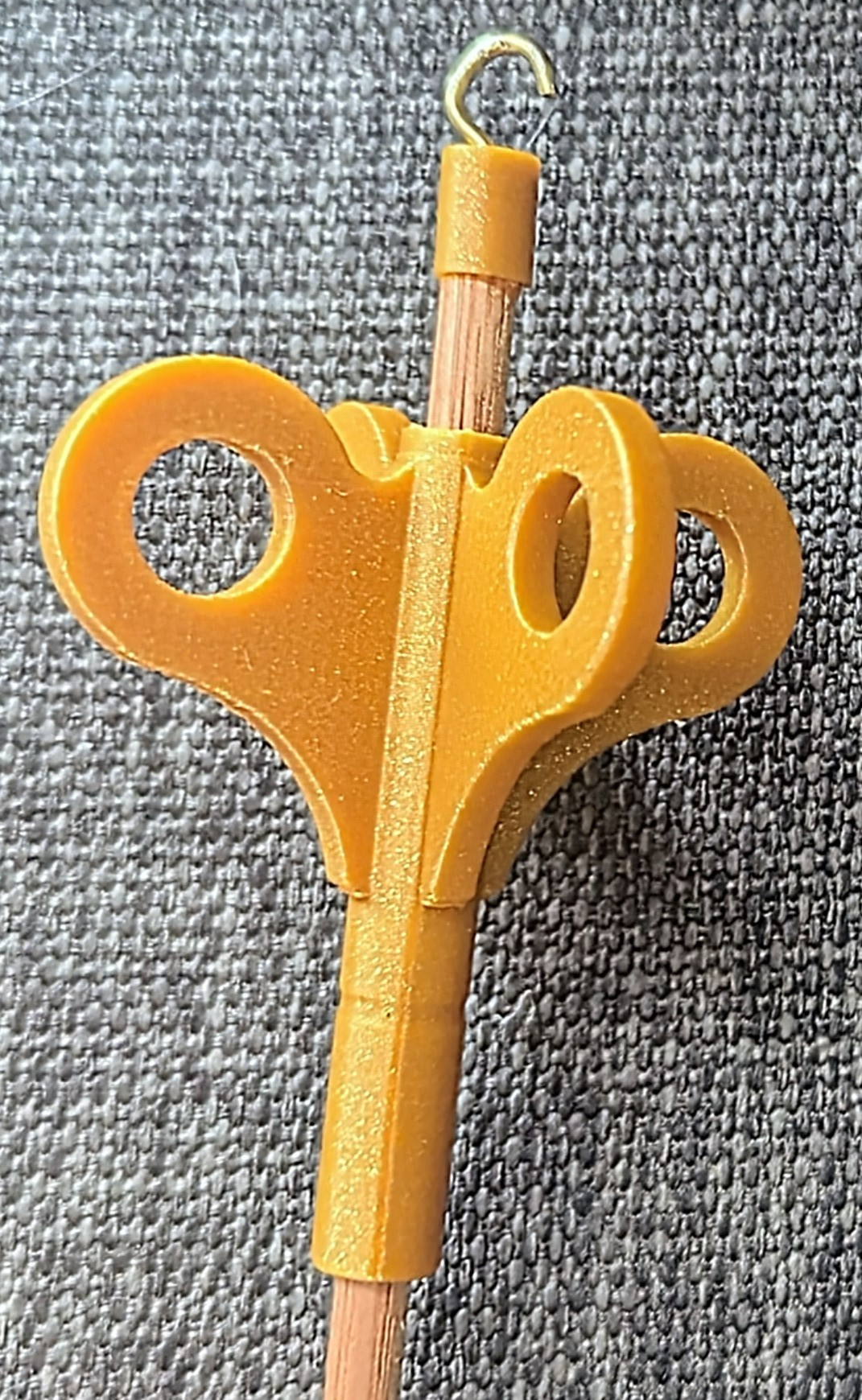
I had tried to order one from overseas, but it didn’t arrive, so I gave up. That was a few years ago. I turned to the 3D printer and in particular a reel of wood-effect PLA. To my mind it doesn’t go near to looking like real wood, but it has its uses. The original was made following the design of the authentic spindles as closely as possibly; the drop-on-the-tiles test was a failure and it broke. The next model I made with an extension in the centre. It broke, too. More filling. That one survived. The extra filling naturally gave it extra strength.
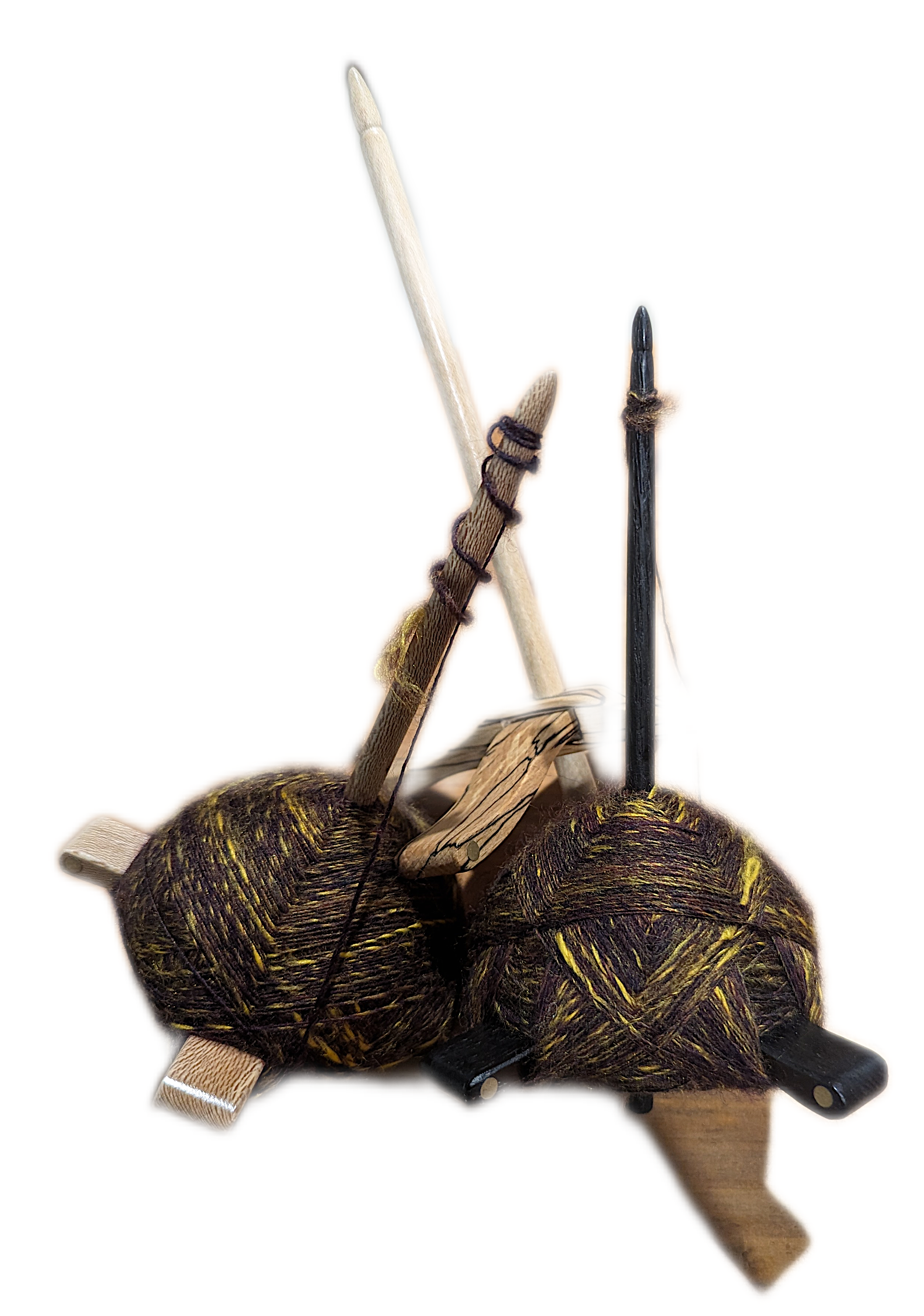
note the two different attempts at getting the shaft tip right – these aren’t for sale

What about the shaft, with the crook at the top? This took even more playing around with angles and thicknesses, and I have a bundle of “prototypes” which may well be used as garden pegs. Getting the width right so that it would sit snugly in the whorl, but also be able to be taken out took a lot of thinking. Also, with limited 3d-related IT skills, getting smooth sides on the shaft just wasn’t going to happen. Then my knuckles were catching on the crook, so the shaft needed lengthening – more fiddling around with the width.

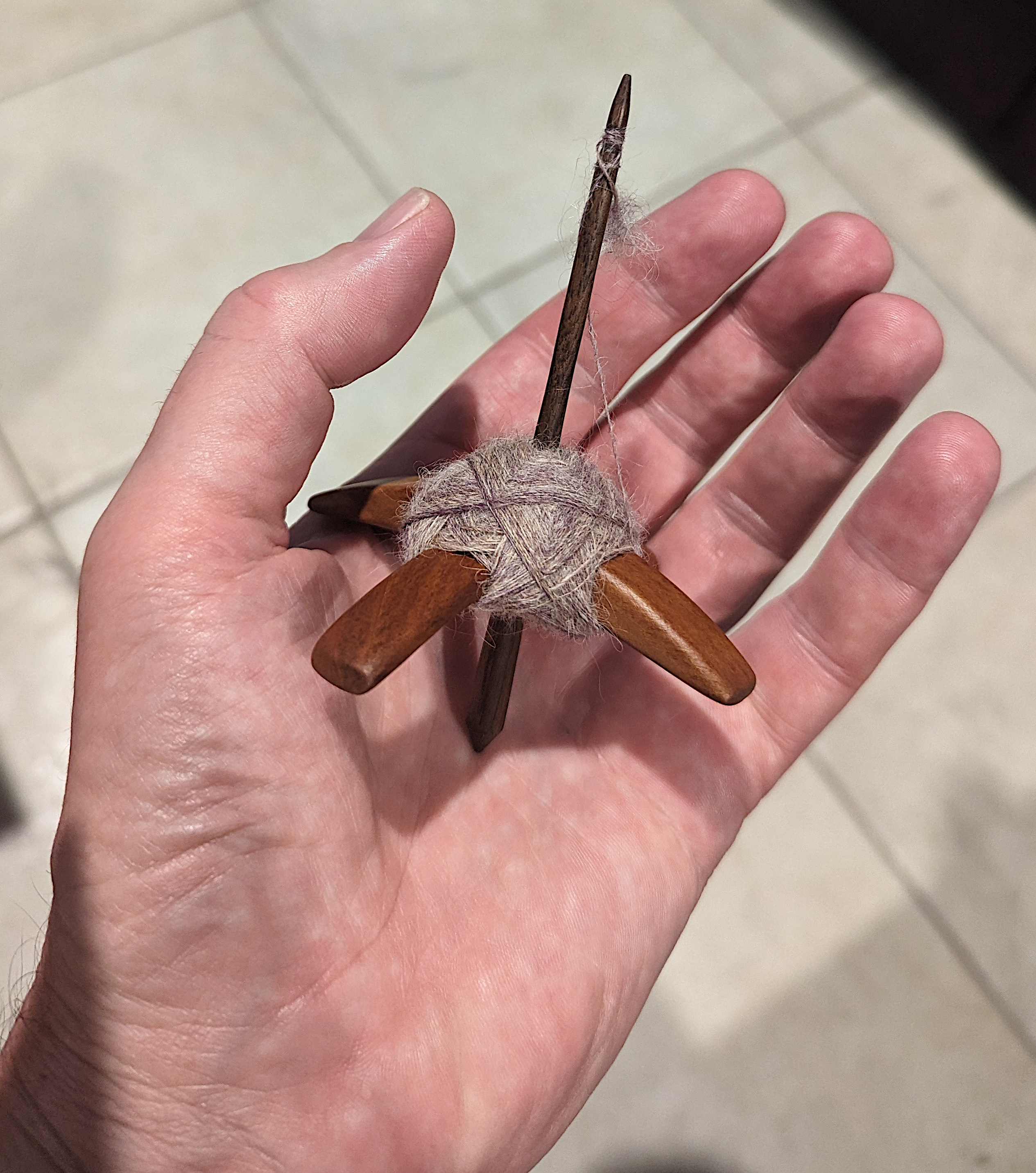
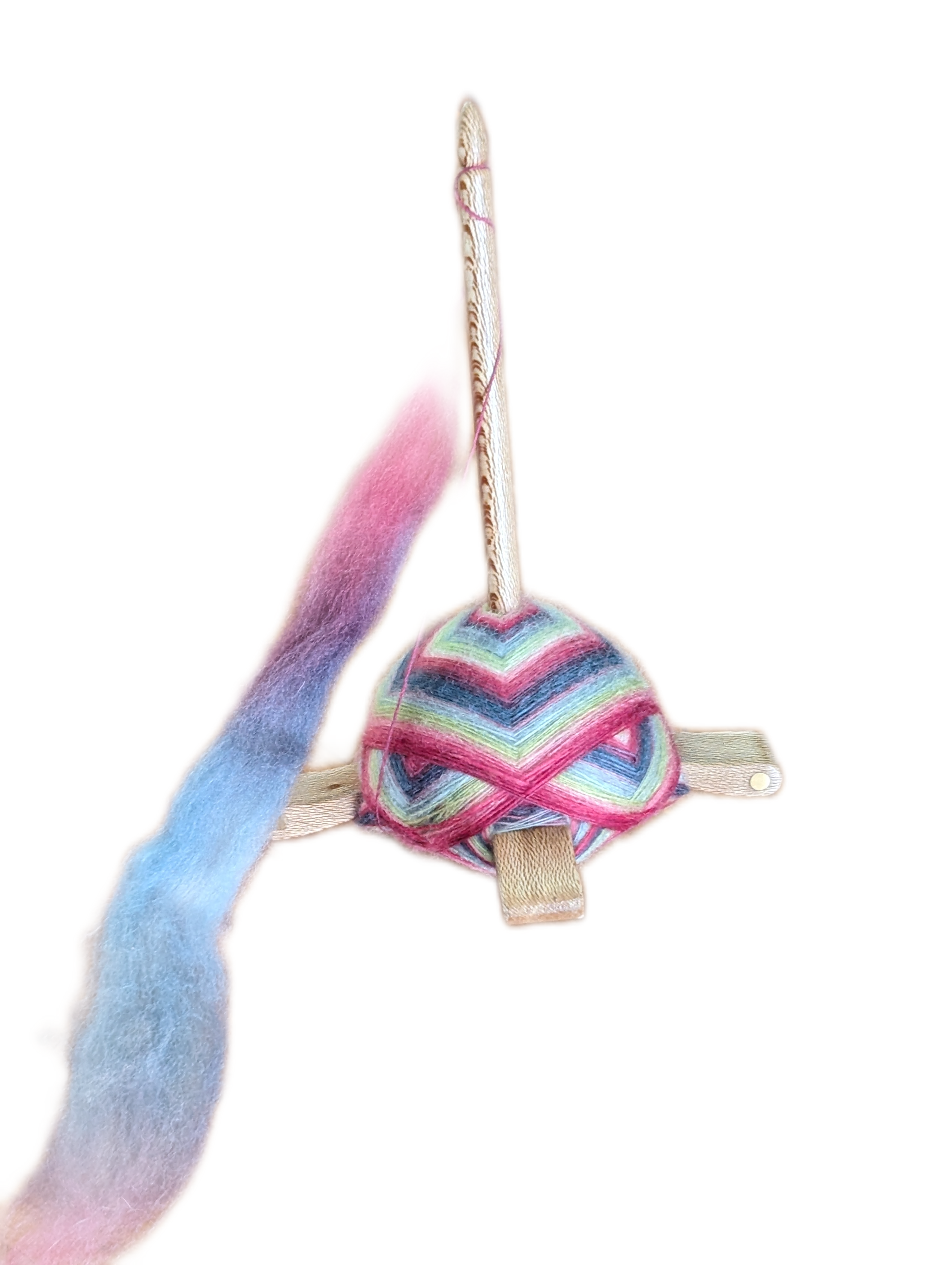
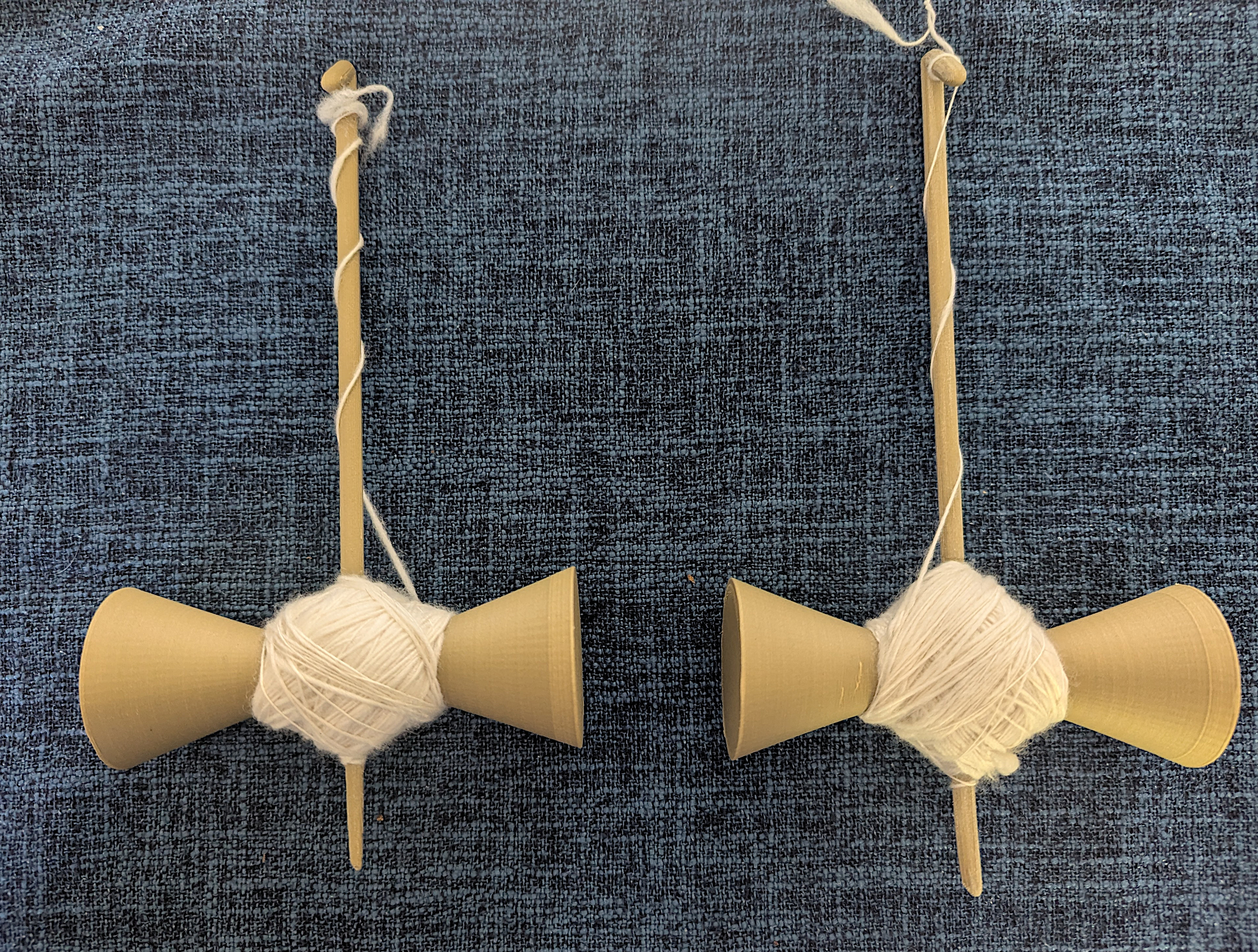
Finally, ones that are worthy of showing. Leaving it a little rough (if you start sanding the wood-effect PLA, you have to do it all over, then stain… too much unnecessary work) actually adds a touch of rustic, and it doesn’t affect usage. How about the spinning and winding on? There are a few YouTubes on this; I tried two different methods. The first was winding horizontally, the second winding up and down the shaft. If that sounds confusing, look at the photo and work from there. I find horizontal winding is quicker and without a fully-controlled experiment, I’m not sure if either method would allow for more wool on the whorl. Empty, they weigh around 53g, so I’m guessing you’d want to stop for comfort’s sake before they were entirely full.
Turncoat or convert?

Transfuge ou converti? Überläufer oder Konvertit? Tránsfuga o convertido? Casadh-cóta nó tiontú?

Well, it’s been a long time since the last post, but activities have continued. Last year I was delighted to have had an article accepted by Spin Off magazine (Fall issue) on Turkish Spindles. I wrote about preferring natural wooden spindles to 3D-printed ones and I never thought I’d be turned…

A little over a year ago, a new yarn store opened locally and I was alerted to the opening by a friend’s post on Facebook. So of I trotted to Skein Machine… I may be posting an updated article I wrote on the store soon, so rather than repeat things I’ll just mention that on my way out, I noticed a wooden drop spindle in the glass counter. Naturally I had to ask for a close-up look. This started a conversation about spindles and the fact that Matt (co-owner) was developing 3D-printed Turkish spindles.

Inspired by Netflix’ Locke and Key

Long story short, I was more than willing to test these out and provide constructive feedback. Why the change of heart? Matt explained that these were made from PLA: plant-based “plastic”. Aha! eco-friendly stuff that Star Trek would have been using so early on in the Captain’s log. While the waste can’t currently go in the green bin, I reckon that pretty soon local governments will have to set up dedicated recycling programs (it seems that the PLA requires a certain level of humidity and the right bacteria to decompose).

OK, so back to the converted… We bought a 3d-printer and naturally the first thing I wanted to try was a drop spindle. Disaster. Tried a few more times. Since then I’ve managed to produce various designs in different weights and colours and use the slightly-less-than-perfect ones myself. There’s a lot of fun to be had in thinking up new and quirky designs – all of which have to be well-balanced.

Glows in the dark, but spins in the light

While I never intended my blog to be commercial, I’ll just say that I don’t get paid by others for advertising (other than accepting ads on the website to keep my subscription rates down). Why am I telling you this? Because I started selling the spindles (and other crafty items) at Skein Machine and also at the Guild . At this point I have no aim to sell them directly; I can only imagine the work that would entail.

And Spin Off? The staff I had contact with were such a pleasure to work with – at all times they were so positive and constructive!

And a couple more…

Can you ever have too many spindles? I guess it depends on whether you’re looking at it from the spinner’s point of view, or the onlooker. As for the former’s, they’re precision tools and one size does definitely not fit all.

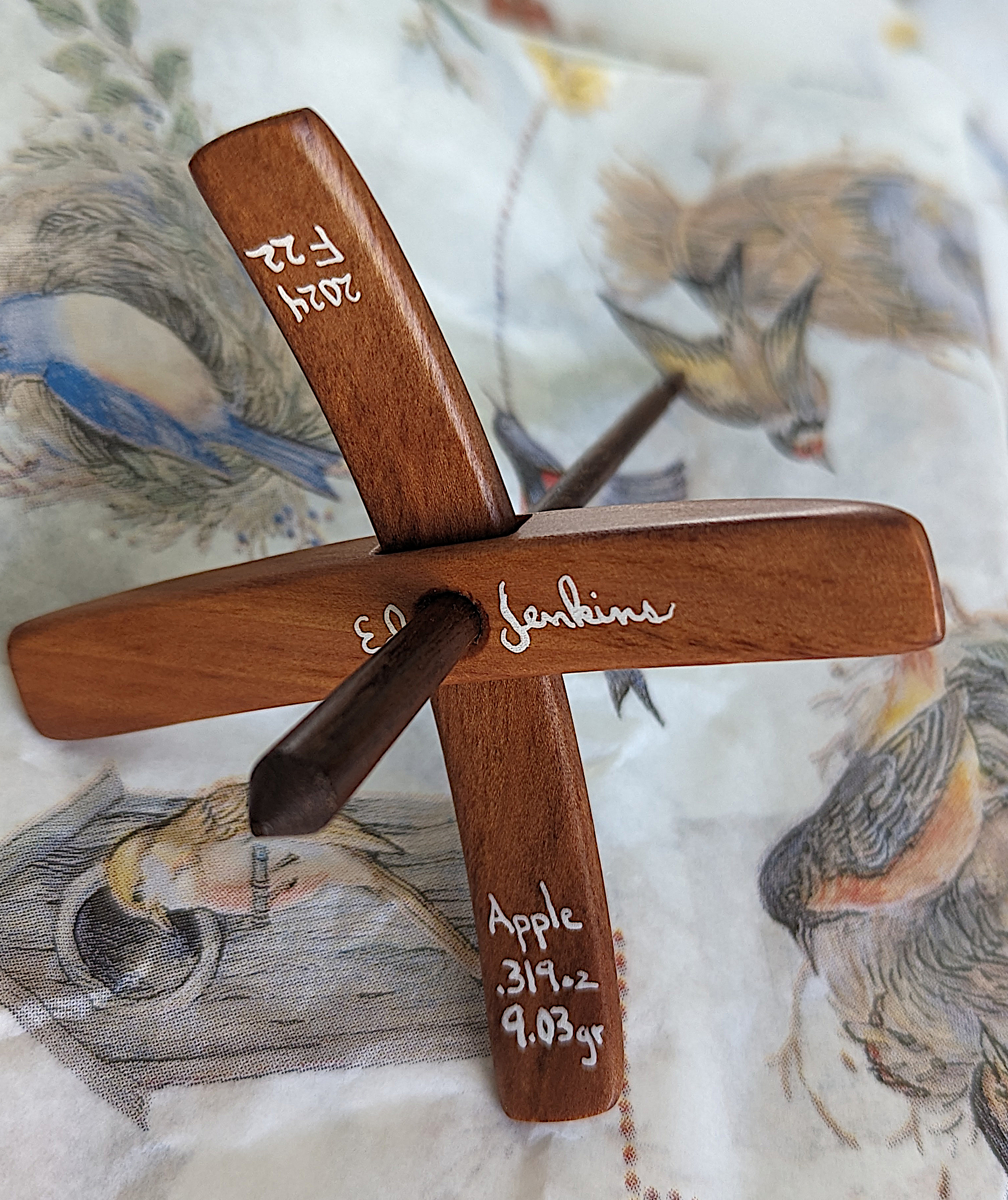
I decided to get a Jenkins’ spindle as I’ve admired these for many a year and have marvelled at the craftmanship when I’ve actually got to play with a fellow guildy’s purchase. Even though the postage wasn’t so high, the order was combined with a another guildy’s (word gets around quickly amongst the fibre-obsessed). This worked out perfectly, as mine came with a free sample of targhee in various shades of pink and green, while hers was blue. We swapped, although the colour wasn’t really that important considering I was happy to try a new sheep breed.

The spindles arrived well-protected and wrapped in bird-themed paper. It was just like opening a Christmas present. They’re real works of art – perfectly made and smooth to the touch. All the info is written on the underside. Naturally, I spent a lot of time admiring them and practise-spinning in my hand. So well-balanced and comfortable to use, even with my large paws.

I’m now the proud owner of a Finch and a Wren… and yes, planning to purchase another …

Welsh onion powder

ciboule en poudre, Winterzwiebelpulver, cebolleta en polvo, Allium fistulosum

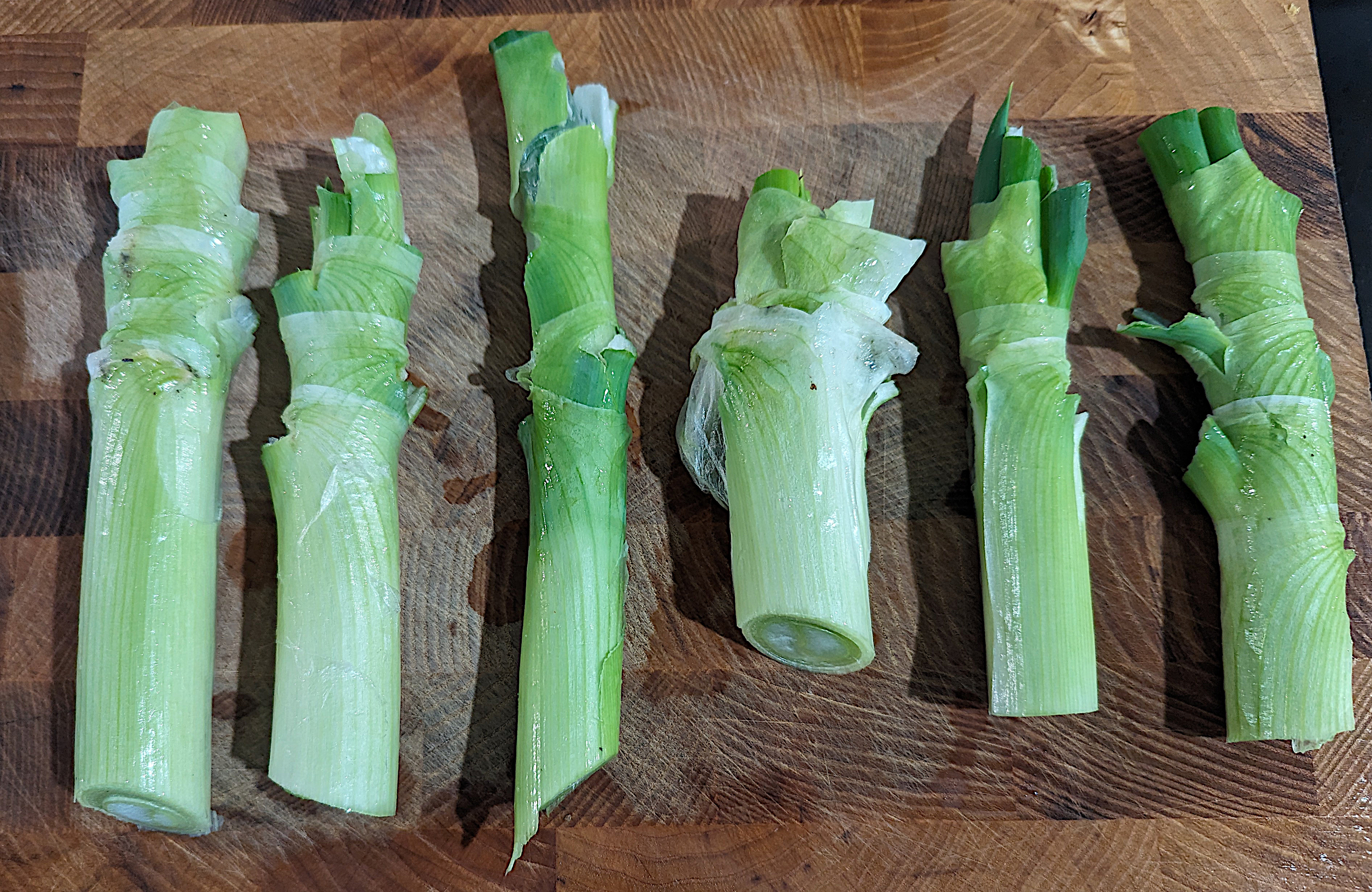
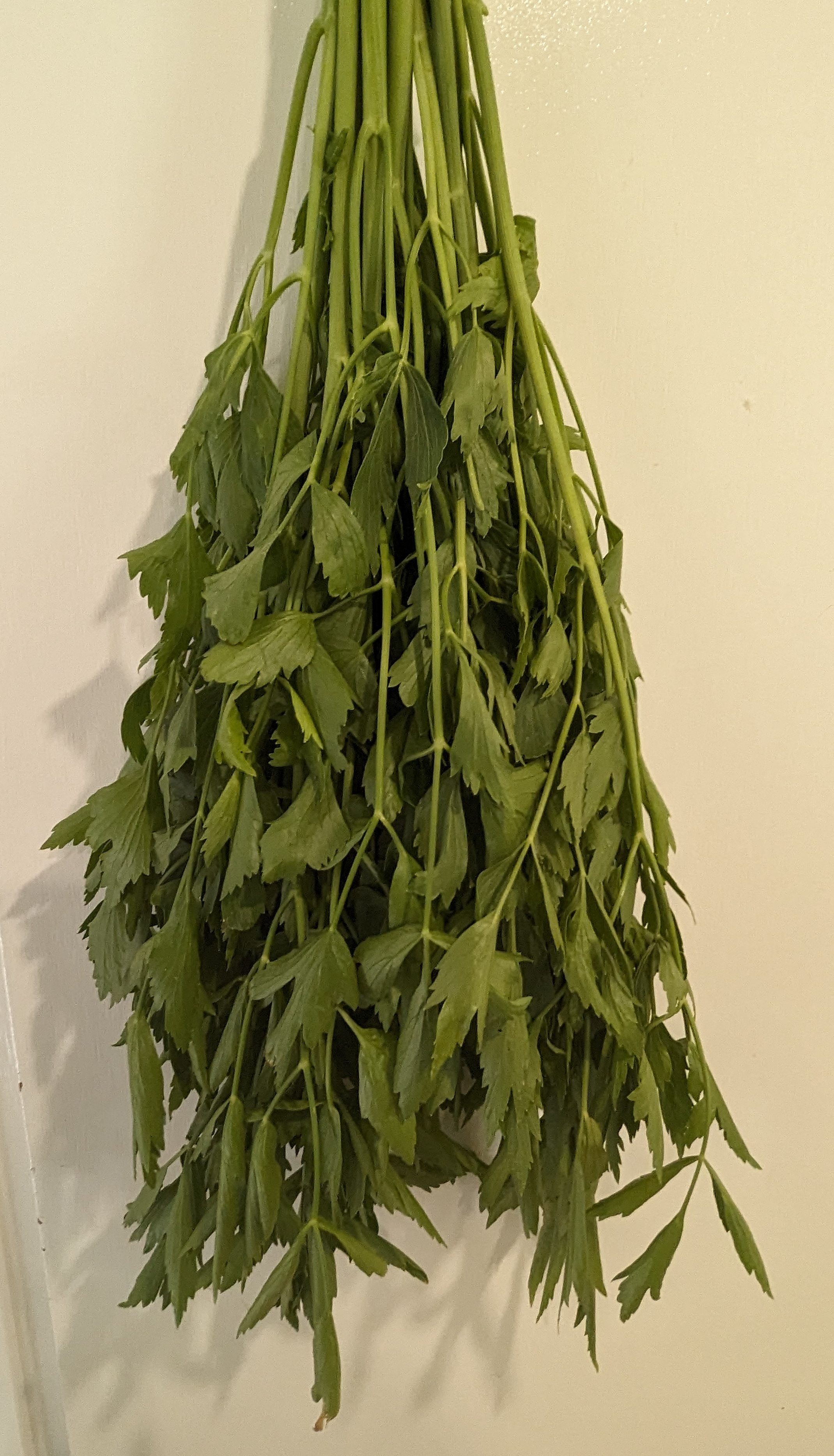
You can see from the photo of the onion stems just how big the plants had grown – too big to eat as they were. There were two choices: use them for stock, or dry and grind them. The latter it was.

The leaves were chopped into rings and dried in the dehydrator set at 50oC. How long did it take? I didn’t time it, but most of the day. The stems weren’t only thick as, but also very glutinous.

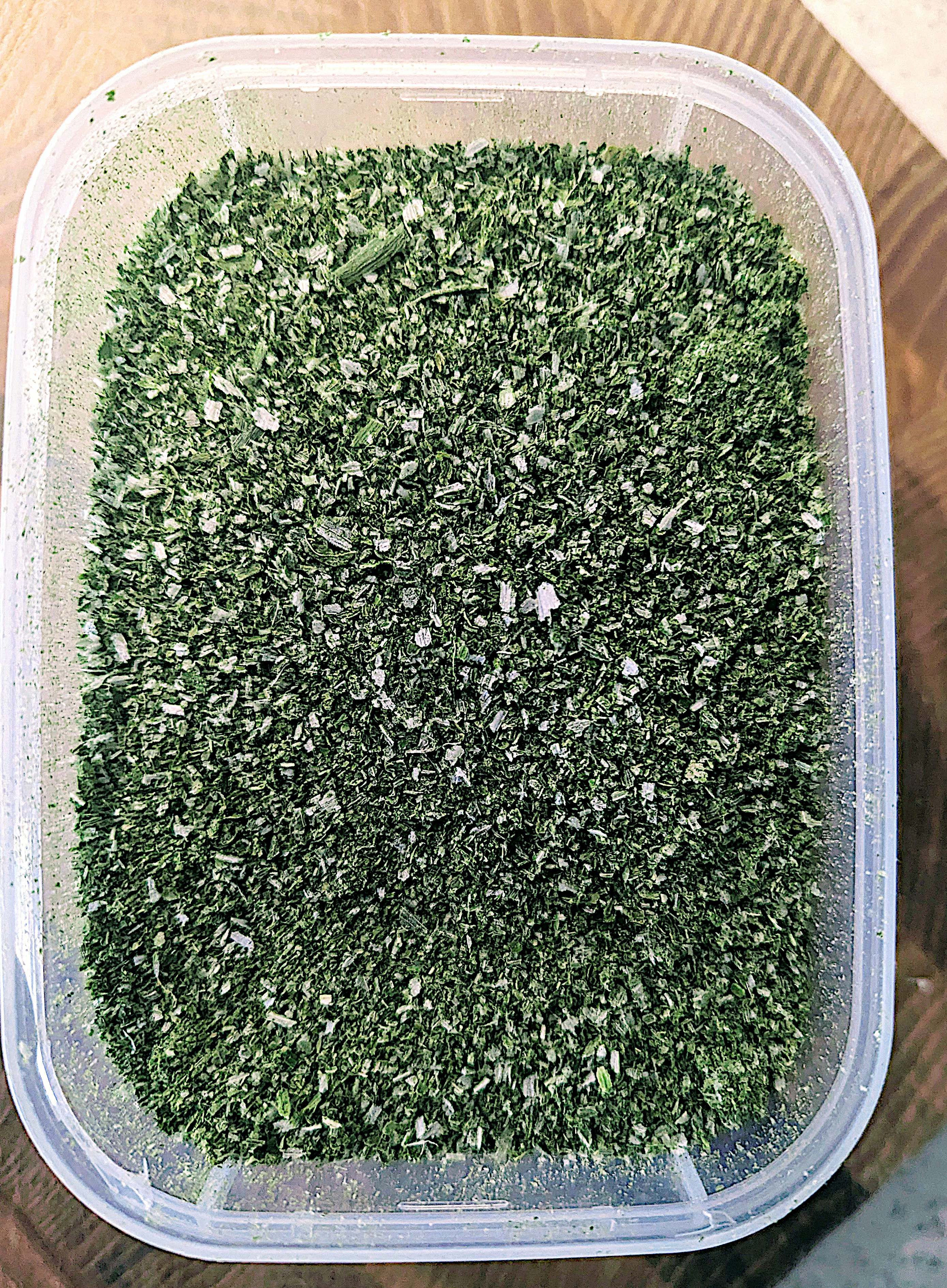
Once finished, they went into the blender and whizzed until ground. The powder is still good after a month or so of storage, and the smell is still quite pungent. Great for soups and stews, and also replacing the package full of salt and other things that comes with instant noodles.

I shall definitely be doing some more, as the bunch I cut back now doesn’t look as though it was trimmed in the first place. We grow ’em big ‘ere!

Turkish spindles

I’ve been using my Turkish spindles a lot lately, more so than the other types in my collection. My IST spindles are in the following woods: London Plane, Bog Oak and Spalted Beech. But why these choices?

I’m a Londoner. London Plane trees are everywhere in the capital – lining the streets and spreading out in the parks, nudging branches with red and white horse chestnuts. As a schoolchild, I would wander home in the autumn and early winter, scrunching through the fallen leaves on the pavement. I can still remember the smell and was reminded of that when I was in Dublin in 2018, where their autumn had come a little earlier than in Sussex. Do children (and adults) still play with itchy balls? Hopefully everyone’s learnt how itchy these things can be and are kinder to their friends. If you don’t know what an itchy ball is, it’s the dried fruit of the plane. When it’s broken open, the hairy seeds can cause quite an irritation when plopped down someone’s back. Not nice and potentially dangerous.

I had a moment of nostalgia when I was walking along North Terrace, Adelaide, and a plane leaf dropped from it’s twig, and drifted down to the pavement in the most poetic fashion, gliding here and there, twisting, turning, floating upwards and then downwards again. Autumn, and an image of Winnie the Pooh coming to mind.

So that leads on to oak, the national tree of England. The sight of one of these trees spreading its boughs un-nudged in a field is symbolic of the English countryside. The smell of rotting oak leaves also reminds me of my childhood, walking home from school through the “squirrel park” where the “parky” used to spend all his time clearing up the fallen leaves with a besom, then carting them off in his wheelbarrow to a humongous compost pile. The smell was strangely sweet/herbal and one that I’m never likely to forget. The spindles are actually made from bog oak – 4,000 year-old oak from the fens. As a history buff, this adds heaps to their appeal.

And beech… Have you ever walked past or through a beech grove in the cooler months, where the unmistakable copper glow of the carpet of fallen leaves contrasts perfectly with the smooth, silver-grey trunks? In summer, the leaves provide a cooling shade from the sun, with their lighter undersides adding an individually mysterious shimmer. There I go a-waxing lyrical… I remember being taught how to eat beech nuts by my Mum, who no doubt hadn’t savoured them since her childhood. We were at Farthing Downs, south of Croydon, where we so often used to take our dog Penny for a walk. The beech trees were at the top of the road, where it became a footpath, and stood proudly at the entrance to some fascinating woodland.

OK, so that’s how I choose my spindles! What makes IST Turkish spindles unique is the shape of the arms and also the brass weights, giving them more spin. The overall design is unique to craftsman Ian Tait. Note that my blog is non-commercial, and that any recommendation of a product or supplier is simply that.

Lovage

Levisticum officinale, livèche, Liebstöckel, apio de monte, luáiste

Lovage… I first grew this in London and was happy that it grew so easily from seed, then reached a height of about 7 feet. I can’t remember using it in its first year, and then moved away from home. But it grew, and grew well.

Years later, I bought a plant in Adelaide and expected it to do equally well. It grew, but barely touched 45cm (I’m more metric these days), and this seemed to be the same for another lovage lover I know. . Hmm… I persisted, and my current plant (or group of plants, more likely) has grown to about 60cm with flowering spikes up to 1.80m and provided a fair harvest of both leaves and seeds in its third year. It’s also in a part of the garden where herbs do unsurprisingly well. Rocky soil, slightly moist and afternoon sun.

So what did I do with the harvest? Dried it. Have a look at this YouTube. Meka dries the leaves in the oven, then grinds to a powder in the blender. Easy! When I first tried drying the leaves naturally, they turned an unappetising shade of khaki. It’s still summer here, so I tried another bunch, this time grinding them when they were crisp.

Success! The powder is an attractive shade of lime (better than in the photo), like Meka’s, and extremely aromatic. I’ve used it once already, and should have enough to last until next season.

What does it taste like? If you’ve never fondled this herb before, the pungent aroma of celery is the giveaway. Strong celery. I find that some of the strength dissipates with cooking, but it’s still one to use in moderation until your experiments result in the right amount.

What’s next on the list? Spring onion greens…

Pisolithus arhizus 2

Here are the results of this autumn’s pisolithus dyes (note that we’re coming into spring here at the moment). The changing weather made the fungi appear, then disappear, then reappear with enough to harvest some sizeable specimens and leave enough to reproduce.

All eleven balls of yarn are different shades, ranging from black – thine eyes deceive thee not – to beige. How did I manage to get so many shades? Mostly without trying.

I have no explanation for how I “achieved” black, and jet black it is. The gold was also a surprise, but the beige was as exhaust bath. The latter reminds me of the shade I obtained from hawthorn berries some time ago.

The intermediate shades could have been to do with optimal harvesting time, length of time between harvest and dyeing (no longer than a day), size and all the usual variables (soil, aspect, etc.).

One thing to note, as mentioned in the previous post, is that the yarn in most cases darkened when lifted out of the pot. Oxidisation, I reckon. One skein I didn’t pay much attention to came out with a woodgrain/ mottled effect; I hadn’t spent much time hovering over the dyepot, gently prodding this one down, and the oxidisation effect became permanent in patches.

These will be periodically brought out and admired until the right project for them is chosen (and all the ones currently on the go are finished).

Brass rubbing scarves

Trying to find translations of “brass rubbing” was fruitless – other than ending up with different ways of saying “rubbing brass” (meaning with a cloth, elbow grease and a bottle of Brasso). I’ll search through the paper dictionaries at a later date.

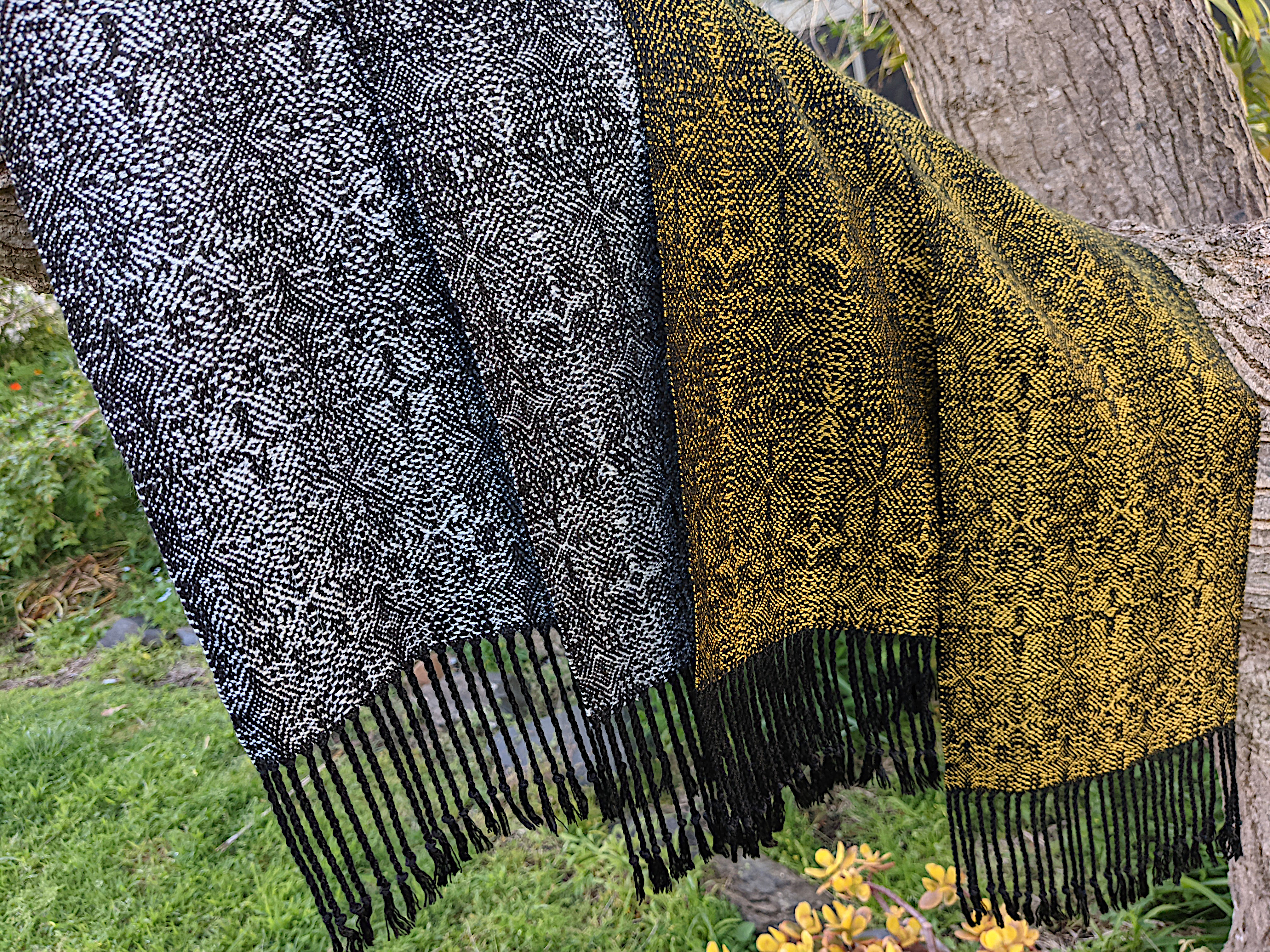
These scarves were woven on the table loom, the first two in gold and silver, then the latter three in gold (was given a commission for a second one), copper and slate – all tencel with a black warp. The draft came from Alice Schlein’s website Weaverly and I’ve since noticed it posted on other blogs. Popular. Alice has posted a significant number of amalgamated drafts; the combination of two drafts in one (my simplified definition) really does add a lot of interest to the finished item in that the eye is constantly drawn from one pattern to the other.

The diagonal lines and “metallic” yarns (in shade rather than content) give these a real burnished look in the right light.

Olive and pecan leaves

Olea europaea et carrye illinoiensis, feuilles d’olivier et de pacanier, Oliven- und Pekannuss-blätter, hojas de olivo y nuez, duilleoga olóige is pecan

When I see an abundance of flora yet not much evidence of its use as a dye plant, I wonder if it’s because people have tried in the past and found it fruitless. Alexanders, Smyrnium olusatum, is something that pops up in great numbers at this time of year, and after weighing up the urge to try it against the logic that if the ancient Greek sand Romans didn’t use it for colour, they’d probably tried it and rubbed it off the tablet, the urge was still there.

I got the palest yellow.

Then there is Yggdrasil, my pet name for the huge, spreading pecan tree nearby. Walnut leaves produce such a wealthy colour, so surely their cousin must. I was also hoping to find some nuts, but the local wildlife had already feasted, leaving just a few scalpings of fruit here and there. Fair enough. I took some leaves, which were moderate in size, then some from a sapling growing beside its parent in a drainage ditch. The leaves were much larger even though the ditch was dry. Perhaps because it had less chance of photosynthesizing? Anyway, there were enough that I could take some without doing damage to the sapling’s future.

The result was a range of strong browns and yellows that reminded me of a 1970’s dyebook. Any different to other yellows and browns? Different enough to record this as a local dye source.

Next came the olives. Apart from being an important crop here as in other parts of the world, they’re also a very common weed. Taking a few small branches home from the local national park was therefore a service. Again, not a lot of evidence that they’ve been used as a dye. Perhaps because they were too important for oil and fruit production while weld wasn’t?

The results were however amazing: Easter yellows to a bronzy-green! The latter I would usually describe as “olive”, but in the circumstances… I decided to repeat the experiment to see if the green was easily achievable and not just a fluke, and also to try out the copper modifier. Unfortunately, neither turned out anything to shout about… maybe not enough plant material? I’ll try again…