I choose wine by the quality (together with the price), but when the bottle comes in an organza bag, that’s an added bonus. I now have a sizeable collection and there’s always at least one hanging on the washing line at any time of the year. In summer there can be 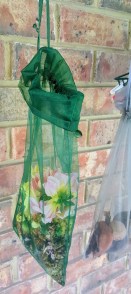 a good half-dozen.
Leaves are generally tied in a bundle to hang off the laundry door for a week or so, but when flowers are plucked one or a small handful at a time, they go into the wine bags (gift bags, not goon bags) on the back wire of the clothes line where they get shade 24/7. This also goes for tagetes heads which would otherwise shed hundreds of seeds over the floor.
I originally spread some wire fencing over the “rafters” in the shed, placed flyscreen wire on top and spread dahlia flowers over that to dry. Now I find that if there are not too many in one go , they too can go into a wine bag. This is only practical in summer, where they can dry within a day; in winter the tree dahlia heads go mouldy when piled into a bag.
And avocado pits? When a colleague donates them on a daily basis, they stay on my desk shelf at work and dry well without going mouldy. Easy! At home they get put into a bag along with the skins – after going over both with a nail brush to get rid of any remaining flesh.
On the right: half-a-year’s harvest of lemon myrtle from the 50cm-high specimen in a pot. I remember buying 100g of these about 18 years ago when they were $50/kg! Although they’re not native to SA, they’re really easy to grow both in pot and in open ground.
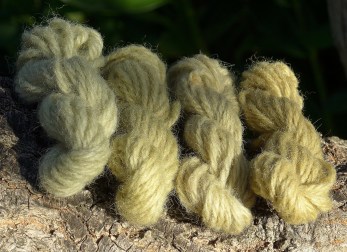

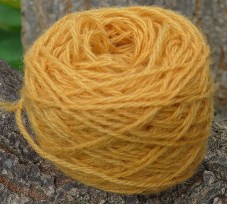 They produced a tea-coloured liquor after simmering for about 3/4 hour, so I decided to go ahead. Had I mordanted the yarn? Couldn’t remember, so I just dropped a skein in the pot. After about 30 mins I added a pinch of alum, and the yarn turned visibly darker. That answered my question. Then some bicarb turned the yarn a rich orange-yellow (deeper than in the photo). So, that answers the other question and I shall be saving as many flowers/heads as I can this year.
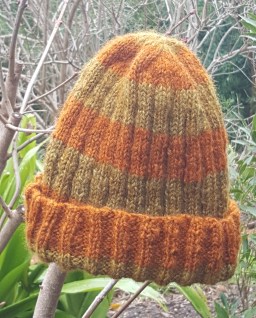 Someone pointed out that this could very well be the colours of a hitherto-unknown footie team. Better not wear it down the Port, then. Or to a quidditch match.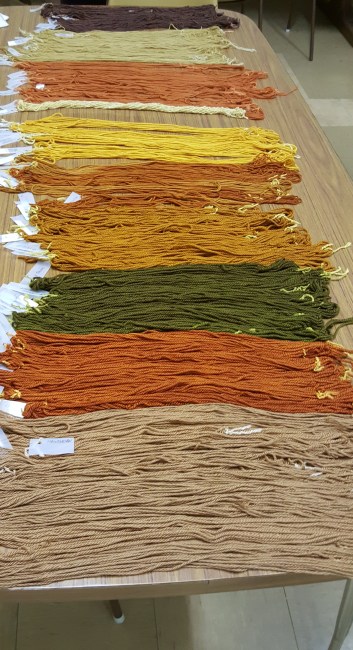

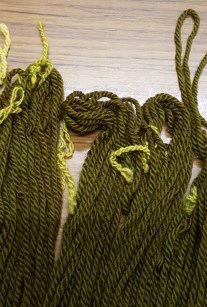 when we dipped half (or more) of the skein back in the liquor with bicarb added, well, even better.
 I only had a few small dahlia plants in the garden, but a local enthusiast came to the rescue with what must have been about five kilos of freshly lopped flowers – plenty to experiment with. I don’t know what percentage of the weight of a fresh flower is water, but as they dried, so it became clear that 5kg wasn’t going to go as far as first thought. However, the results were pretty amazing.
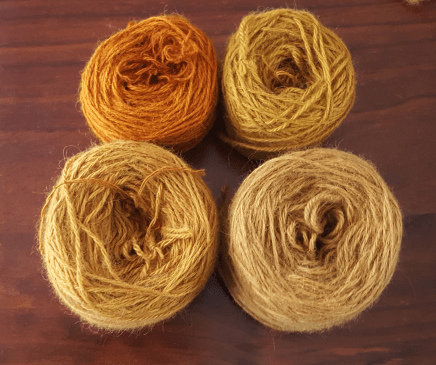 ite alpaca, mordanted with alum at 10% wof. They were simmered for another hour, then one skein was removed. A generous spoonful of bicarb was added to the pot, turning the remaining skein copper. I wasn’t able to repeat the effect with the remaining dyepots, but got very acceptable results nonetheless. The photo shows them paler than real life.
 Hedgerow weaver