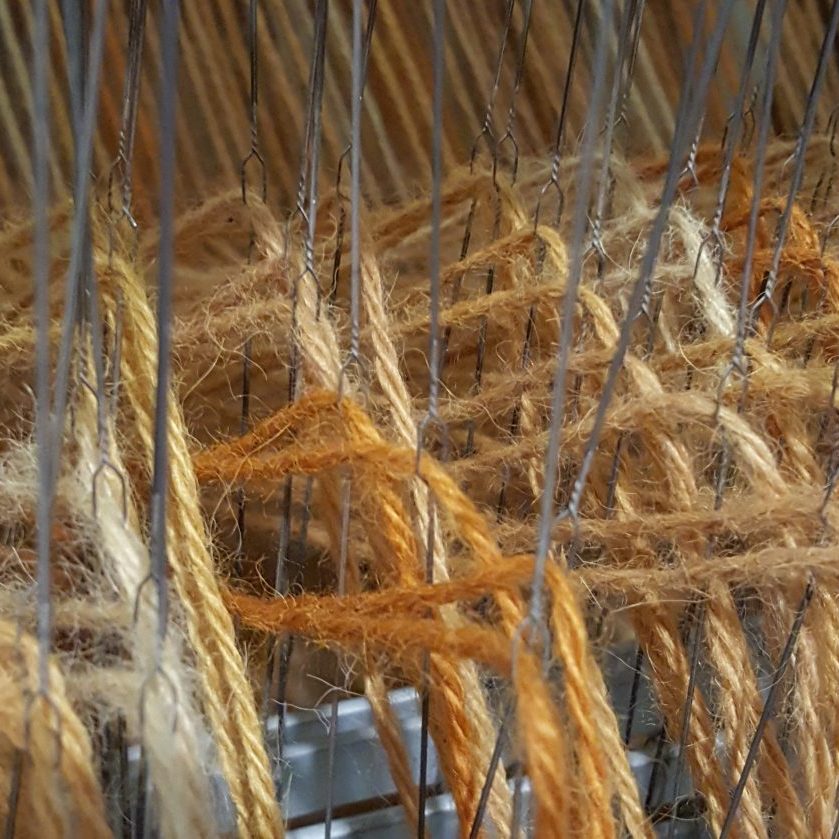
fibres de perle et de rose, Perlen- u. Rosenfaser, fibras de perla y rosa, snáithíní péarla is rós
It was rose fibre that initiated this blog, or rather the lack of information about it on the internet. Wondering why nobody had written anything led me quickly to the conclusion that someone has to be first, of course. That was a few years ago and there is now more information on this and other regenerated fibres (cellulose-based) to be found. While the pearl fibre is described by most sources as “pearl-infused cellulose fibre”, there doesn’t however appear to be any clear description of the rose, i.e. are the fibres chewed up, spat out and spun bamboo-style, or is the process more along the lines of “infused”?
So why has it taken me so long to write anything myself? I mislaid the 100g of rose fibre that was part of a birthday present and didn’t want to buy any more in the meantime. I since have both bought more and found the original – more to play with!
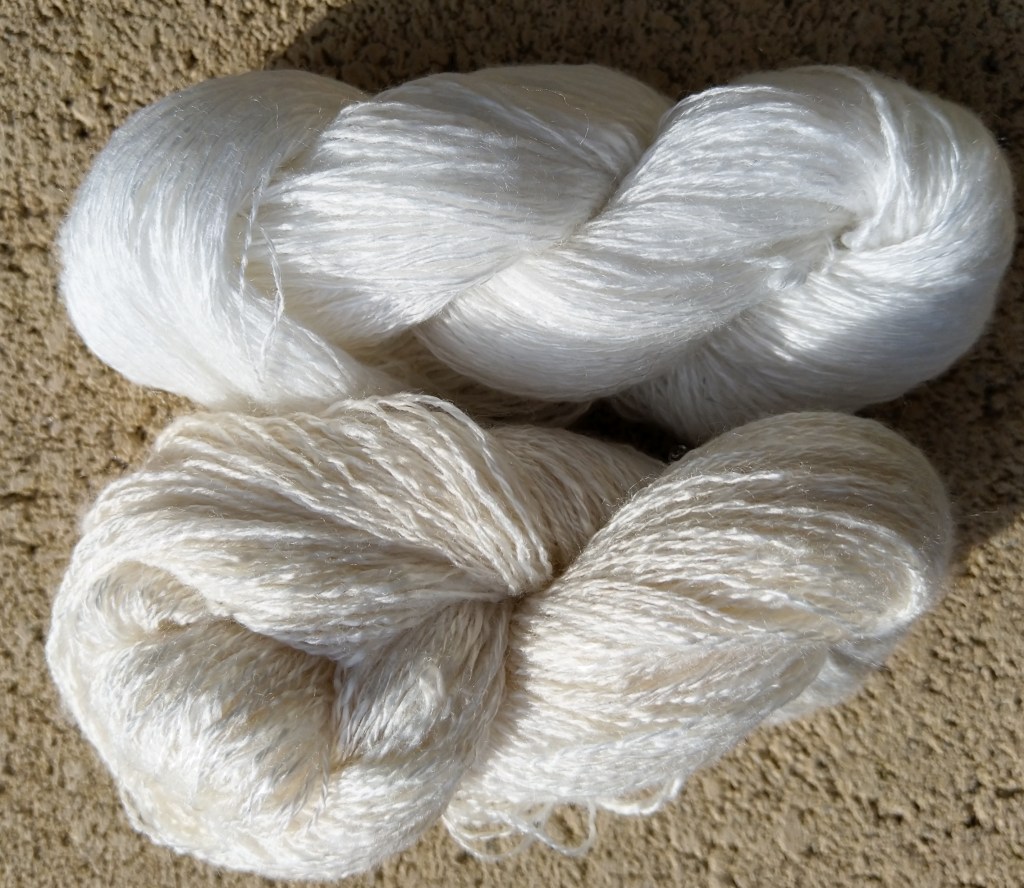
The rose fibre is very silky and slippery and spins into a a soft yarn with plenty of shimmer and drape. The second lot of fibre produced a yarn that was also a little golden in colour a bit like tussah compared to mulberry. The first is a lot whiter. It was bought from one of my favourite shops, but at a time when they seemed to have changed ownership; I wasn’t happy with several parts of the order, but as none of it was fondled/spun for some time, it was too late to return. I just hope that the original is indeed rose. Fun to spin with, anyway, and the feel is the same. And the shop? The current owners are fantastic and provide top customer service, ’nuff said.
The pearl fibre has a more cotton-like feel and appearance. It affords slightly more grip, so would be easier for a beginner. The yarn is soft, but not as sleek, and doesn’t reflect the light as much. Still worth having/using? Certainly! Both yarns were spun on a 15g Turkish spindle and plied on a larger one.
As with other regenerated fibres, I reckon both would blend well with natural fibres on a pair of carders. Depending on where they’re purchased, they can cost significantly less than silk, with the rose especially offering a similar effect and feel. My intended use? Watch this space (but don’t hold your breath)…
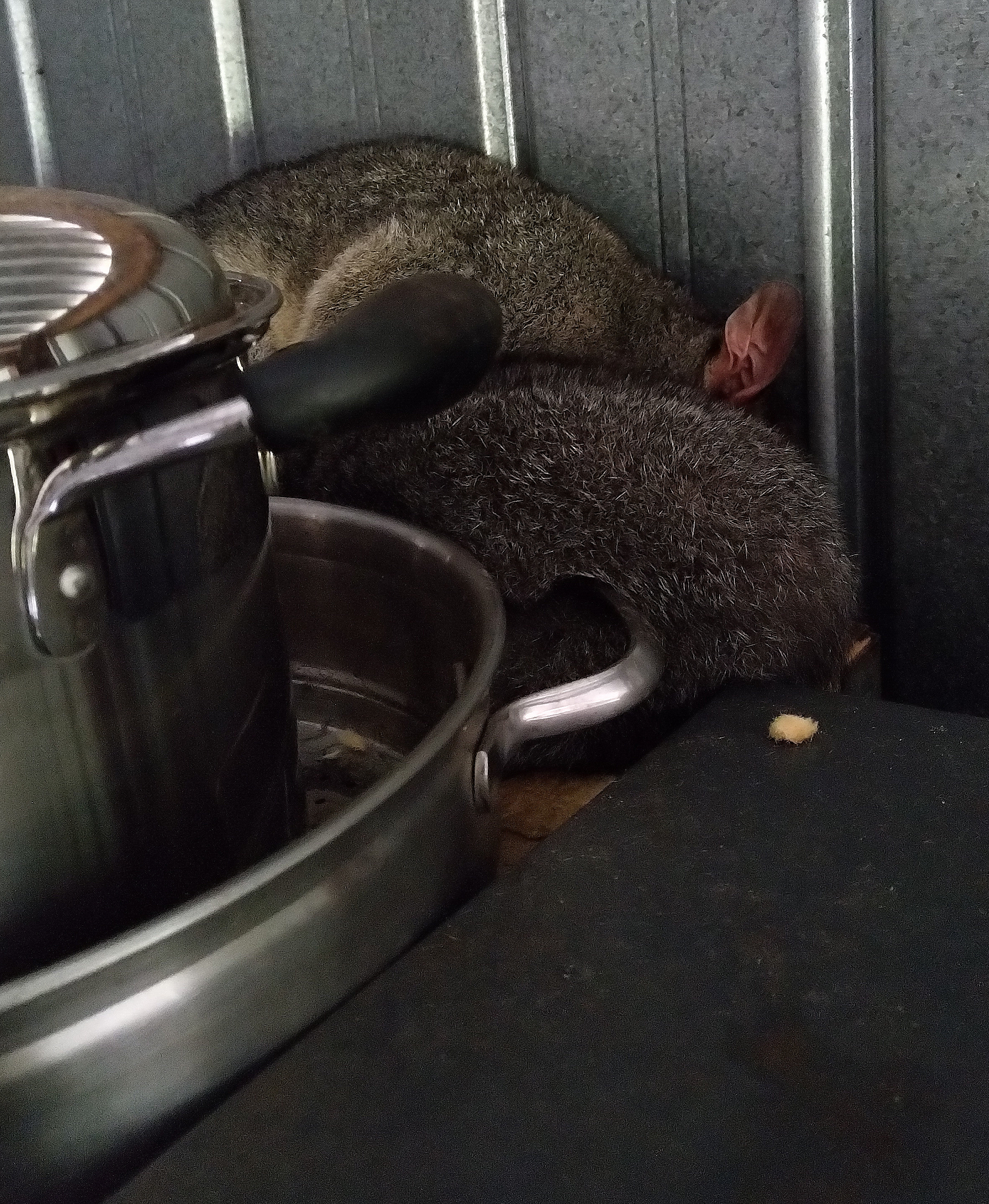 I’ve got used to the possums now – both mother and baby – sleeping in the shed behind the dyepots. Even when they’re on the next shelf down when I go to grab something, I don’t jump as far backwards or gasp quite so loudly.
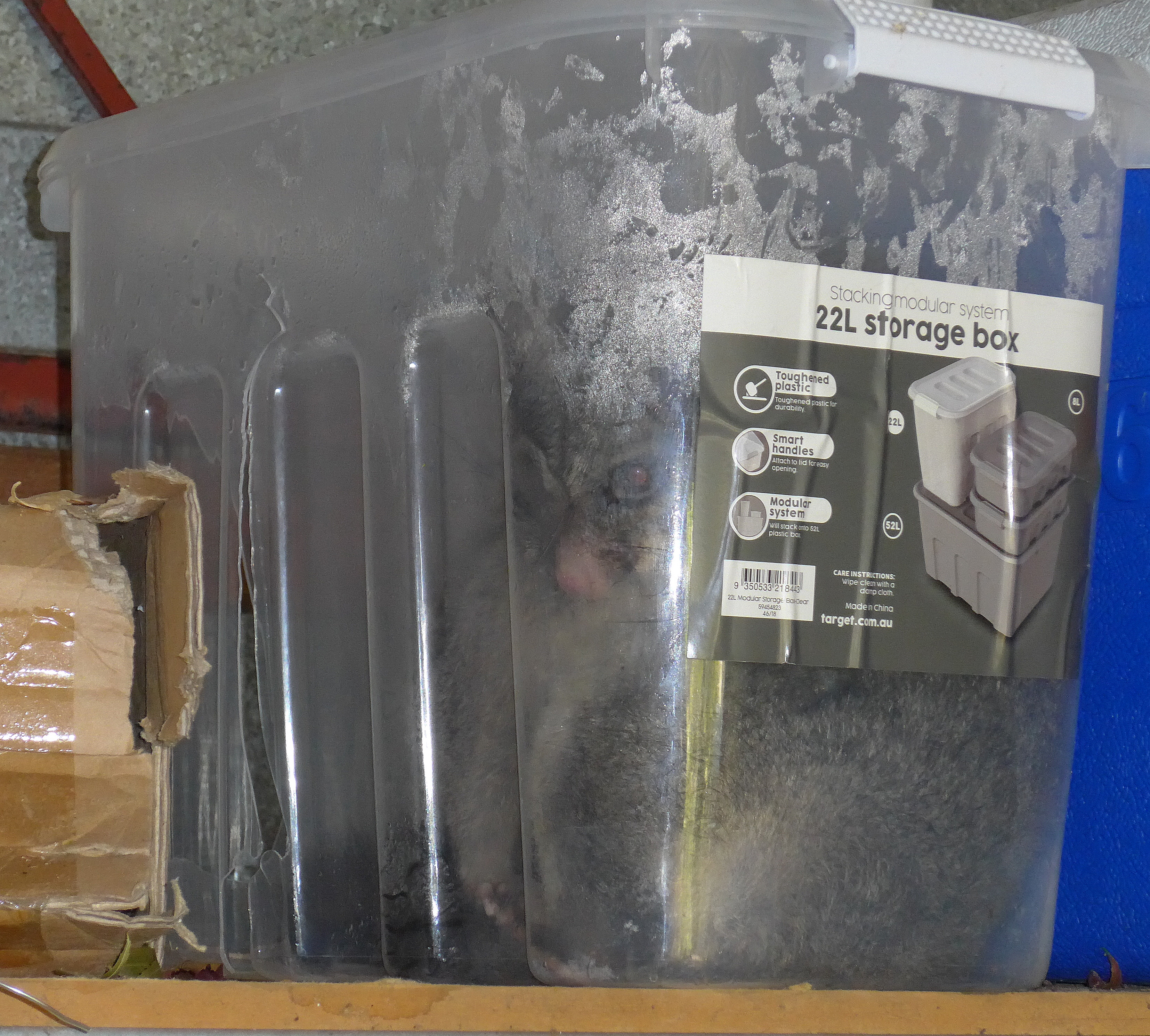 It wasn’t until I was looking for a storage box that appeared to have some stray balls of yarn in it that I found their latest nesting place. Now, before you all shriek and wonder if they can get out (you’ve probably already shrieked in the time it’s taken me to type), there’s an entrance/exit in the back that they managed to chew, and also a crack in the side of the box where it no doubt gave way when they were getting more comfortable. Entrance, exit and ventilation. They’re not stupid, you know!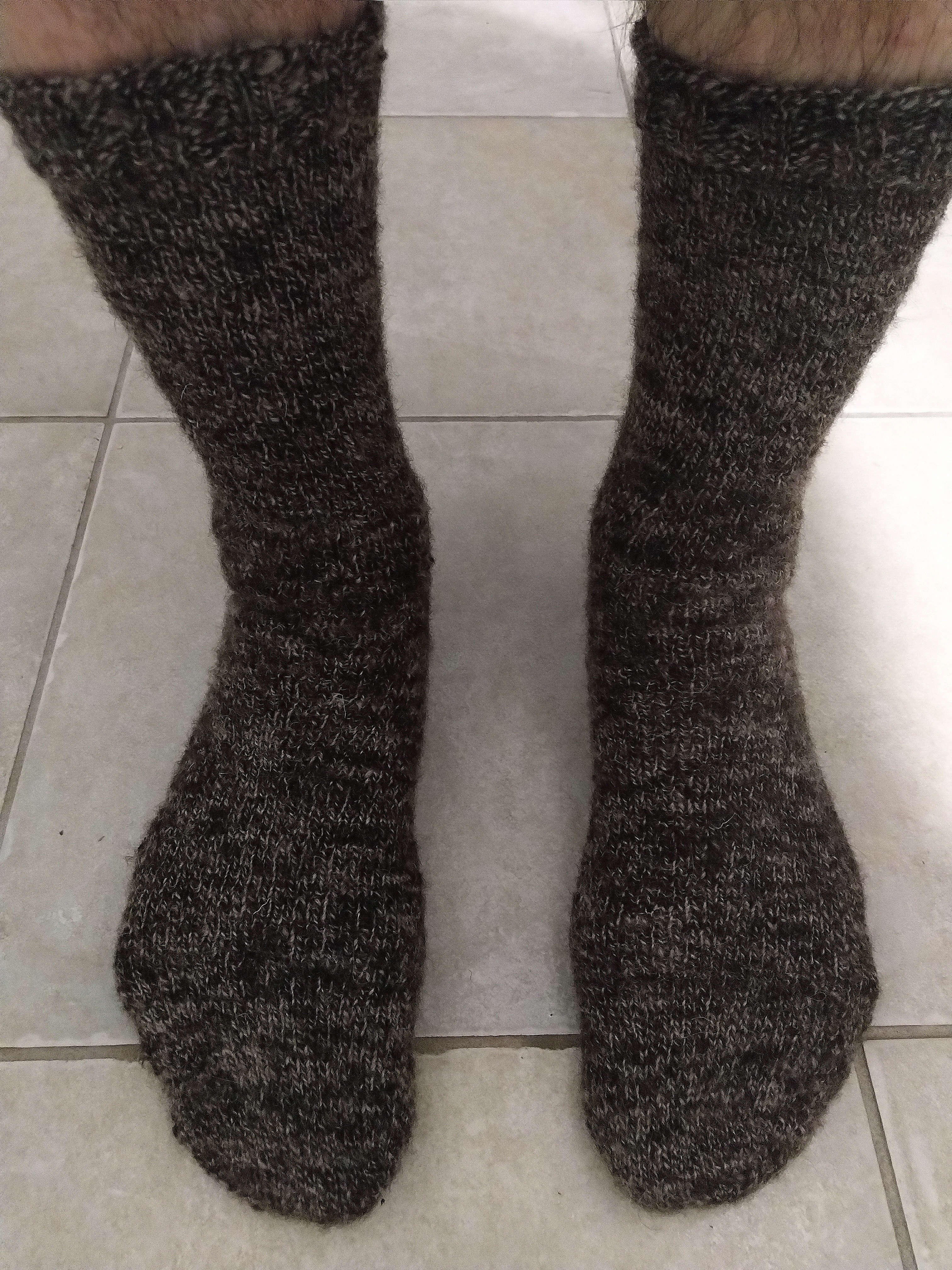
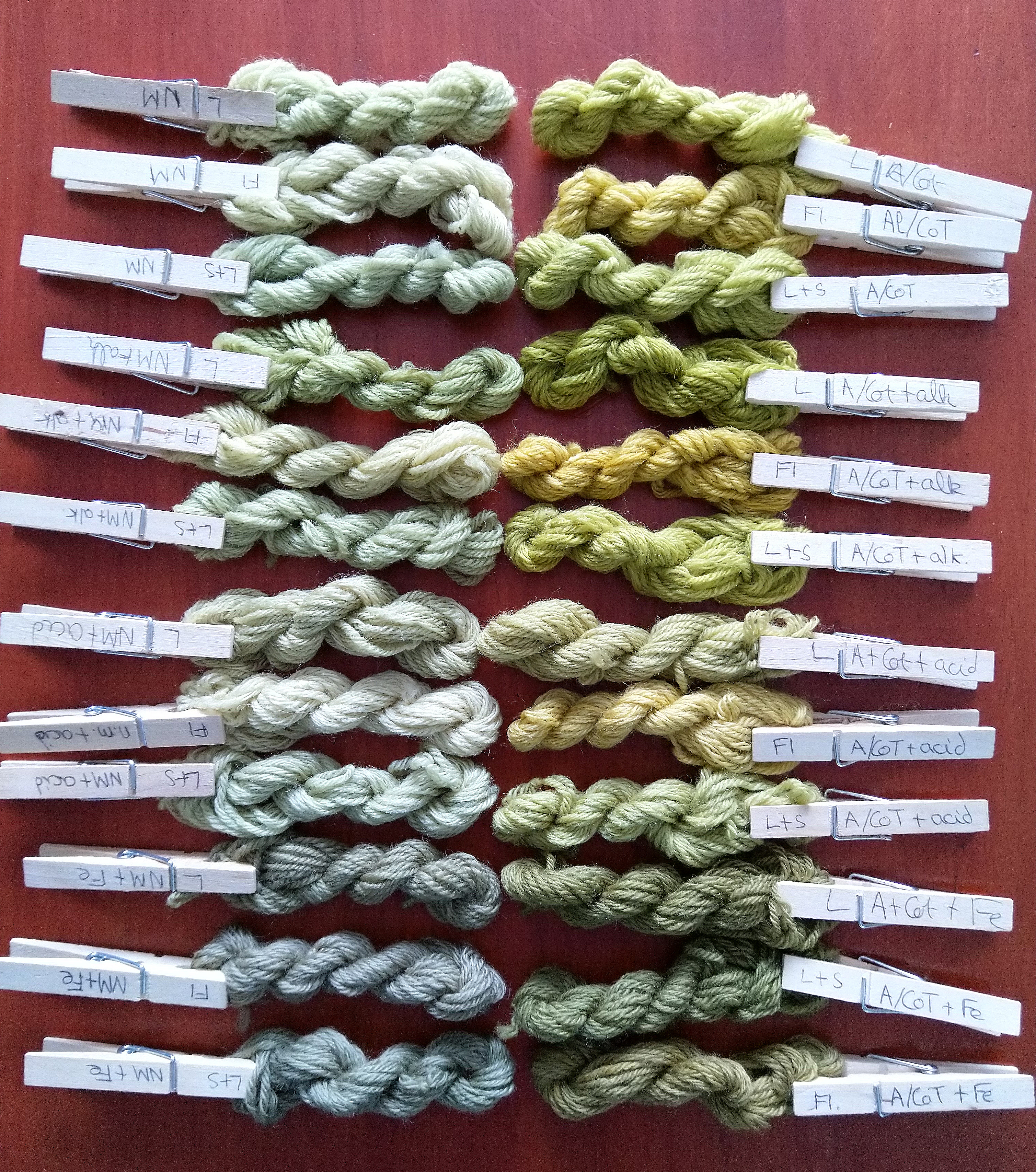
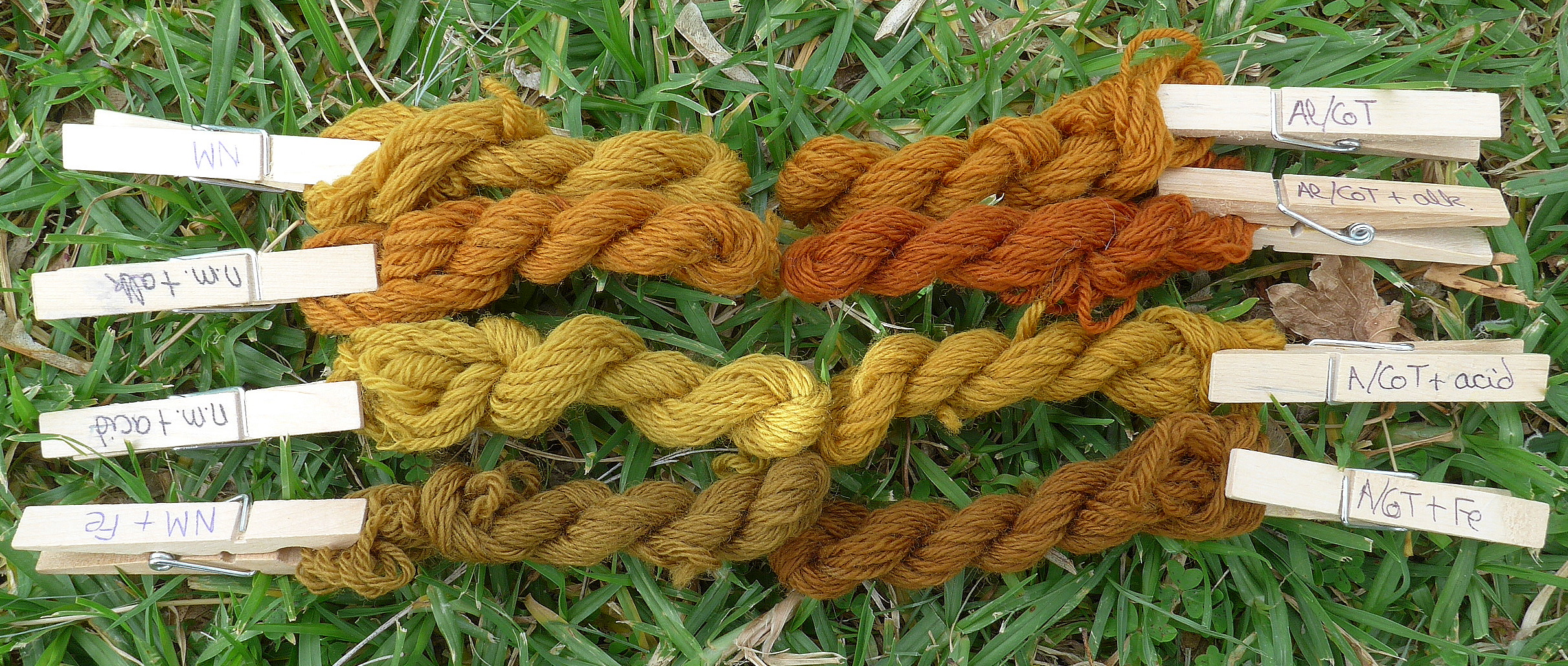 The result of the dyepot were to be expected, and after getting so many muted shades from eucalypts, the bold oranges and red were a welcome change – and not unexpected, either, from this plant family. Different to dahlias? I’d say about the same. As for production, I’d have to wait until I had an equal amount of both plants, but that’s not what it’s all about at present.
 and. As a child with a thirst for natural history (is it still called that?) and a small but highly informative collection of nature books, I stood gaping at this tall grass with purple flowers – all very exotic. If memory serves correctly, I took a couple of flowering heads home, but the purple didn’t last. I can’t remember where it was, but have a lot of fond and grateful memories of day trips in to the countryside where there was always a new discovery.
 eoclaip
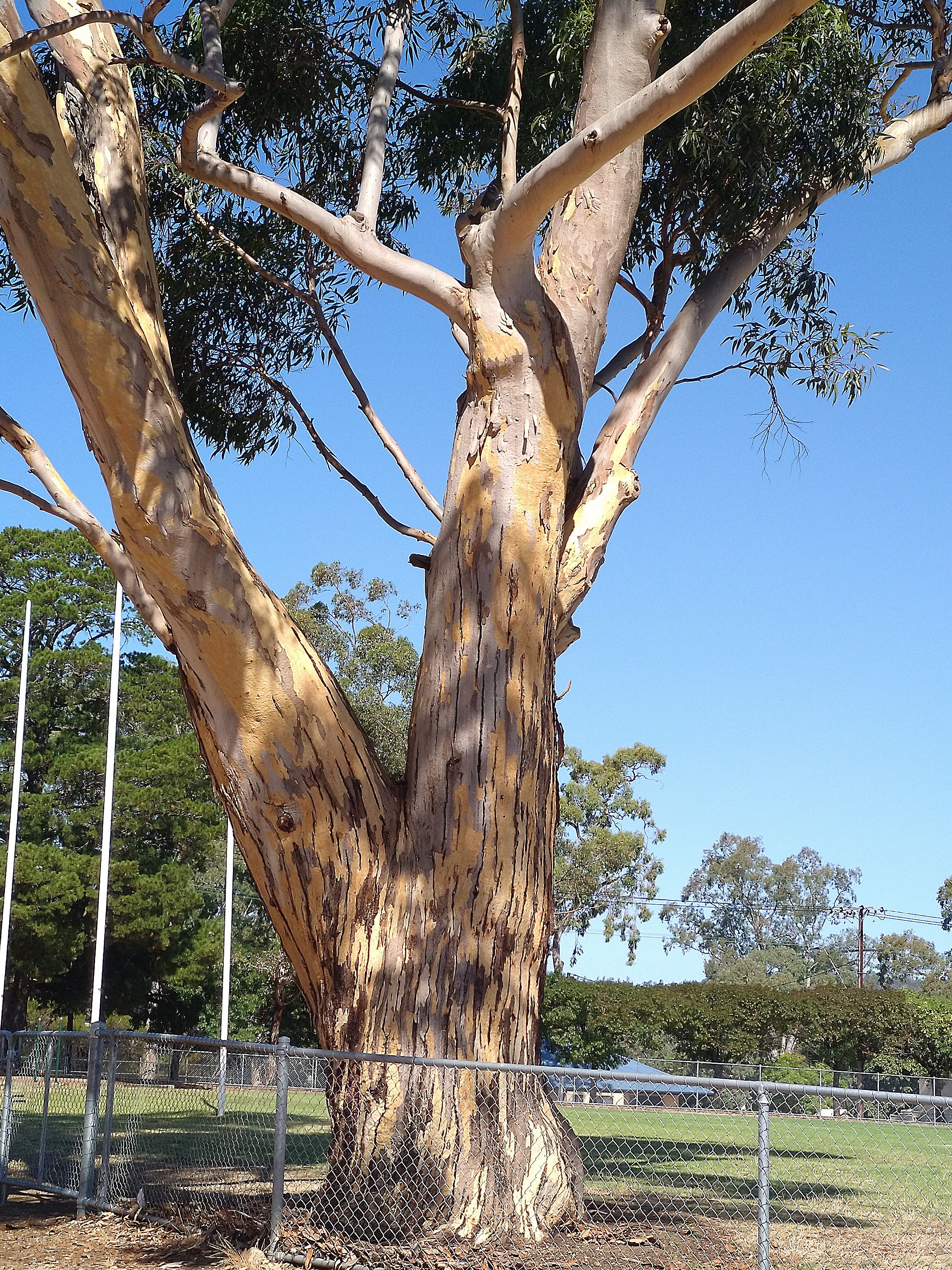
 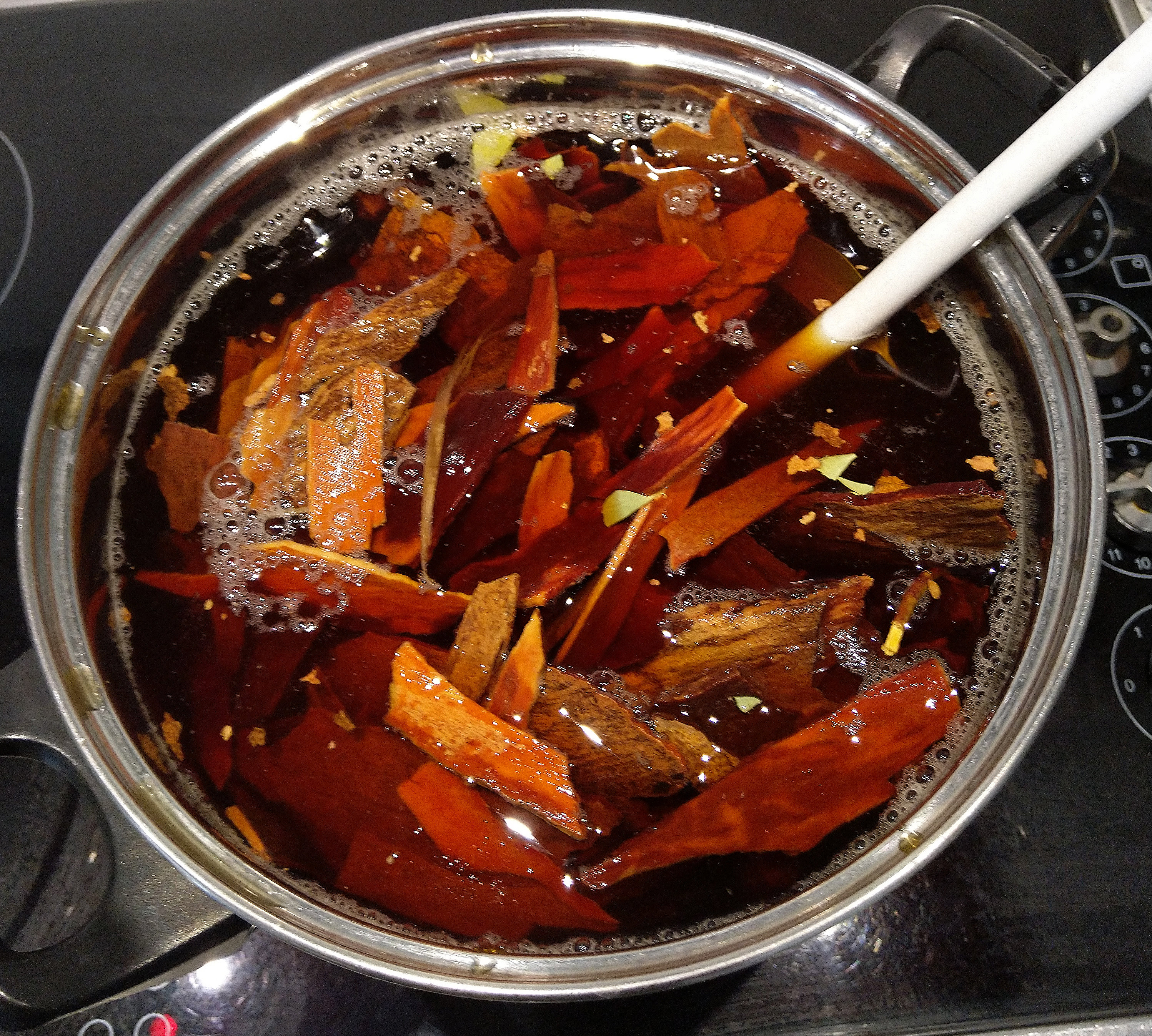 As with the E. sideroxylon experiment, the bark was soaked for a day, then simmered for 45 mins. The water turned from apricot-brown to deep brown-red. I could tell I’d get some colour, even if it weren’t a striking red. After straining, the woollen yarn was simmered for 45 mins and then rinsed in cold water straight away. Why? Why not.
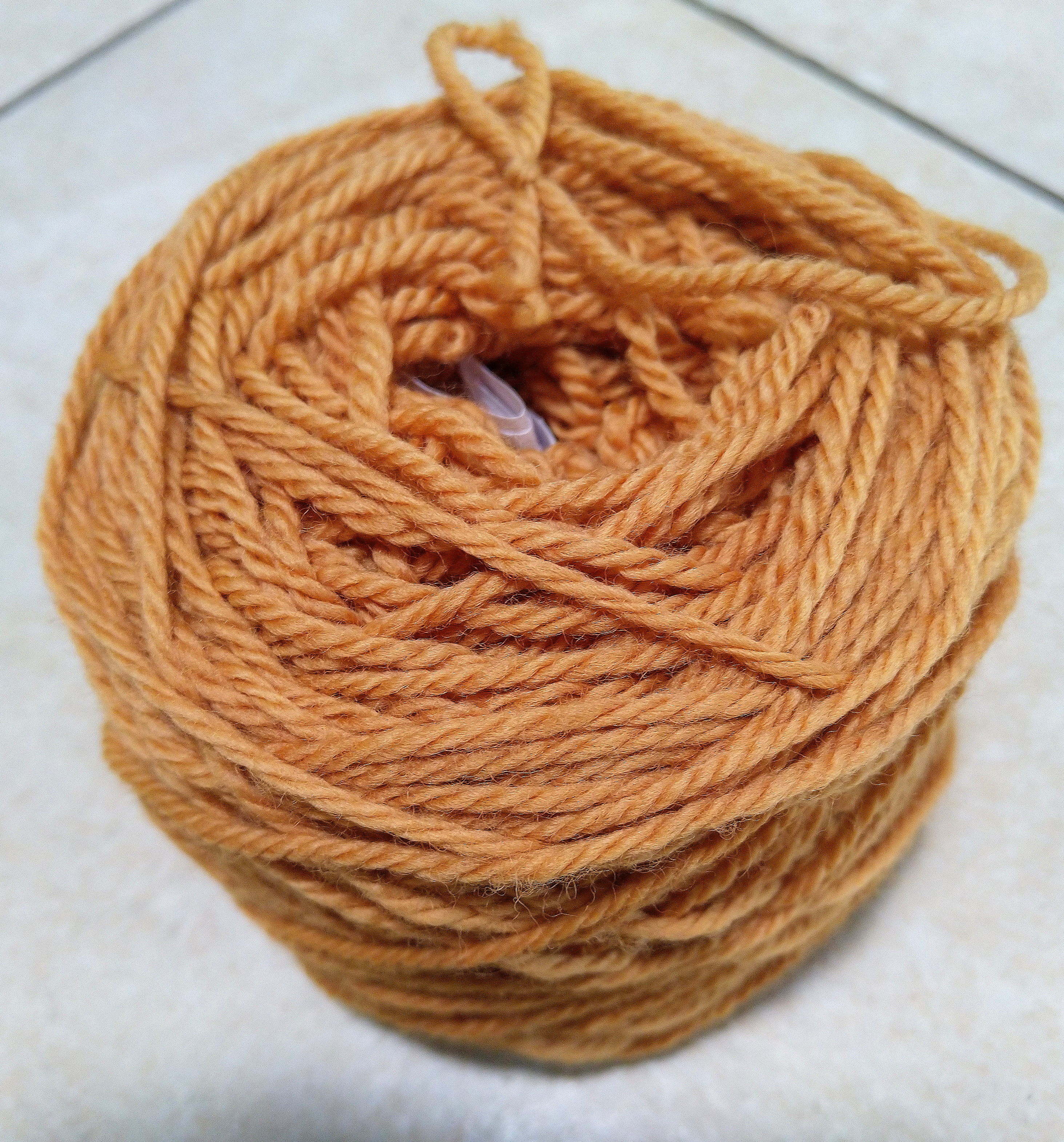
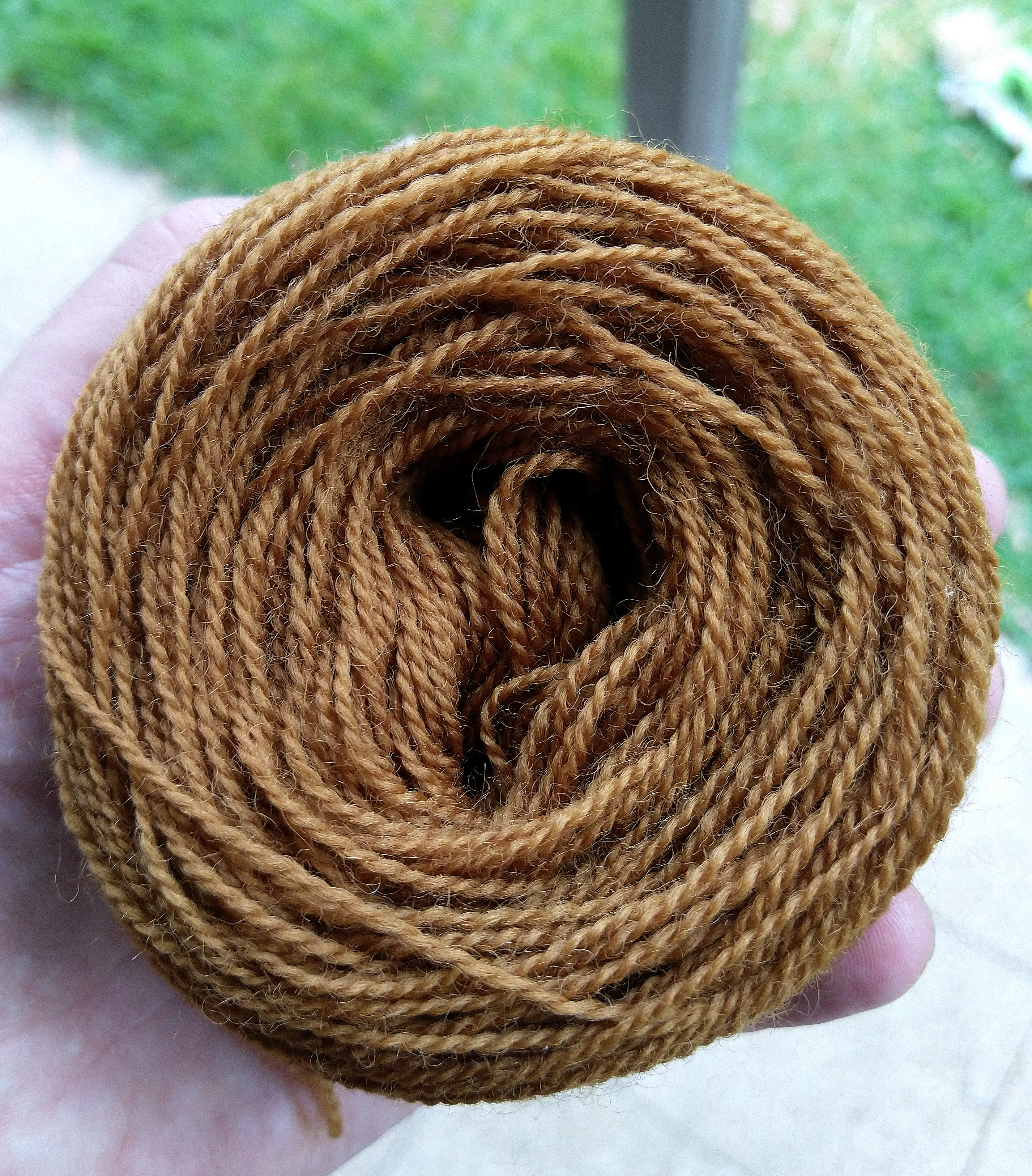 The result was a pleasing medium-darkish honey-brown (a bit brighter than in the pic), and worthy of repetition. I’ll be trying this one on tencel, too. Why so many browns lately? This isn’t a common colour in commercial yarns, and I need a certain shade of tencel to complete a project. Moreover, the experiment per se is fun – what other reason could you possibly need?
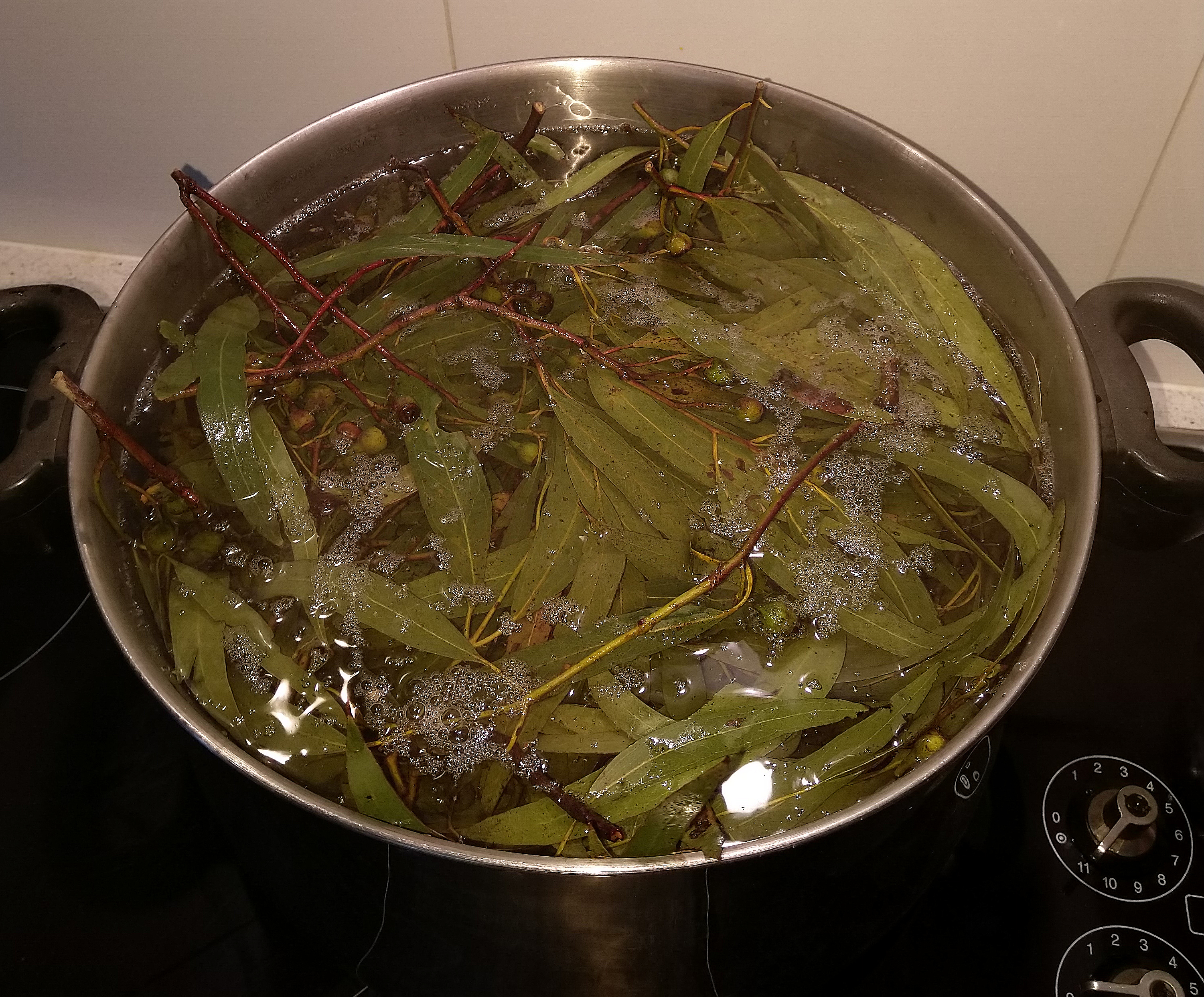
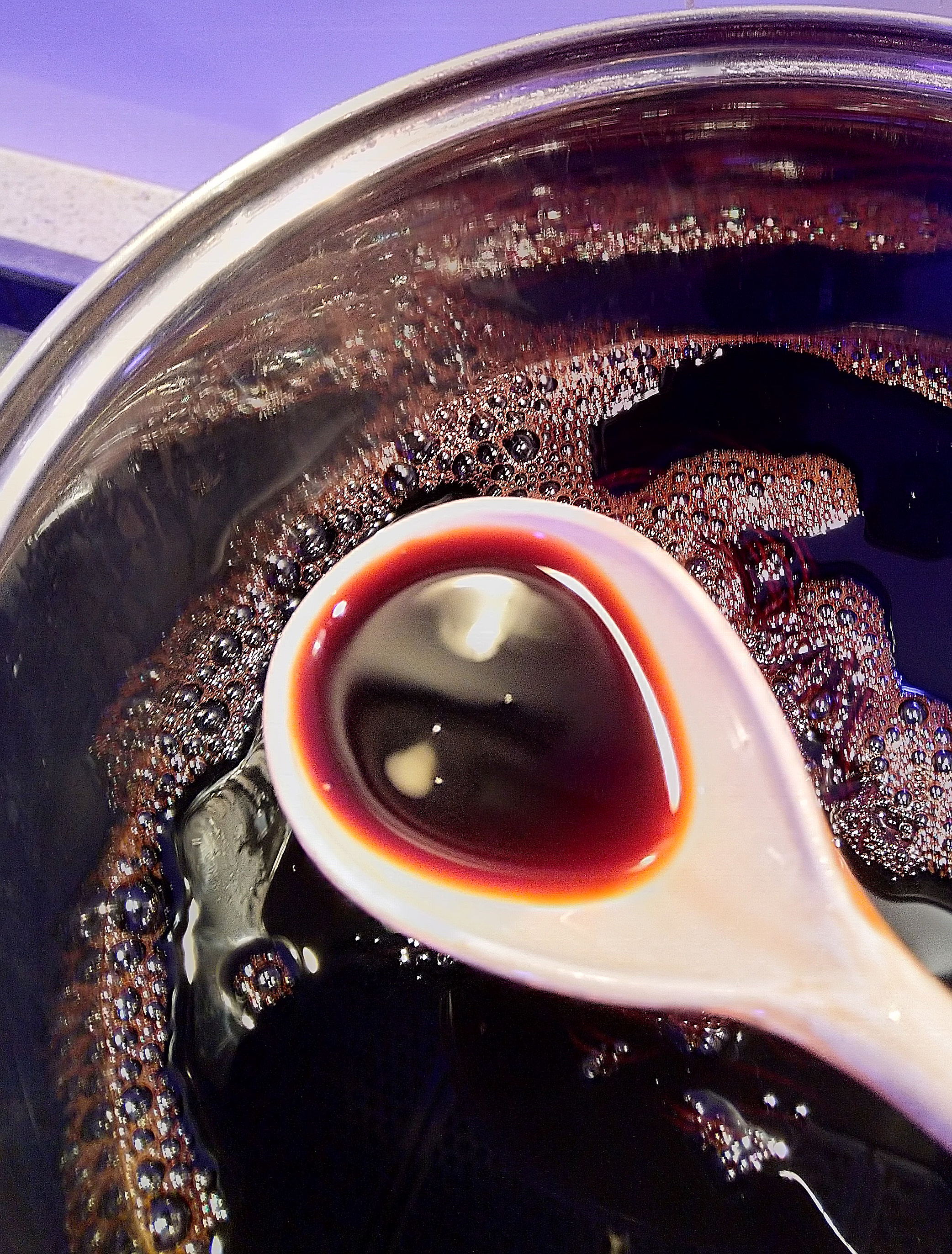 The dye liquor colours up quickly and is a deep, reddish black. An hour’s simmering, then a straining followed by a sieving (lots of small bits…) and it was ready for the yarn: a skein of 8-ply (bottom, left), followed by one of 2-ply that had been mordanted with alum/CoT as a precaution (bottom, right). As you can see, no mordanting was necessary, but produced a slight greenish tinge on the 2-ply (inside, it looks more golden, so let’s go for old gold/nut-brown butter). The 8-ply – denser and softer – came out a mid-chestnut brown. The colours in the pic are a little richer than in real life.
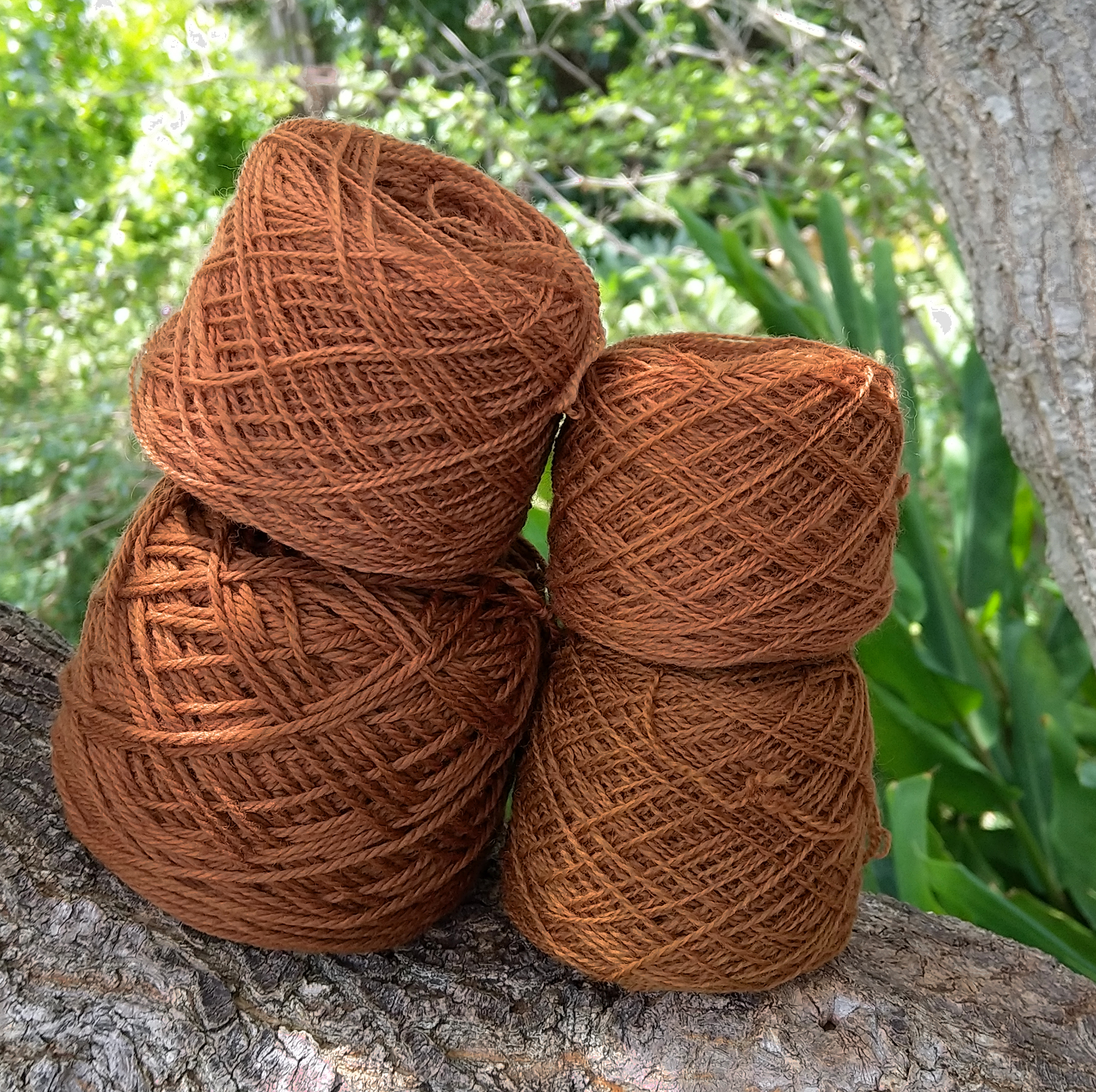 The liquor was still darker than dark, so another two skeins of the 2-ply were dyed individually. The first (top, left) came out a paler brown with a reddish tinge after an immediate wash; the second was left in the liquor overnight, producing a richer colour all round.
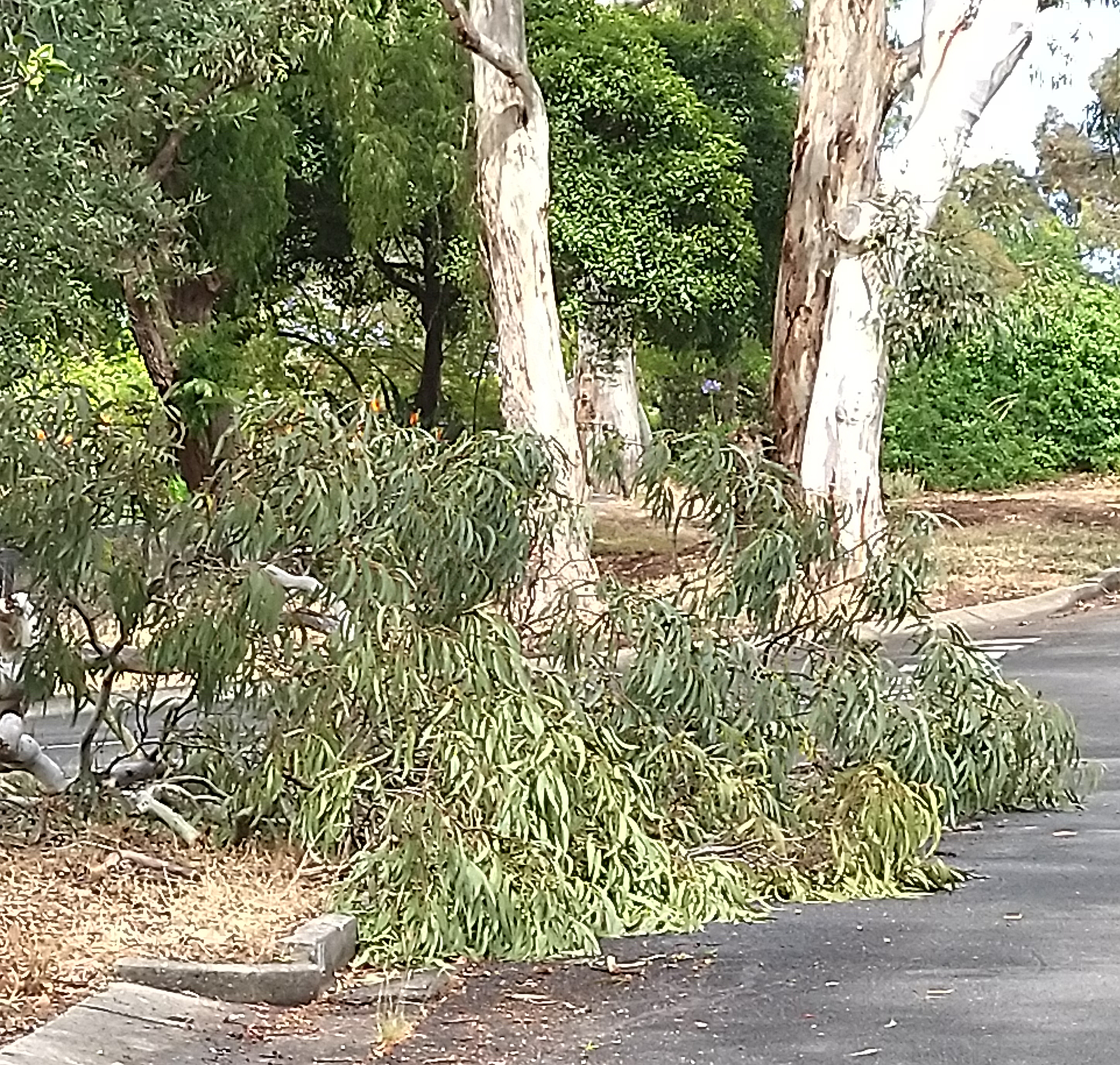 branches due to drought or a sudden uptake of water when the rain comes after a period of dry; this year the weather is so up-and-down that I can’t give the exact reason, which sometimes a gum doesn’t need…) and it’s still at the side of the road, though there’s less of it.
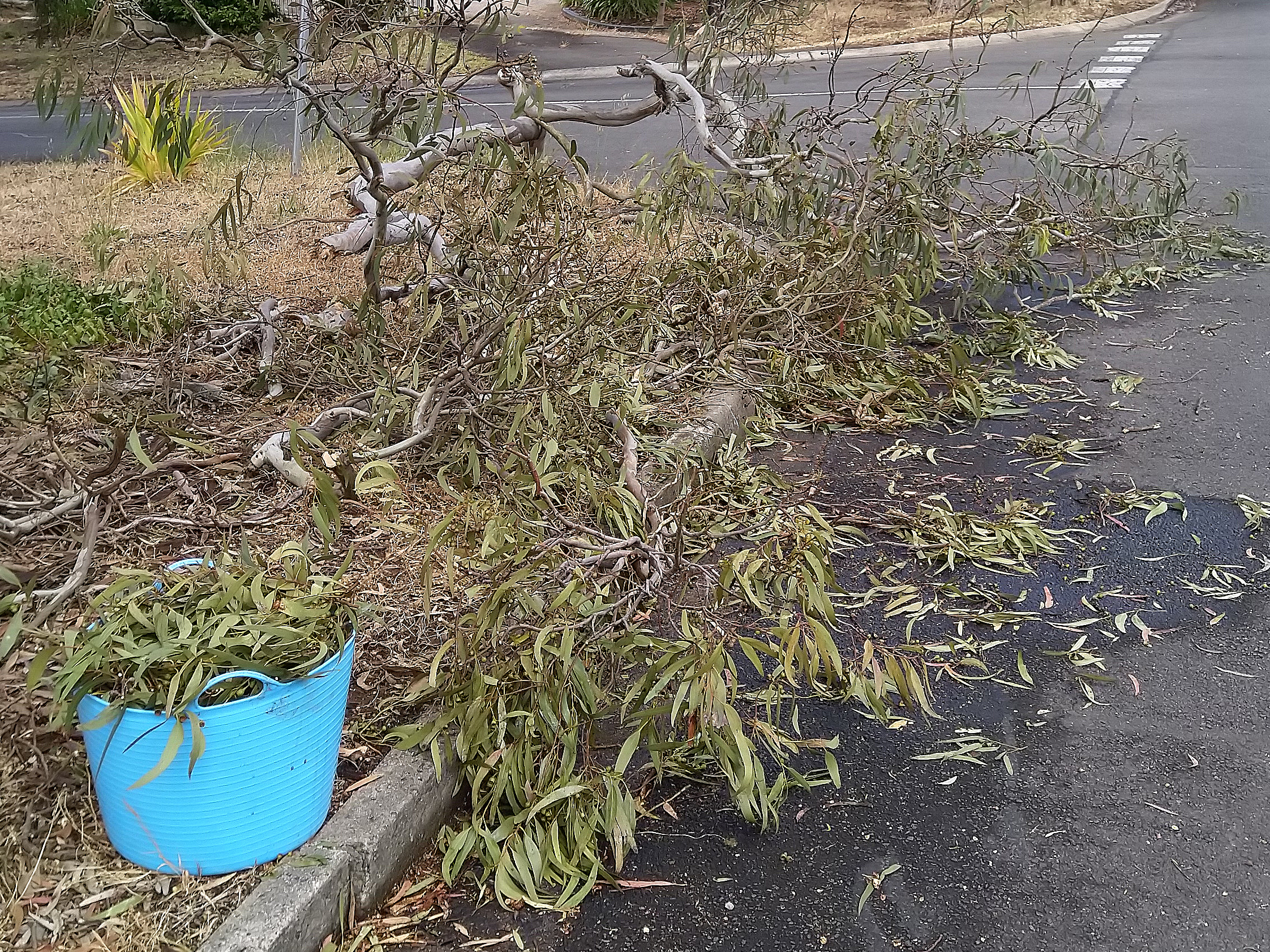 After driving past it once, I went back with pocket saw, secateurs and large bucket, then went back again for seconds. How much did I manage to harvest? Compare the ‘before’ and ‘after’ pics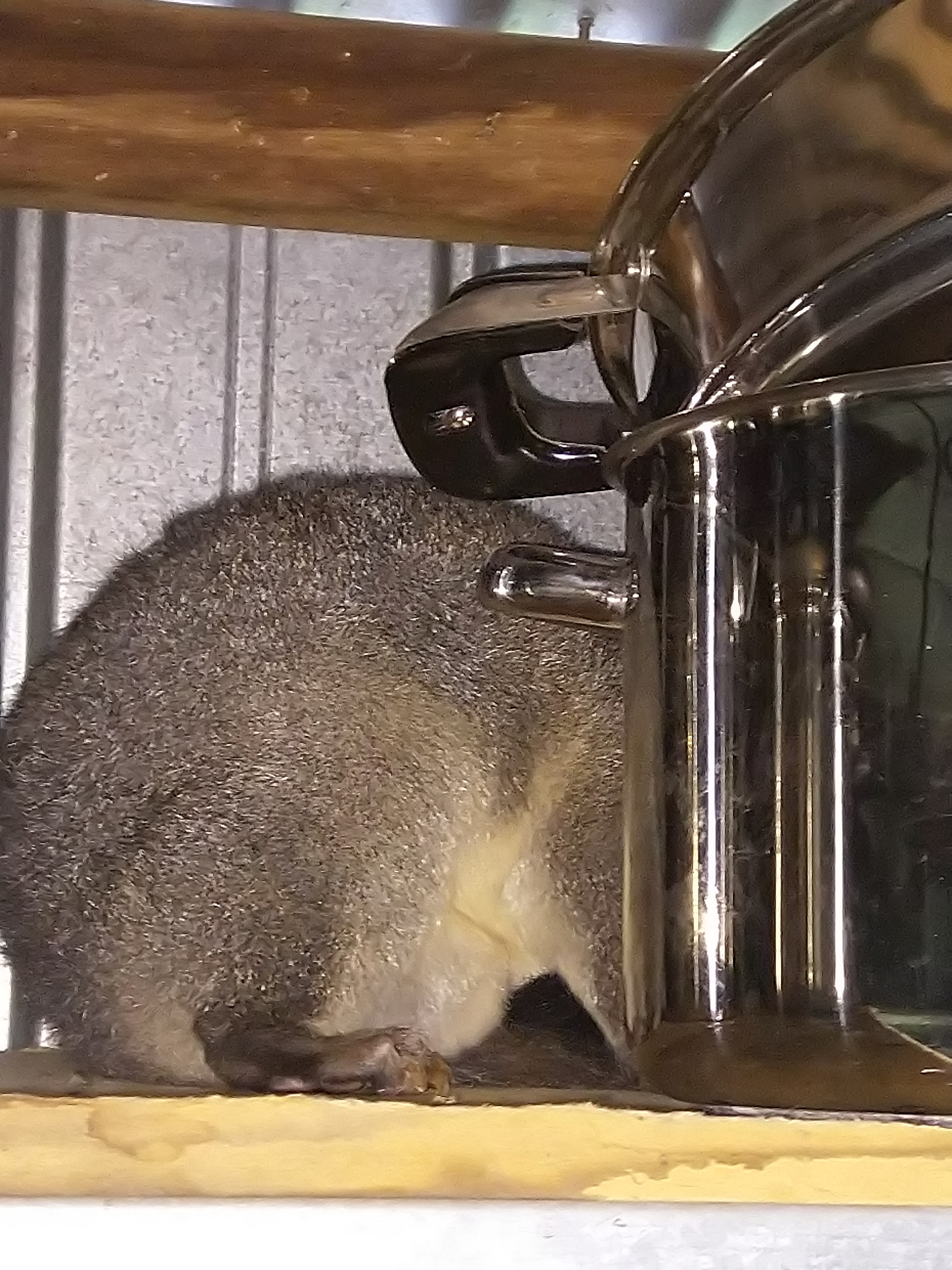
 My largest specimen (not full-sized by any means) grew buds last year, but these dried up on a particularly hot day. The specimen was later planted behind a retaining wall at the side of the house, and I’ve watched the buds develop eagerly. Then today, the first open flower!
 Hedgerow weaver