Basque-style spindle: Txoatile

I’ll start with an excusatory line: note that I’ve written Basque-style spindle. The ones I’ve made are an adapted design (more about that later) and made in Australia… ’nuff said.

I couldn’t actually find much information about the txoatile, but Google tells us “Txoatile” comes from Basque words “txori” (bird) and “artilea” (wool), reflecting its spinning motion.

I was intrigued by the shape and wondered if it had once been made from a bone. Why? Maybe in my mind I was connecting it with the dealgan. Nothing else to suggest bone or any other material. In The World of Spindles by Beatrix Nutz there’s a link to Museotik which has a couple of examples of txatila, both in wood (and interestingly with different spellings in Spanish) and both dating from the early 20th century.

I had tried to order one from overseas, but it didn’t arrive, so I gave up. That was a few years ago. I turned to the 3D printer and in particular a reel of wood-effect PLA. To my mind it doesn’t go near to looking like real wood, but it has its uses. The original was made following the design of the authentic spindles as closely as possibly; the drop-on-the-tiles test was a failure and it broke. The next model I made with an extension in the centre. It broke, too. More filling. That one survived. The extra filling naturally gave it extra strength.
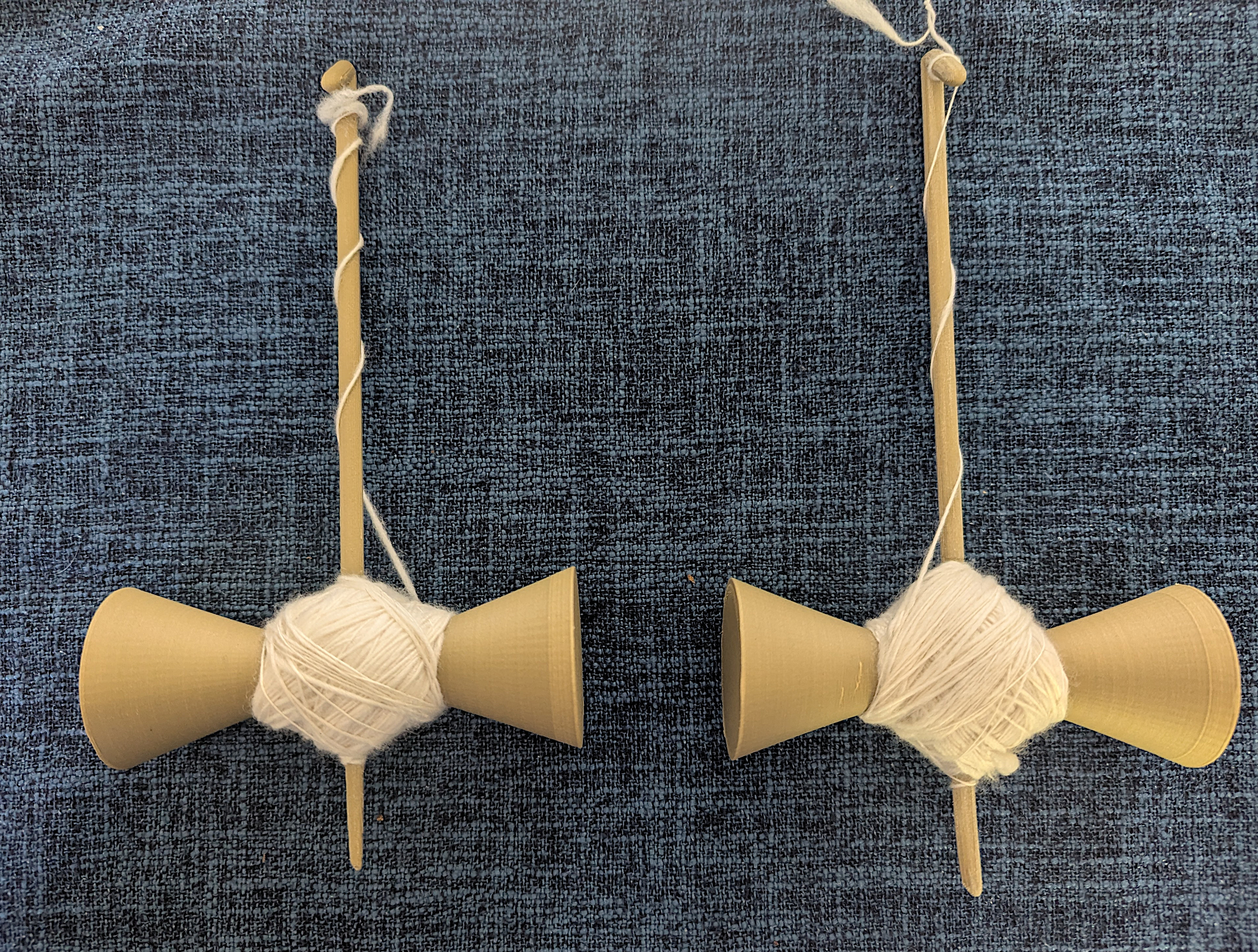
note the two different attempts at getting the shaft tip right – these aren’t for sale

What about the shaft, with the crook at the top? This took even more playing around with angles and thicknesses, and I have a bundle of “prototypes” which may well be used as garden pegs. Getting the width right so that it would sit snugly in the whorl, but also be able to be taken out took a lot of thinking. Also, with limited 3d-related IT skills, getting smooth sides on the shaft just wasn’t going to happen. Then my knuckles were catching on the crook, so the shaft needed lengthening – more fiddling around with the width.

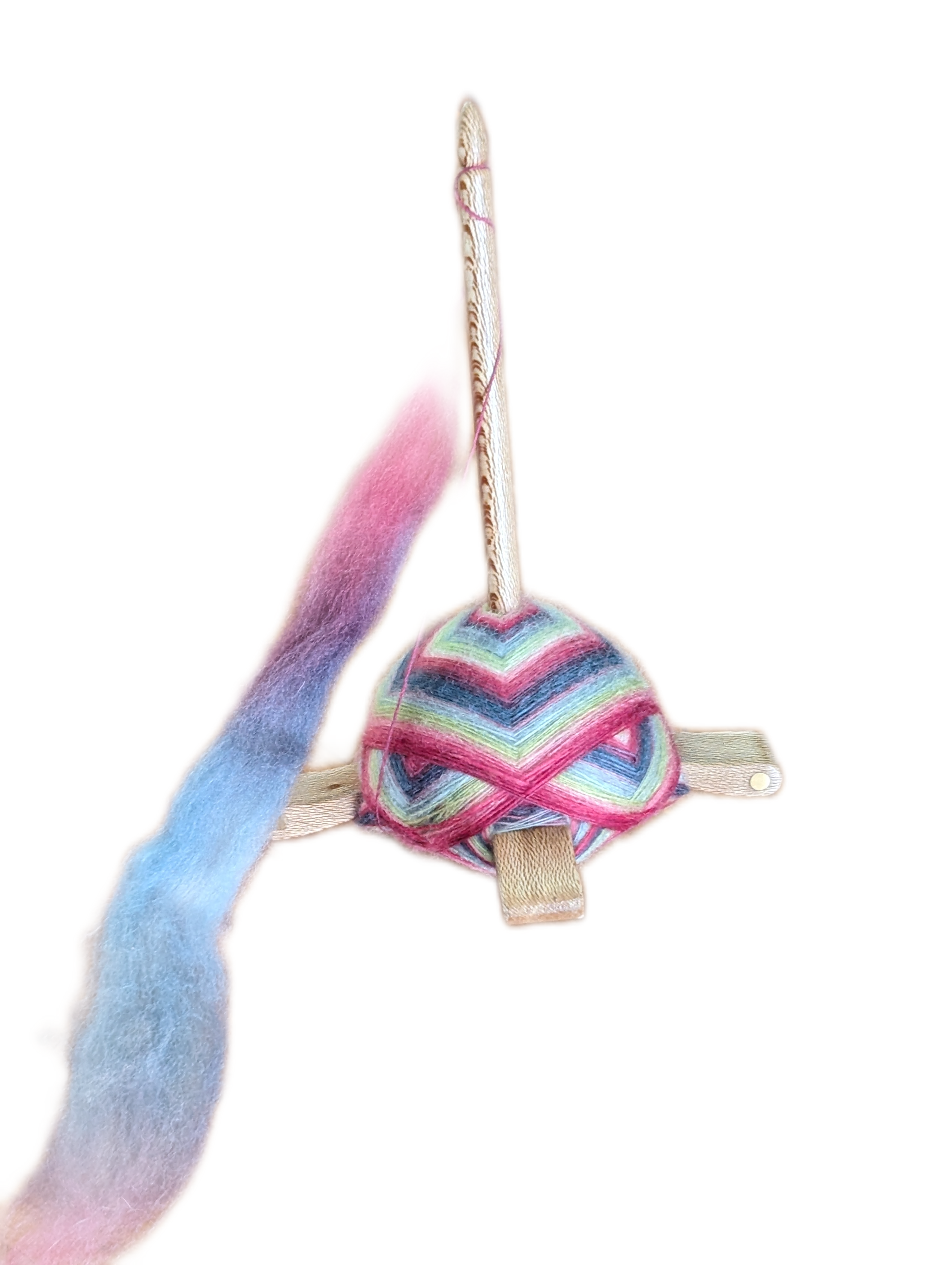
Finally, ones that are worthy of showing. Leaving it a little rough (if you start sanding the wood-effect PLA, you have to do it all over, then stain… too much unnecessary work) actually adds a touch of rustic, and it doesn’t affect usage. How about the spinning and winding on? There are a few YouTubes on this; I tried two different methods. The first was winding horizontally, the second winding up and down the shaft. If that sounds confusing, look at the photo and work from there. I find horizontal winding is quicker and without a fully-controlled experiment, I’m not sure if either method would allow for more wool on the whorl. Empty, they weigh around 53g, so I’m guessing you’d want to stop for comfort’s sake before they were entirely full.
And a couple more…

Can you ever have too many spindles? I guess it depends on whether you’re looking at it from the spinner’s point of view, or the onlooker. As for the former’s, they’re precision tools and one size does definitely not fit all.

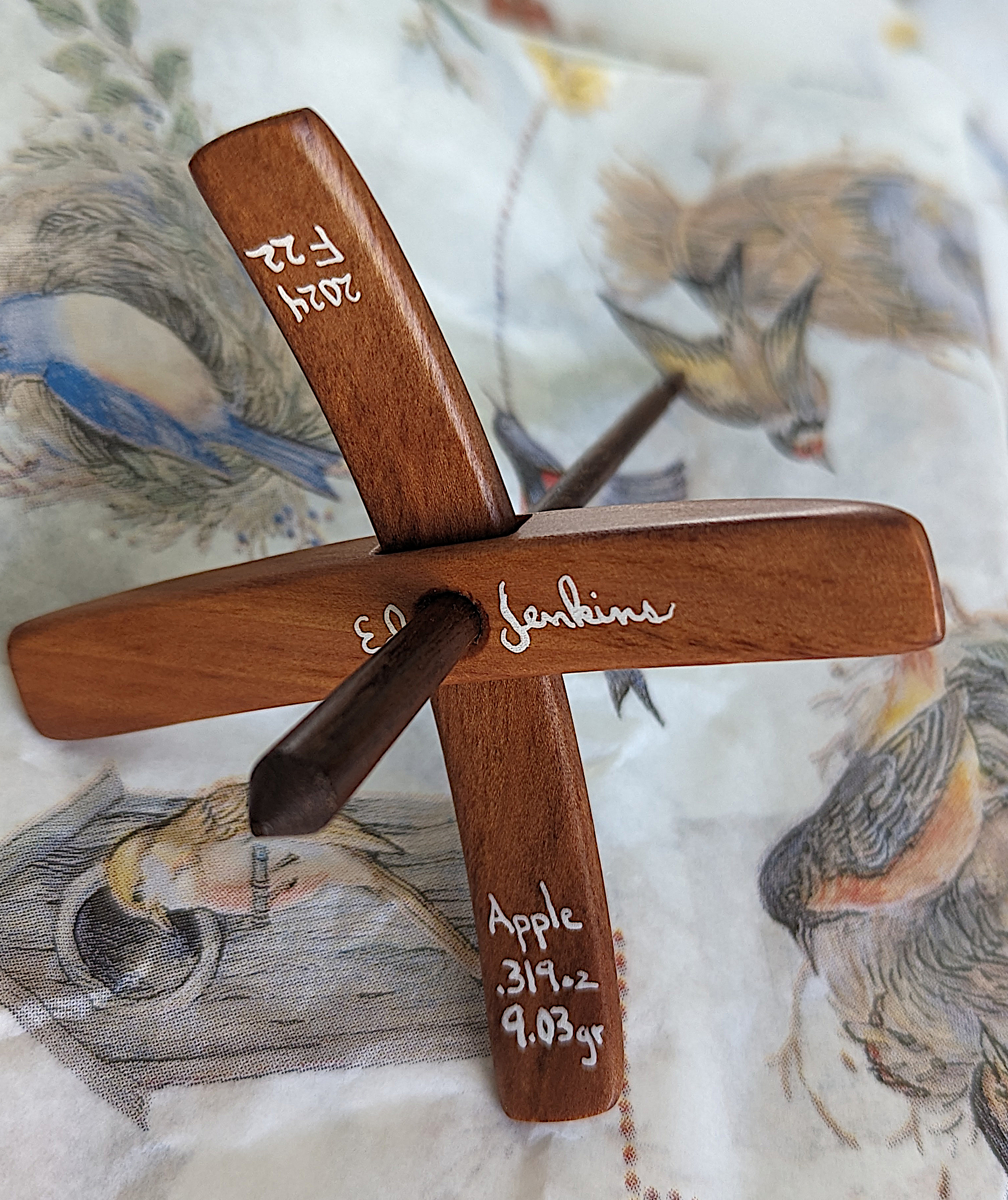
I decided to get a Jenkins’ spindle as I’ve admired these for many a year and have marvelled at the craftmanship when I’ve actually got to play with a fellow guildy’s purchase. Even though the postage wasn’t so high, the order was combined with a another guildy’s (word gets around quickly amongst the fibre-obsessed). This worked out perfectly, as mine came with a free sample of targhee in various shades of pink and green, while hers was blue. We swapped, although the colour wasn’t really that important considering I was happy to try a new sheep breed.

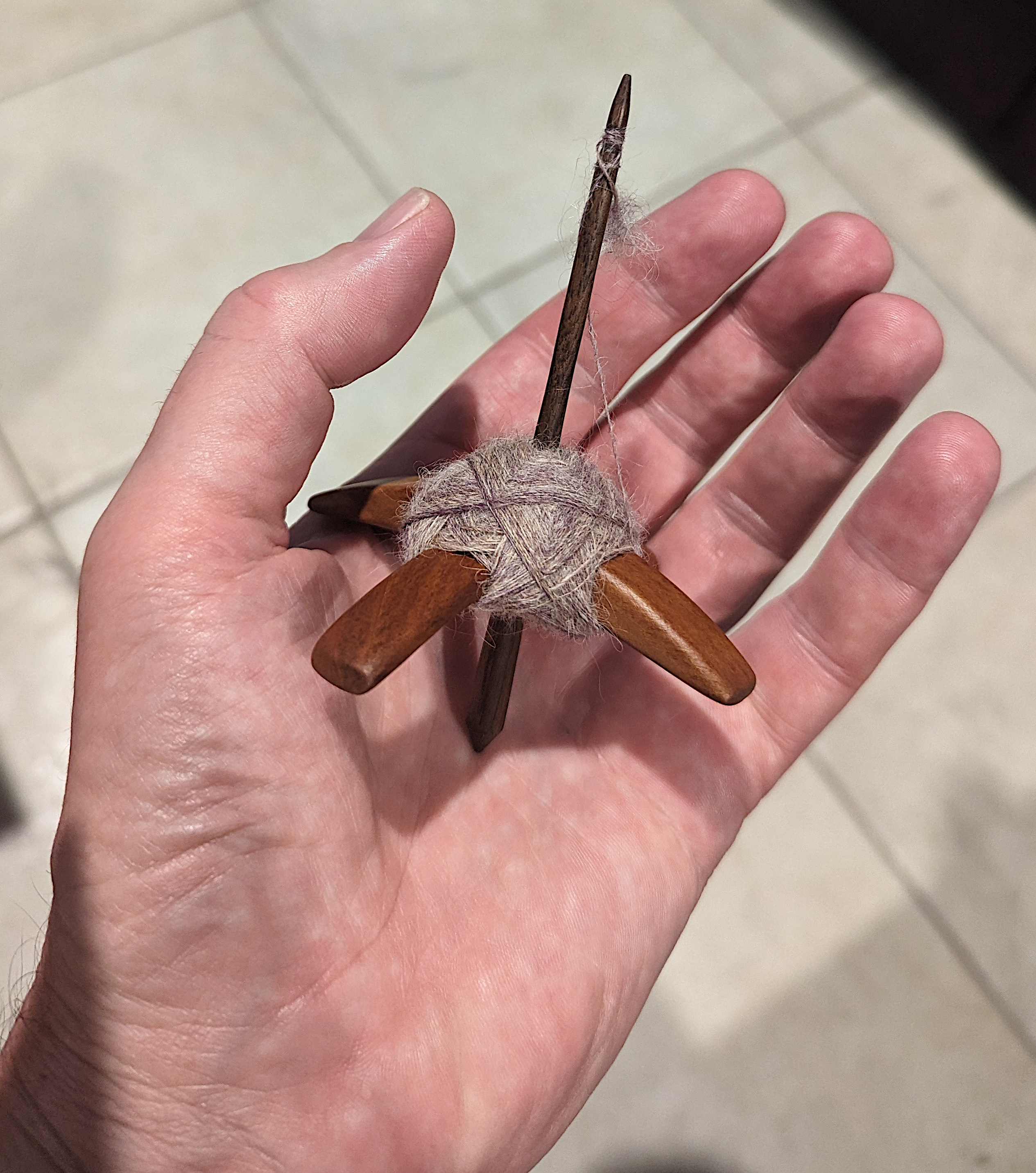
The spindles arrived well-protected and wrapped in bird-themed paper. It was just like opening a Christmas present. They’re real works of art – perfectly made and smooth to the touch. All the info is written on the underside. Naturally, I spent a lot of time admiring them and practise-spinning in my hand. So well-balanced and comfortable to use, even with my large paws.

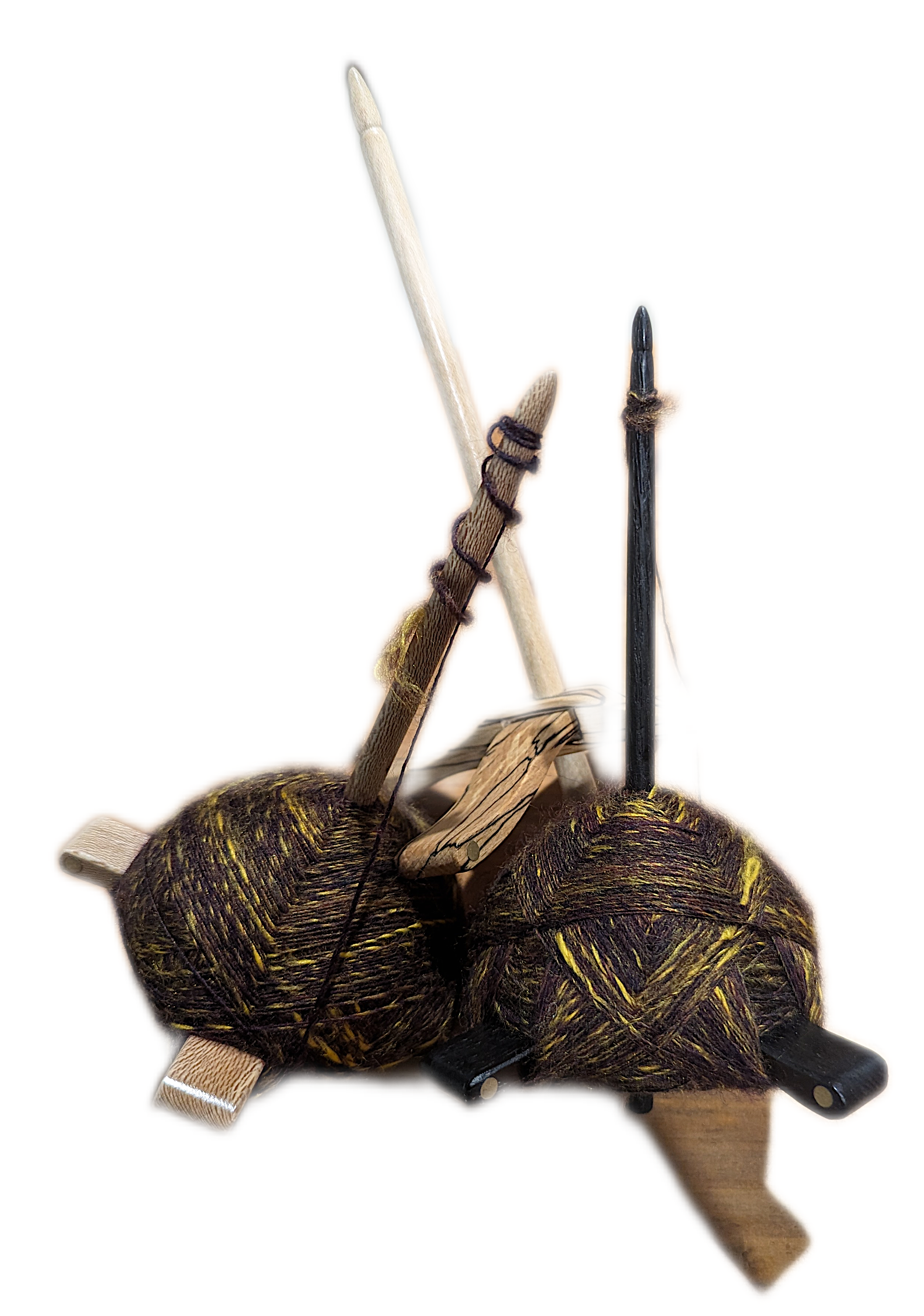
I’m now the proud owner of a Finch and a Wren… and yes, planning to purchase another …

Welsh onion powder

ciboule en poudre, Winterzwiebelpulver, cebolleta en polvo, Allium fistulosum

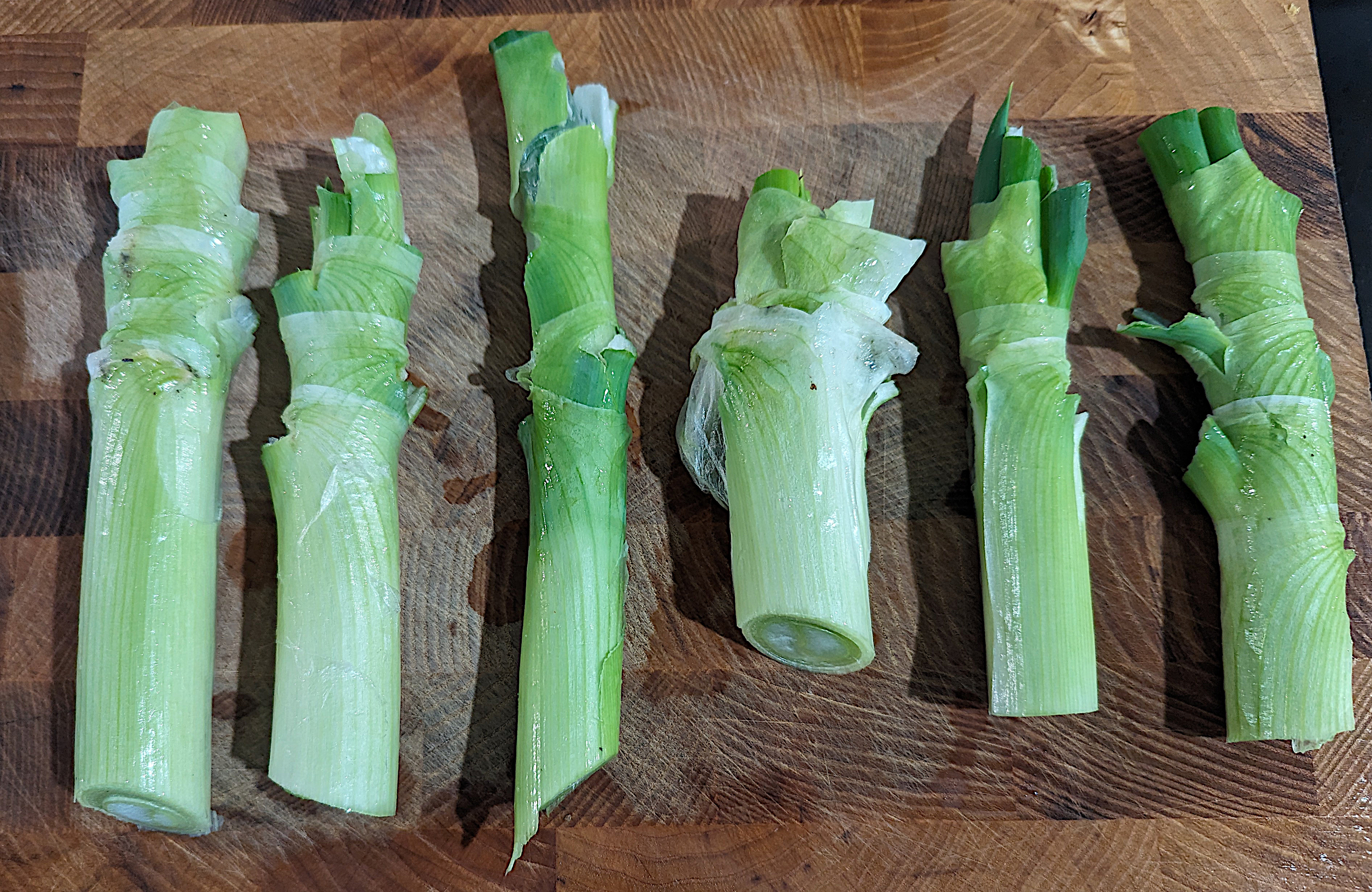
You can see from the photo of the onion stems just how big the plants had grown – too big to eat as they were. There were two choices: use them for stock, or dry and grind them. The latter it was.

The leaves were chopped into rings and dried in the dehydrator set at 50oC. How long did it take? I didn’t time it, but most of the day. The stems weren’t only thick as, but also very glutinous.

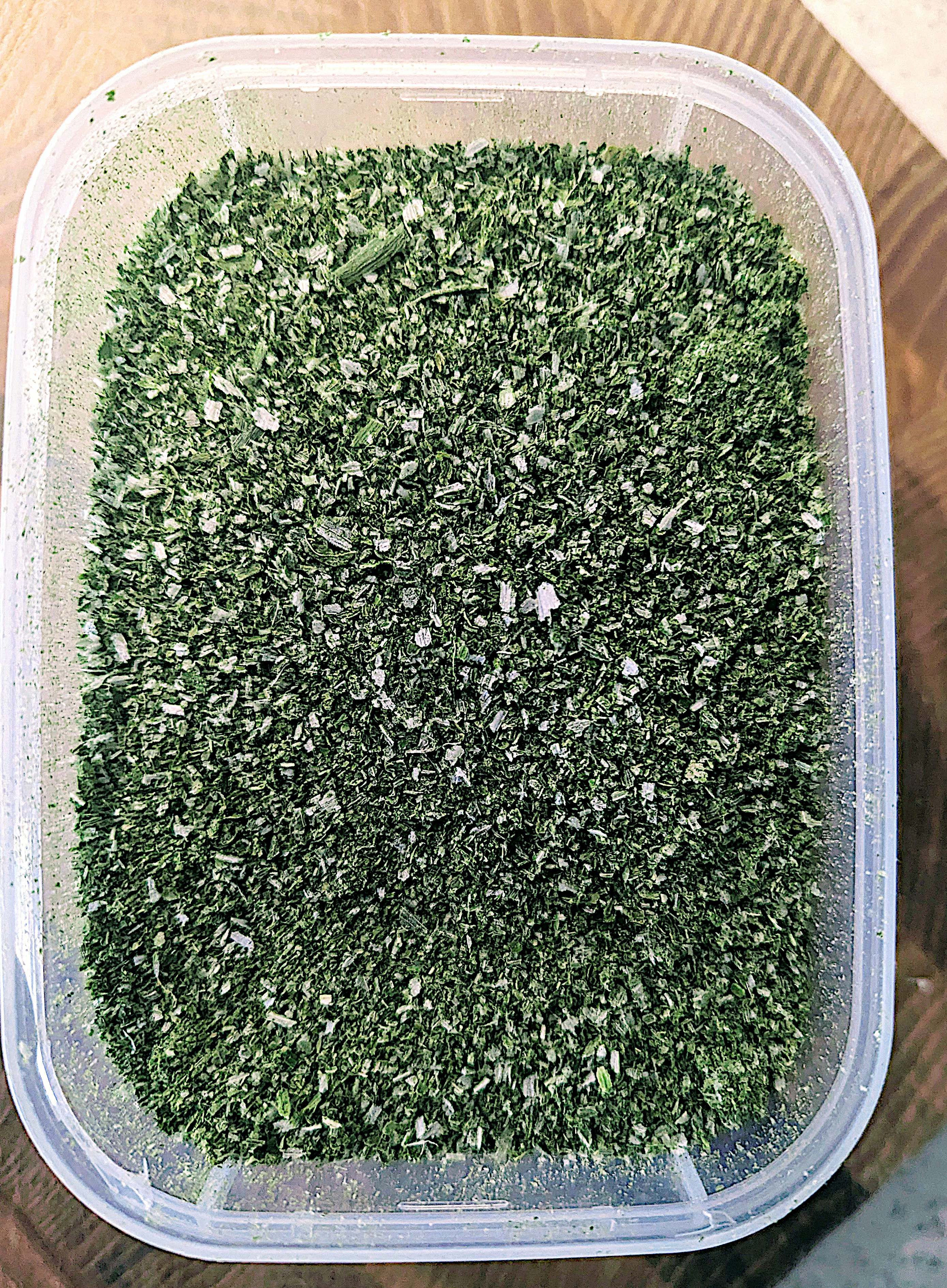
Once finished, they went into the blender and whizzed until ground. The powder is still good after a month or so of storage, and the smell is still quite pungent. Great for soups and stews, and also replacing the package full of salt and other things that comes with instant noodles.

I shall definitely be doing some more, as the bunch I cut back now doesn’t look as though it was trimmed in the first place. We grow ’em big ‘ere!

Turkish spindles

I’ve been using my Turkish spindles a lot lately, more so than the other types in my collection. My IST spindles are in the following woods: London Plane, Bog Oak and Spalted Beech. But why these choices?

I’m a Londoner. London Plane trees are everywhere in the capital – lining the streets and spreading out in the parks, nudging branches with red and white horse chestnuts. As a schoolchild, I would wander home in the autumn and early winter, scrunching through the fallen leaves on the pavement. I can still remember the smell and was reminded of that when I was in Dublin in 2018, where their autumn had come a little earlier than in Sussex. Do children (and adults) still play with itchy balls? Hopefully everyone’s learnt how itchy these things can be and are kinder to their friends. If you don’t know what an itchy ball is, it’s the dried fruit of the plane. When it’s broken open, the hairy seeds can cause quite an irritation when plopped down someone’s back. Not nice and potentially dangerous.

I had a moment of nostalgia when I was walking along North Terrace, Adelaide, and a plane leaf dropped from it’s twig, and drifted down to the pavement in the most poetic fashion, gliding here and there, twisting, turning, floating upwards and then downwards again. Autumn, and an image of Winnie the Pooh coming to mind.

So that leads on to oak, the national tree of England. The sight of one of these trees spreading its boughs un-nudged in a field is symbolic of the English countryside. The smell of rotting oak leaves also reminds me of my childhood, walking home from school through the “squirrel park” where the “parky” used to spend all his time clearing up the fallen leaves with a besom, then carting them off in his wheelbarrow to a humongous compost pile. The smell was strangely sweet/herbal and one that I’m never likely to forget. The spindles are actually made from bog oak – 4,000 year-old oak from the fens. As a history buff, this adds heaps to their appeal.

And beech… Have you ever walked past or through a beech grove in the cooler months, where the unmistakable copper glow of the carpet of fallen leaves contrasts perfectly with the smooth, silver-grey trunks? In summer, the leaves provide a cooling shade from the sun, with their lighter undersides adding an individually mysterious shimmer. There I go a-waxing lyrical… I remember being taught how to eat beech nuts by my Mum, who no doubt hadn’t savoured them since her childhood. We were at Farthing Downs, south of Croydon, where we so often used to take our dog Penny for a walk. The beech trees were at the top of the road, where it became a footpath, and stood proudly at the entrance to some fascinating woodland.

OK, so that’s how I choose my spindles! What makes IST Turkish spindles unique is the shape of the arms and also the brass weights, giving them more spin. The overall design is unique to craftsman Ian Tait. Note that my blog is non-commercial, and that any recommendation of a product or supplier is simply that.

The Green Man

L’homme vert, der grüner Mann, el hombre verde, an fear glas

I came across this natural moss portrait along the Sturt River / Warriparri in Coro this week – the Green Man enjoying watching the world go by from the trunk of an ash tree on the bank of the creek. The child in me is always seeing faces and characters, human and otherwise, in tree trunks and rocks, and this was a wonderful encounter, especially at this time of year.

The ash (and willows, etc.) are non-native and considered weed species here, but I still love seeing them everywhere. The smell of the greenery and the water (when the creek hasn’t dried out for the summer) brings back memories of summer in England. There’s often a heron to be seen, as well as families of ducks and all sorts of plants. The local council has just extended the linear path even further and has provided picnic tables along the way. It’s a great place for walking doggy.

There’s some more info on the Green Man as well as an interesting poem about him on this website.

Friend or foe?

Ami ou ennemi? Freund oder Feind? ¿Amigo o enemigo? Cara nó namhaid?

The kaka beak (Clianths puniceus) flowered even more impressively this year, to the point where I wasn’t so much wow-ing the display, rather thinking that this was what had been expected all along. Impressive nonetheless. As usual, after the flowers came the signs of chewed leaves, only this time the culprits were to be seen…

I haven’t been able to identify them yet, but I think they’re moth larvae, maybe the peppered moth. With some species I turn to biological control, if they happen to be a non-native species, but with these something told me that they might actually be useful.

I’ve planted a couple of seedlings of New Guinea bean – Lagenaria siceraria – and have previously noticed the flowers open at night. Pollinated by moths? The larvae have since disappeared, and as they were so well camouflaged, I’m hoping that it was because they moved on to their next stage of development.

Clianthus puniceus

Kaka beak, Kōwhai Ngutu-kākā, Papageienschnabel

It must’ve been over fifteen years ago that I bought a packet each of red and white kaka beak seeds from New Zealand (legally and through the post). This was after only one successful attempt at growing our native Sturt’s desert pea. I had it in my head that kaka beak needed to be sown in autumn, and so two or three years in a row I sowed a pot of each colour, saw a few grow, some even to their first pair of true leaves, then cark it.

A few years ago I came across the remaining seeds, and repeated the experiment, this time checking with a supplier on the optimum sowing time. Seems they can be planted for most of the year. The first re-attempt came to nought, but out of the second attempt I ended up with four plants of the red. None of the white ones came up, but I might try again, considering the viability of the red seeds. How could I tell them apart? The red-flowering ones are black, and the white-flowering ones a pale brown.

ClianthusMy largest specimen (not full-sized by any means) grew buds last year, but these dried up on a particularly hot day. The specimen was later planted behind a retaining wall at the side of the house, and I’ve watched the buds develop eagerly. Then today, the first open flower!

I guess there are some people, particularly “across the ditch”, laughing at this great achievement. Well, I still get a kick any time seeds germinate. Always have done. Always will. And now one’s flowering.

Back to the plant per se, it seems that it is critically endangered in the wild and restricted to one location. Thankfully it’s not so rare in cultivation.


Noch a bisle mehr entdeckt…

(English version below)

Habe ich das Buch vor einer Woche auf Google Books gefunden. Es wurde in Fraktur gedruckt. Der Autor hieß Joseph Mollenhauer: praktisch gelerneter Färber zu Fuld. Und das Titel: Praktischer und sehr anwendbarer Waid und Schoenfaerber zum Gebrauch für Wertmesiter und Liebhaber.

Die Vorrede beginnt so: Da ich wegen politischer Verfassung des Staates meine praktische Kentniße nicht weiter benutzen kann noch darf; so bin von vielen Freunden aufgefordert worden, diese meine Färbkenntniße gemeinnützig zu machen.

Ich habe noch nichts um die politische Verfassung zu dieser Zeit in Hesse herasugefunden. Trotzdem wird das Buch mir immer mehr interessant. Kann es das Original sein, oder eine Kopie?

Vor der Vorrede wird geschrieben  – und es scheint in zwei Shriftarten zusammen – Dieses färbbuch gefördert (?) mir Johann Henrich Marx… November 1806. Die Vorrede wurde aber am 30 April 1801 geschrieben. Vielleicht wurde denn diese Inschrift vom Verwandten geschrieben? So viele Fragen, die ohne Zeitmaschine nicht werden beantwortet können..

A little more uncovered…

I was able to find a printed copy of the work on Google Books, written in Fraktur – a lot easier to understand! It was written in 1801 by Joseph Mollenhauer: experienced dyer at Fuld, and titled Practical woad and beautiful colours for the use of professionals and enthusiasts. I’m still deciding on the best translation, so don’t quote me on that for the time being.

So, was this the original, or a handwritten copy? Just before the introduction there is a page that states This book was …. to me by Johann Henrich Marx… November 1806. This inscription seems to be written in two different scripts, and with the word for “this” – dieses – looking more like vinfub, you can understand the difficulty in trying to decipher it. What is clear is that the introduction was written on 30th April, 1801.

The author begins his introduction, Because I can’t practise my craft any longer due to the State constitution, many friends have asked me to pass on my dyeing knowledge. I haven’t yet been able to find out what the constitutional thingamajig was, but have been wondering why my BA couldn’t have included being thrown such a work and being told to go and research it…

Wenn man/frau Kurrent lesen kann…

(English version below…)

Einer Mitgliederin unseres Bundes wurde dieses Buch von ihrem Großvater gegeben. Das Buch wurde 1801-1806 im Schwarzwald geschrieben, wo ihre Verwandte beim Marxfabrik in Lambrecht arbeitete. Es liegt jetzt im Lutheranischen Arkiv hier in Adelaide. Ein Faksimile bleibt mit dem Handspinners and Weavers Guild SA. Das Foto wird mit Genehmigung kopiert.

clone tag: -1709877823551749639Am Anfang des Buches steht das Alphabet in normaler Handschrift. Auf der nächsten Seite steht das Aphabet in Kurrentschrift. Ein sehr deutiger Schlüssel, aber trotzdem ist die Schrift sehr schwer zu lesen.

Das nächste Projekt besteht darauf, das Buch in moderne Schrift (sowie auch auf Englisch) übersetzen und drucken zu lassen.

Es war echt eine Vergnügen, solch einen historischen Schatz anzuschauen.

Dyeing, social history and languages all in one! It was such a pleasure to view this book, written in 1801-1806 in the Black Forest, where the author worked at the Marx wool factory. The handwriting alone is something to marvel at, even though it is difficult to read. Whilst studying in Germany, I was given a photocopy (from and English text!) of 1940’s Gothic alphabet to help me read official documents of that period. I have to say that Gothic script is a lot easier to understand than Kurrent! At the front of the book there is a page with the alphabet in regular handwriting, and on the opposite side the alphabet in Kurrent. Still difficult to read!

The book was given to a member of the HSWG SA by her grandfather, who inherited it from his relatives. The original has been kindly donated to the Lutheran Archive in Adelaide, whist a facsimile has been donated to the Guild.

It would be wonderful to find a way of transcribing and translating the book, and perhaps even getting it printed.