Aluminium acetate
This was the first time I’d used aluminium acetate as a mordant. My attempt to use aluminium sulphate and washing soda wasn’t a success, so on to the smelly stuff…
There was plenty of dyestuff to harvest as the Tagetes minuta had grown abundant; not bushy, but taller than ever, to around three metres. This allowed for a double experiment on cotton and wool, as well as yielding plenty to dry for later use.
Some sources state that aluminium acetate on cellulose only needs a temperature of 55oC to work, but I decided to follow the directions in Jenny Dean’s Wild Colour: to simmer a 5% WoF solution for an hour, then leave overnight before rinsing well. The dyestuff was simmered for about 45 mins., then strained and the cotton yarn added. I wasn’t too concerned with exact weights when it came to the plant material – that’s for another time.
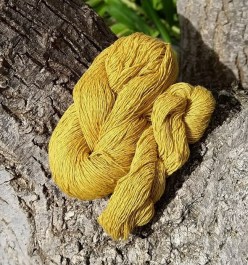 The yarn was left to cool in the liquor overnight, then rinsed well. A smaller sample was cut off and washed in cheap washing-up liquid. Although some colour came out in the water, there is no difference in the two samples to the naked eye. An unmordanted sample of cotton was added to the original dyebath, but came out the palest yellow (the sample has since vanished…).
Next came the tencel: 20/2. Why 20/2? Because I was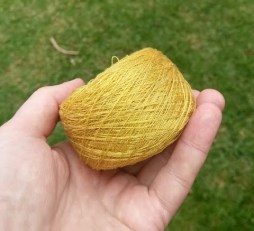 put off a while ago by weaving with hand-dyed (fibre reactive) 10/2 that broke a few times. I intend to use it in the future, but in the meantime it’ll be used for dye experiments while I save the 8/2 for weaving for weaving’s sake. The shade obtained was lighter than the cotton; I thought that it may have come out deeper, considering how well tencel takes up fibre reactive dyes, then was reminded that a another experiment gave cotton and tencel an equal footing in this respect.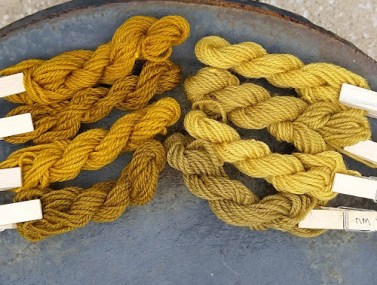
As the previous experiment on wool was basic, I decided to extend the game. The examples show how the alum/CoT mordant (left) brings out the deeper shades. Top-to-bottom: an alkaline modifier darkens them, acid lightens them and iron “saddens” them – classic textbook stuff.
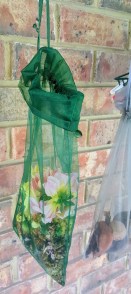 a good half-dozen.
 , they too can go into a wine bag. This is only practical in summer, where they can dry within a day; in winter the tree dahlia heads go mouldy when piled into a bag.
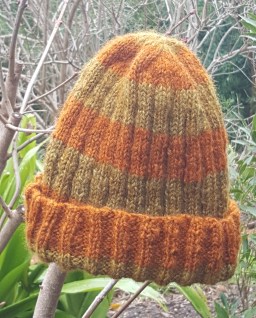 Someone pointed out that this could very well be the colours of a hitherto-unknown footie team. Better not wear it down the Port, then. Or to a quidditch match.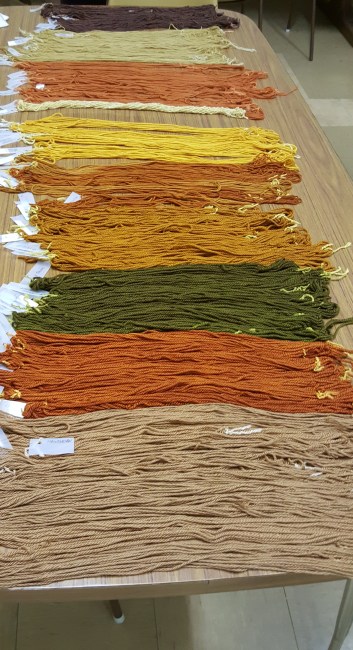

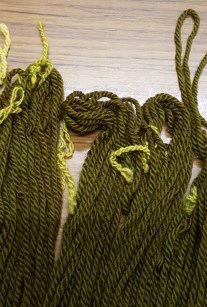 when we dipped half (or more) of the skein back in the liquor with bicarb added, well, even better.
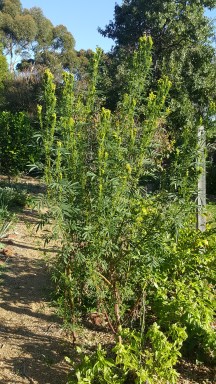 Tagetes minuta, aka Peruvian mint, huacatay, stinking Roger… and a noxious weed in many parts of the world. It does however have some interesting uses: seasoning, herbal tea, medicine, garden stake and dye.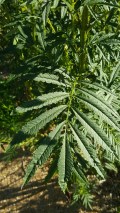
 nmordanted & dyed with 400% wof dried tops, 3 + 4) 50:50 alum-CoT to 15% wof, dyed with 200% fresh tops and 200% dried tops respectively. Once cool, they were washed with soap nuts; there was no noticeable colour loss. You can see that the yarn used to tie the skeins took on more colour.
 Hedgerow weaver