Juglans regia et Juglans nigra, getrocknete echte Walnüsse u. frische Schwarznüsse, nogales secos y nogales negros frescos, gallchnónna triomaithe is gallchnónna dubh úr

We came across a couple of nut trees whilst out walking doggie, and I (mis-)took them to be pecans. Why? We have not so far away a huge pecan that I had (mis-)taken for an ash. Confused? Well, I’d only ever seen one pecan tree, in the Adelaide Botanic Gardens and hadn’t really retained an image of its leaves. The aforementioned pecan tree nearby is however a real specimen – tall and spreading and grand. Just like a large ash, but different. Back to the nut trees… looking at the fruits I’d managed to collect, they were clearly a different shape to pecans, and when I cut them open, that confirmed what they were. They were left in a bag for a few days and started to go mouldy, but were still full of potential. All three went into the dyepot at once and produced some beautiful, deep shades. One fruit would probably have been ample for the small amount of yarn, but it was only an experiment (this time).
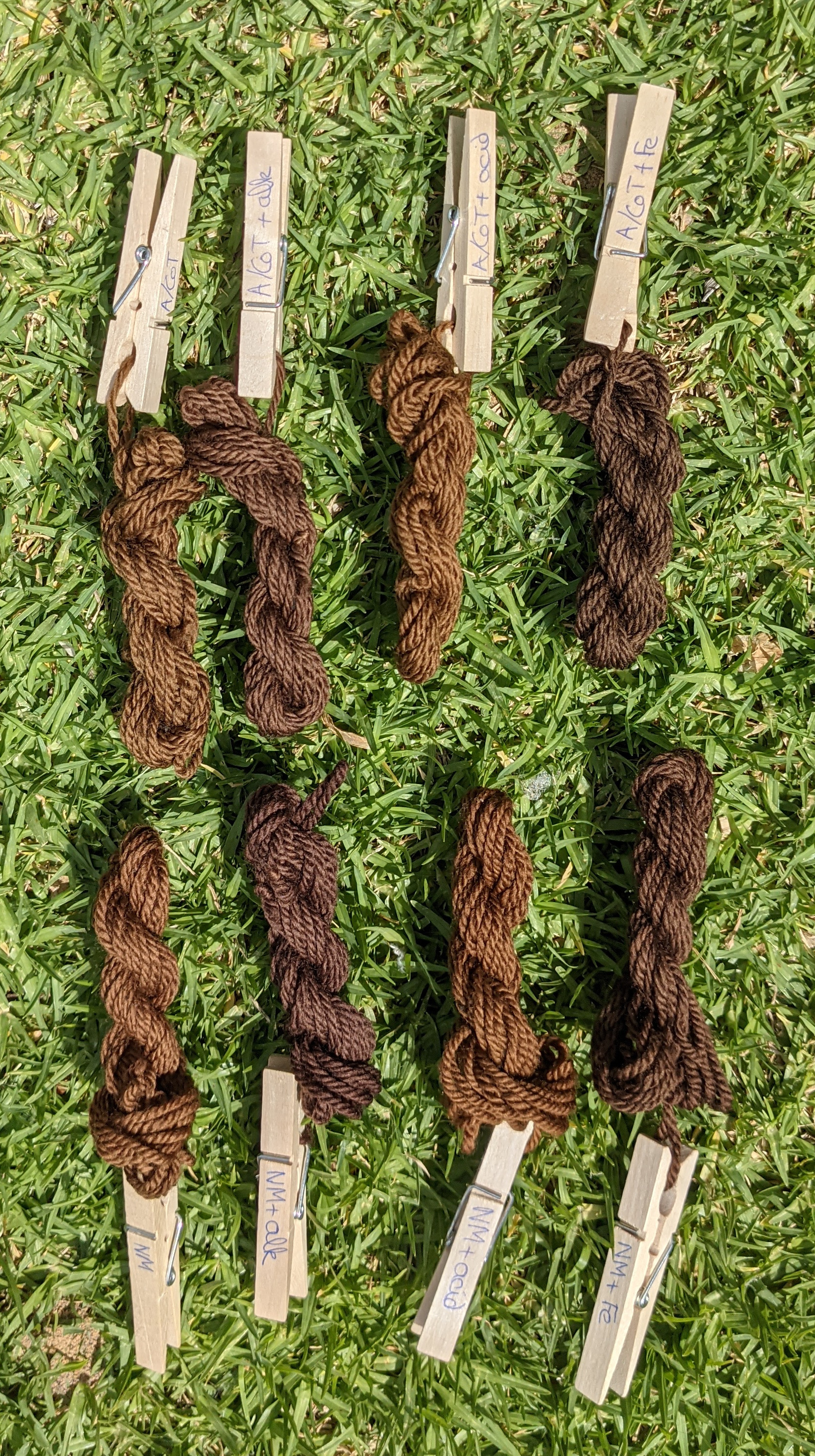
These colours reminded me of a previous experiment with J. regia leaves: rich browns and deeper shades on the unmordanted yarn.
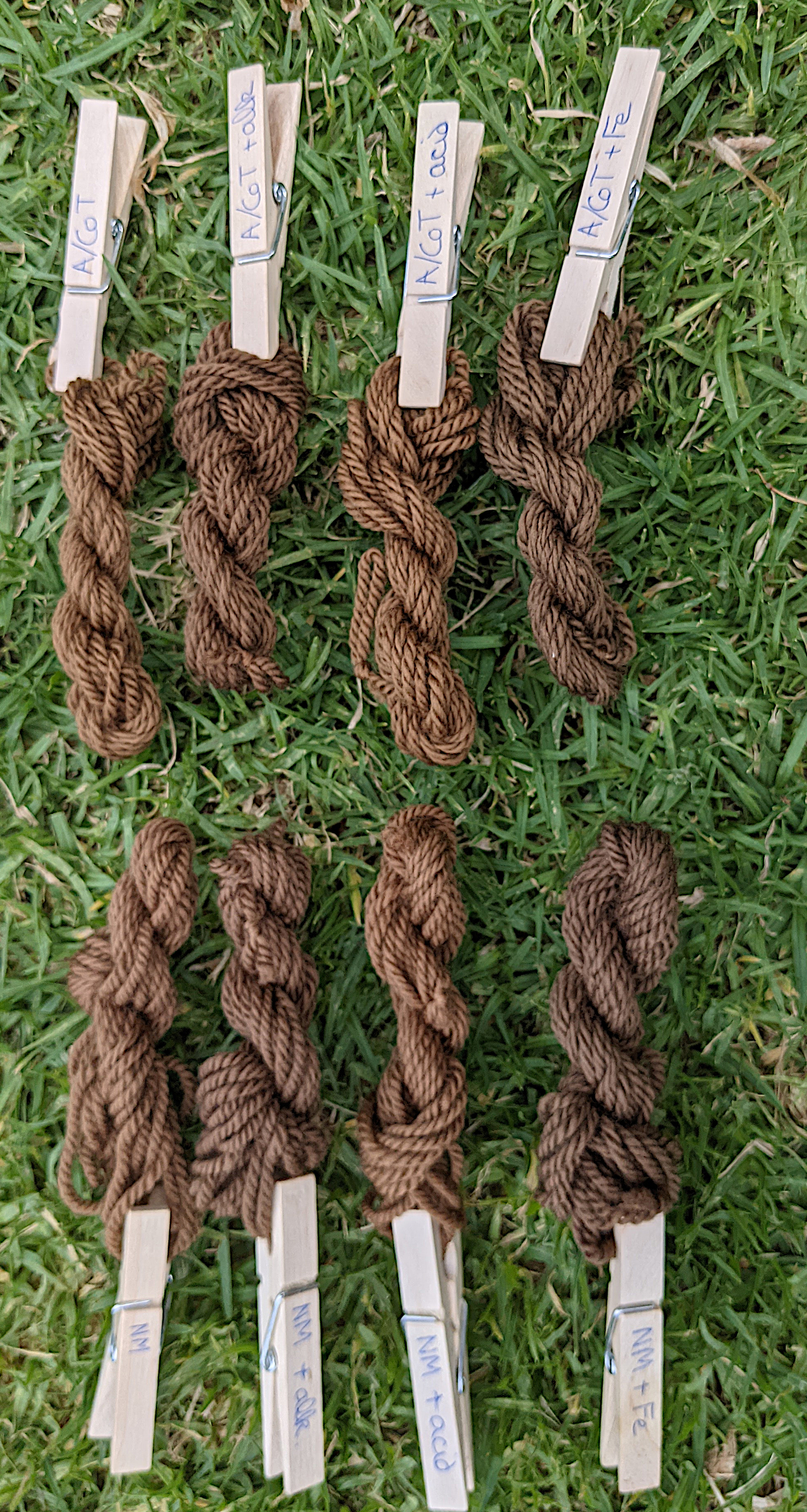
The next dyepot involved some dried English walnuts that has fallen from the tree prematurely last summer, or maybe the summer before, or the one before that. Whichever, it was in much hotter weather. The fruits were still whole, but dried and had not grown to full size. Four or five of them were thrown in to soak for a few days, then boiled for a bit before the yarn was added to simmer (the colour of the liquour suggested it was ready).
A different range of shades, and different again to the earlier experiment with leaves. Worth repeating, but I’ll be wanting to try some fresh J. regia next year.


 (bicarb) brought out more brown, whereas the acid (vinegar) brought out a redder tone.
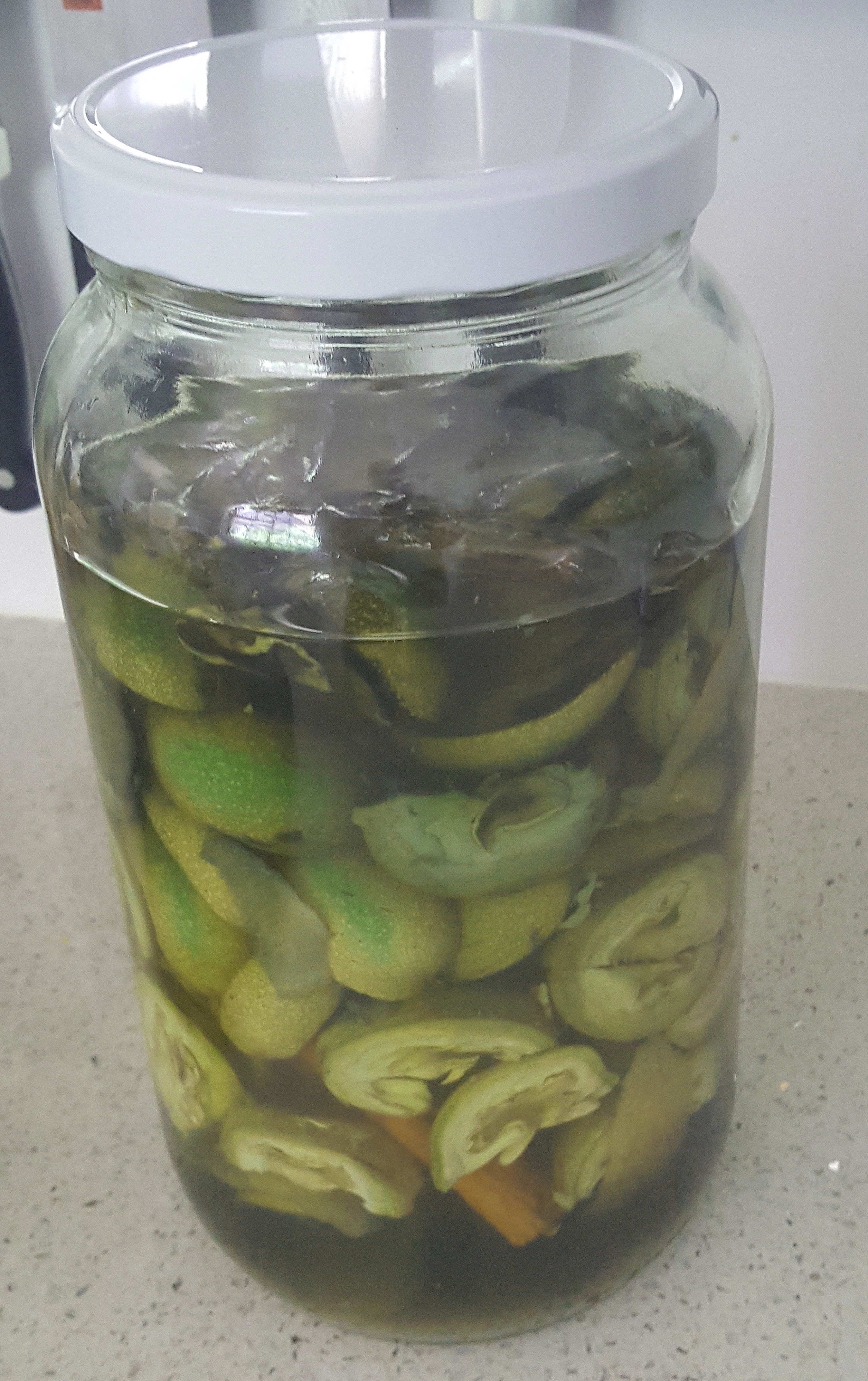
 After coming across some walnut trees a few years ago, I decided to try pickling the unripe fruits, then discovered a recipe for nocino. The fruits are cut up, then steeped in vodka, sugar, lemon zest and spices for a month. It only takes a few days for the mixture to start turning black, which got me thinking; if the walnuts can stain anything in sight (hands, chopping boards, counter-tops, etc), maybe they can also dye yarn?
 e smell was like Christmas cake from the start of the process to the very end, and one year later the yarn still smells yummy. I might try making something with it if I can bear to stop smelling it.
 Hedgerow weaver