Levisticum officinale, livèche, Liebstöckel, apio de monte, luáiste
Lovage… I first grew this in London and was happy that it grew so easily from seed, then reached a height of about 7 feet. I can’t remember using it in its first year, and then moved away from home. But it grew, and grew well.
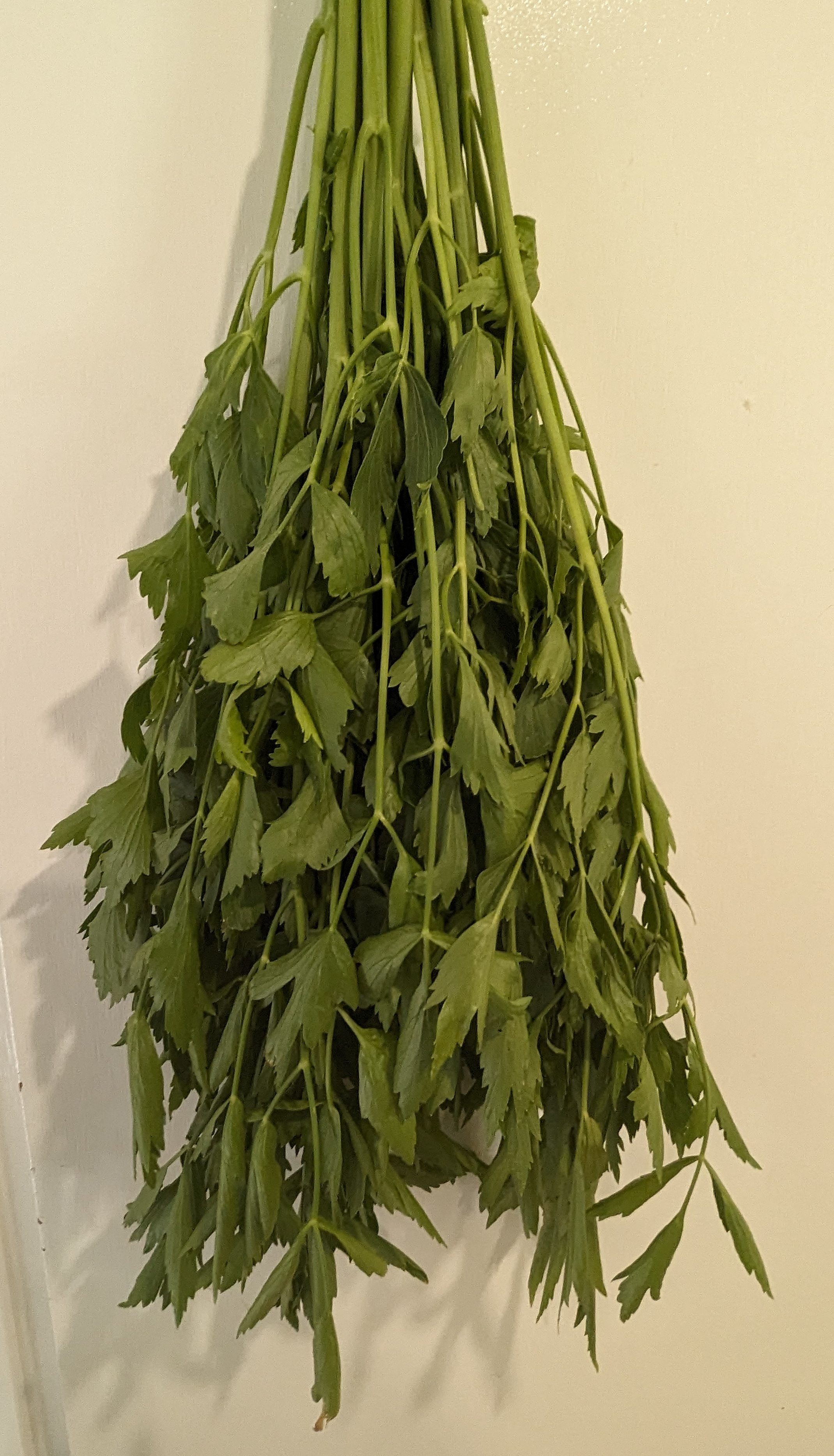
Years later, I bought a plant in Adelaide and expected it to do equally well. It grew, but barely touched 45cm (I’m more metric these days), and this seemed to be the same for another lovage lover I know. . Hmm… I persisted, and my current plant (or group of plants, more likely) has grown to about 60cm with flowering spikes up to 1.80m and provided a fair harvest of both leaves and seeds in its third year. It’s also in a part of the garden where herbs do unsurprisingly well. Rocky soil, slightly moist and afternoon sun.

So what did I do with the harvest? Dried it. Have a look at this YouTube. Meka dries the leaves in the oven, then grinds to a powder in the blender. Easy! When I first tried drying the leaves naturally, they turned an unappetising shade of khaki. It’s still summer here, so I tried another bunch, this time grinding them when they were crisp.
Success! The powder is an attractive shade of lime (better than in the photo), like Meka’s, and extremely aromatic. I’ve used it once already, and should have enough to last until next season.
What does it taste like? If you’ve never fondled this herb before, the pungent aroma of celery is the giveaway. Strong celery. I find that some of the strength dissipates with cooking, but it’s still one to use in moderation until your experiments result in the right amount.
What’s next on the list? Spring onion greens…
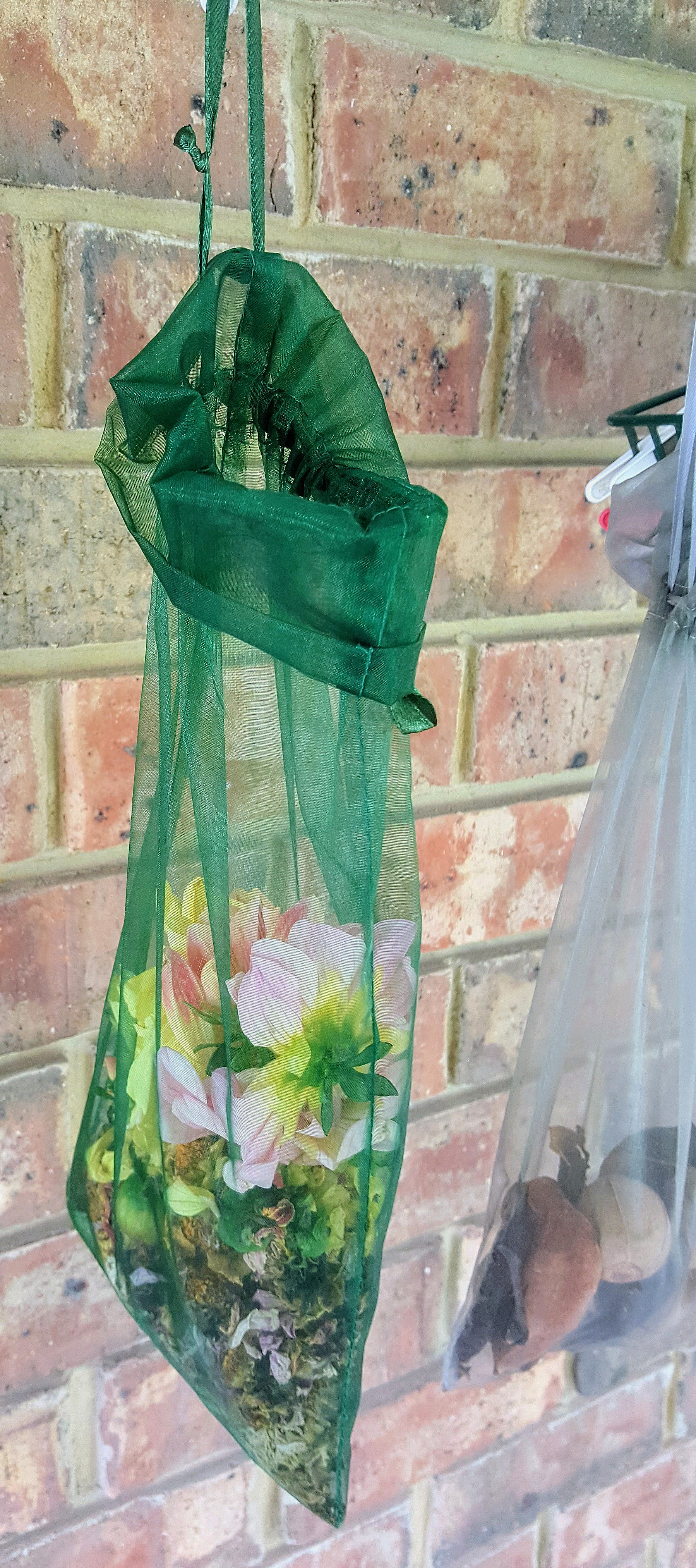 a good half-dozen.
 , they too can go into a wine bag. This is only practical in summer, where they can dry within a day; in winter the tree dahlia heads go mouldy when piled into a bag.
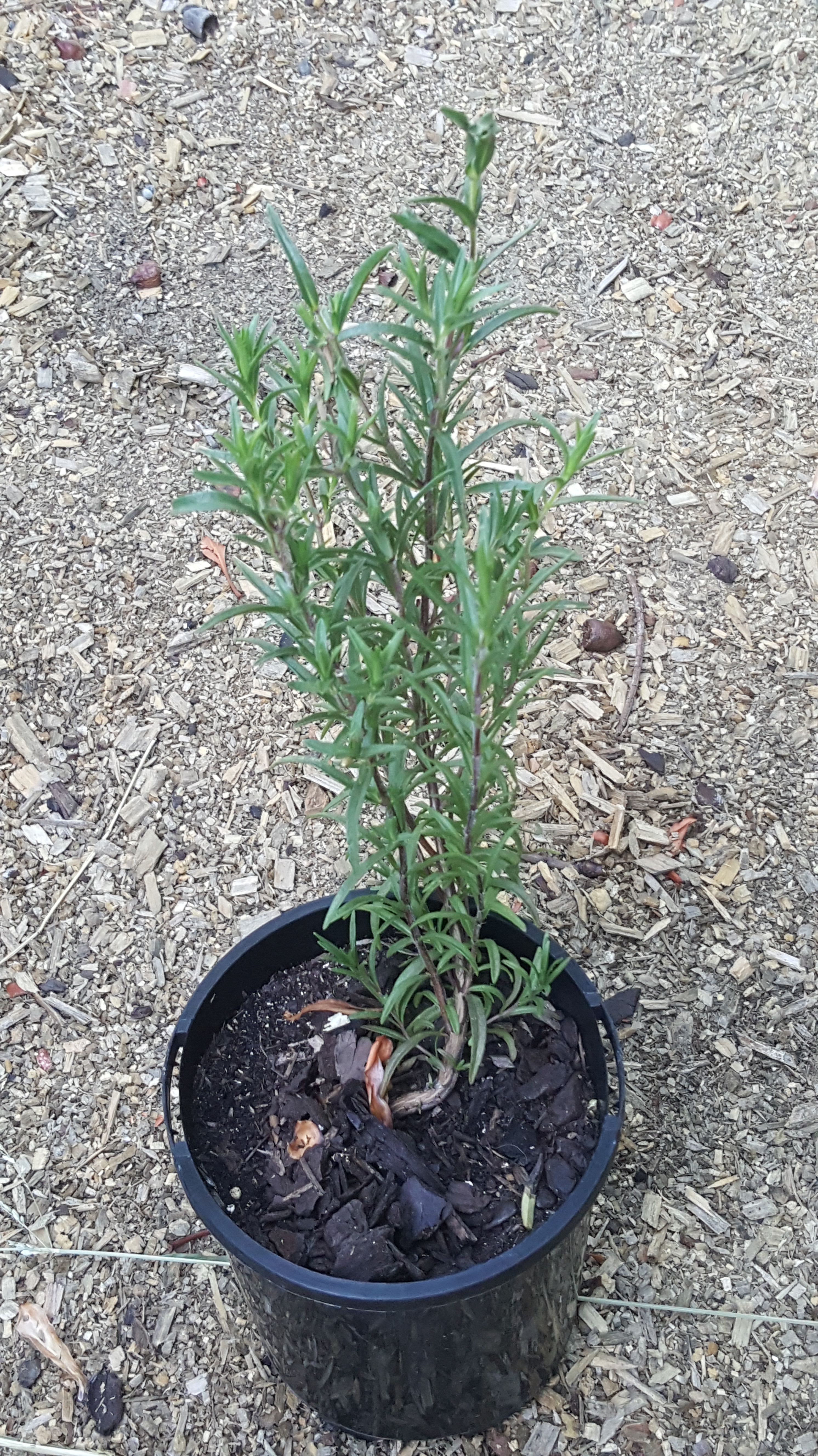 I originally came across this plant in Rodale’s Illustrated Encyclopedia of Herbs many moons ago, and after the internet took off, started searching for it high and low. I was very kindly sent a small cutting by an interstate nursery with an order, but one day of typical Adelaide summer weather put pay to that. Then a couple of years ago, I was able to order a couple of packets of seeds from a US nursery. This was after waiting for
 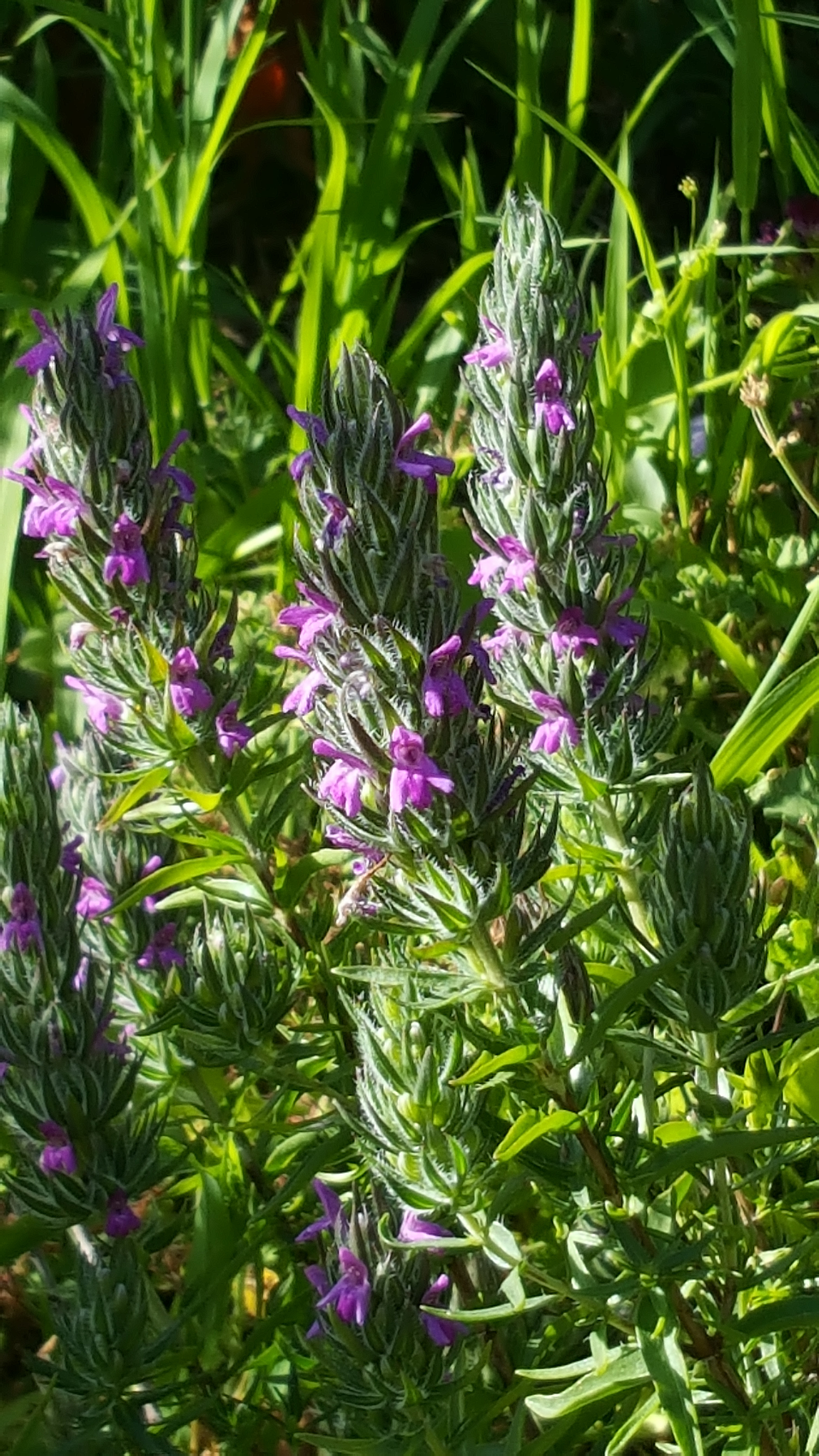 , but it produced enough seeds for me to grow a second run this year (which was good as I’d misplaced the packets). This time I thought more about the conditions it would need: a plant from mountains in the Mediterranean and Middle East… The seeds were sown on top of potting compost with a thin covering of vermiculite.
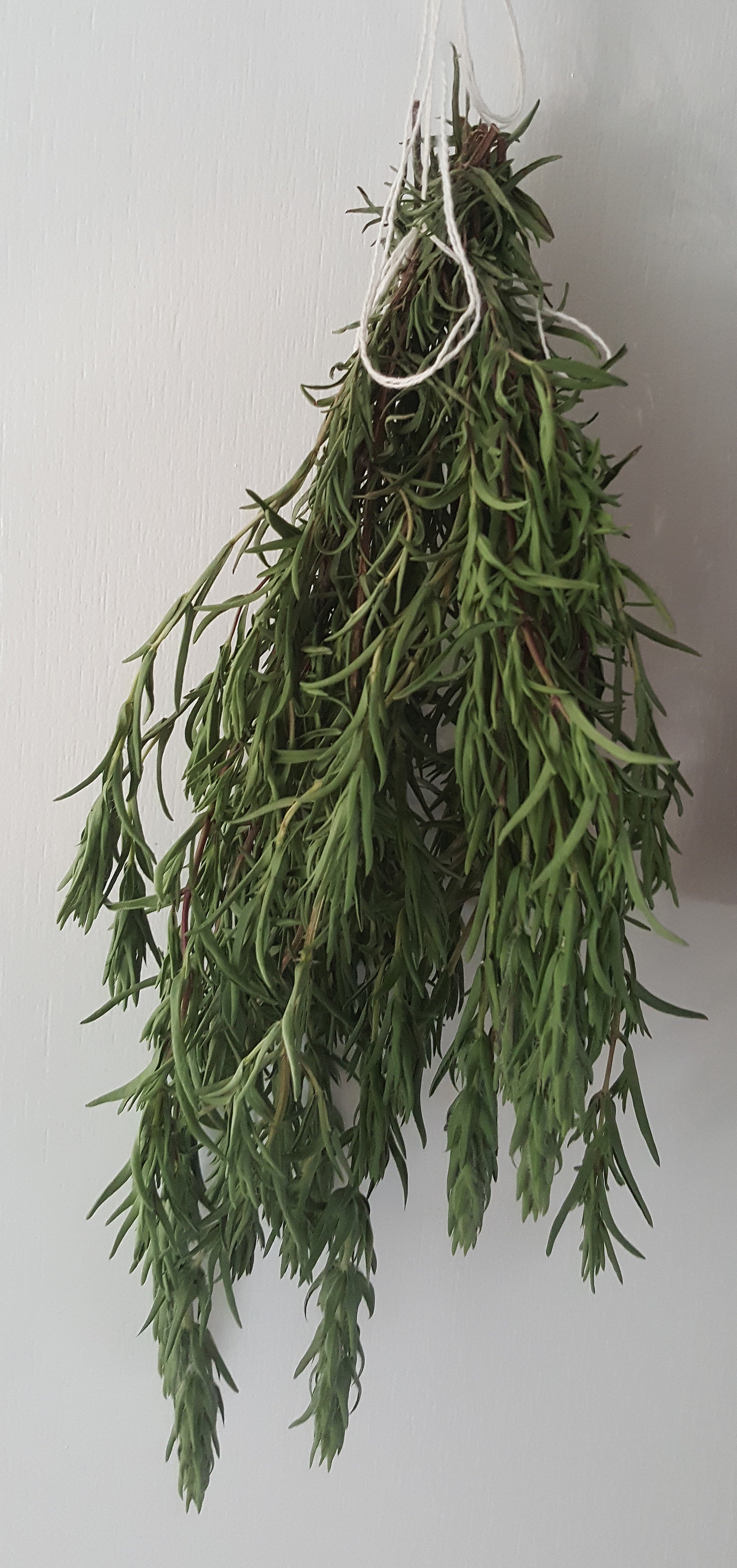 So, what’s it used for? There’s zatar (funny, that) – the spicy mixture for dipping bread (after a dip in olive oil), and no doubt any other recipe that calls for some herbal zip. I’ve asked a number of acquaintances from the Middle East what they would use it for, but they tell me that za’atar is thyme, or Syrian oregano. It could be any one of a number of plants, including Satureja. I guess it depends where you’re from and what herb is locally available to give that spicy-herby flavour.
 Hedgerow weaver