Levisticum officinale, livèche, Liebstöckel, apio de monte, luáiste
Lovage… I first grew this in London and was happy that it grew so easily from seed, then reached a height of about 7 feet. I can’t remember using it in its first year, and then moved away from home. But it grew, and grew well.
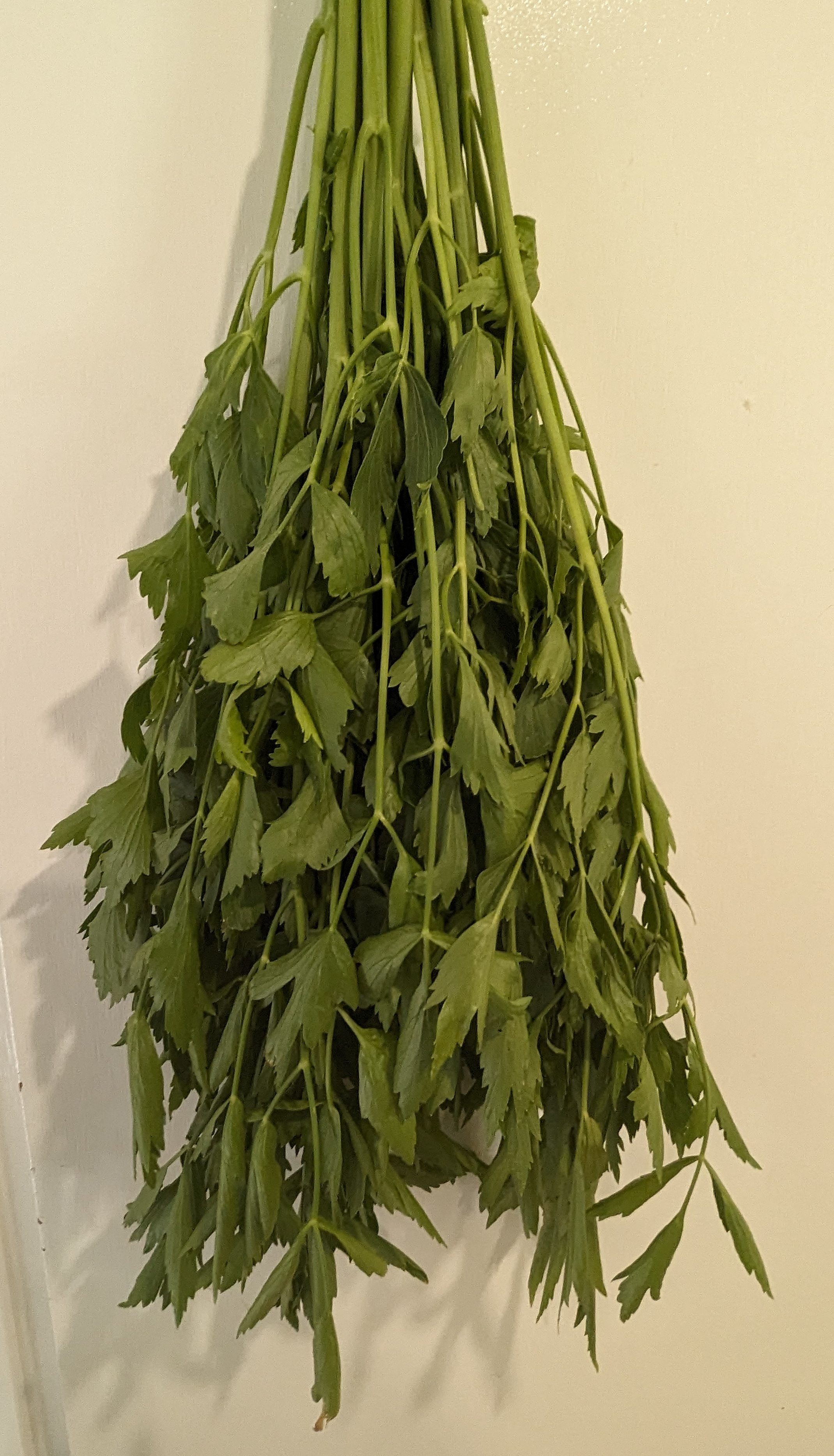
Years later, I bought a plant in Adelaide and expected it to do equally well. It grew, but barely touched 45cm (I’m more metric these days), and this seemed to be the same for another lovage lover I know. . Hmm… I persisted, and my current plant (or group of plants, more likely) has grown to about 60cm with flowering spikes up to 1.80m and provided a fair harvest of both leaves and seeds in its third year. It’s also in a part of the garden where herbs do unsurprisingly well. Rocky soil, slightly moist and afternoon sun.

So what did I do with the harvest? Dried it. Have a look at this YouTube. Meka dries the leaves in the oven, then grinds to a powder in the blender. Easy! When I first tried drying the leaves naturally, they turned an unappetising shade of khaki. It’s still summer here, so I tried another bunch, this time grinding them when they were crisp.
Success! The powder is an attractive shade of lime (better than in the photo), like Meka’s, and extremely aromatic. I’ve used it once already, and should have enough to last until next season.
What does it taste like? If you’ve never fondled this herb before, the pungent aroma of celery is the giveaway. Strong celery. I find that some of the strength dissipates with cooking, but it’s still one to use in moderation until your experiments result in the right amount.
What’s next on the list? Spring onion greens…

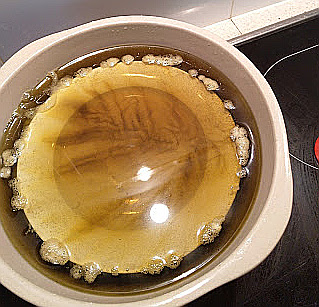 First came trimming (I’d had them in the fridge whilst deciding what to do; some of the ends were a bit brown), then pricking all over with a needle. The second picture, right, shows them after bathing in brine for a day. A friend asked if the plate was made of walnut, too. Good point, and I swear th
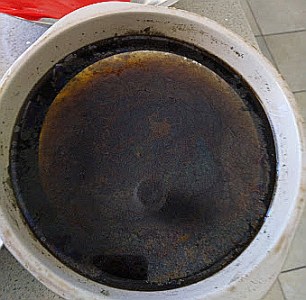 e pattern was purely by chance. It was however ordinary, white china.
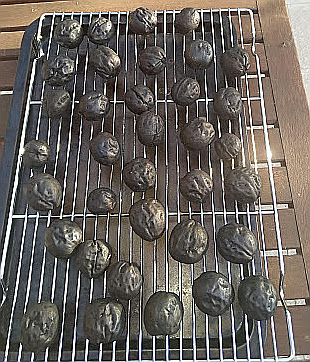 s I wondered if they might dry beyond redemption. Instead they turned a fantastic metallic shade, like Christmas beetles. And wrinkled. I still made sure they were handled with tongs (dyeing walnuts and spinning silk and wool means you need to pay special attention to all that potential dye, and your fingers).
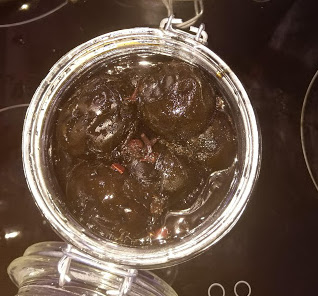 e result? They were simmered in the pickling mixture, then everything placed in a couple of jars with a glass milk watcher on top as a weight, and left for a couple
 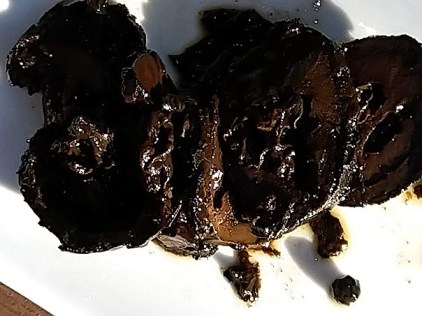 of months. Naturally one had to purchase some Stilton to go with them. The first one out was a little soft; it broke up but was still worth the effort – a sort of pickled pate. The second kept its shape more when cut. And the taste? Definitely worth the Stilton, and worth eating all of them by the time the next lot are ready. If they last that long. The picture really doesn’t do them justice.
 Hedgerow weaver