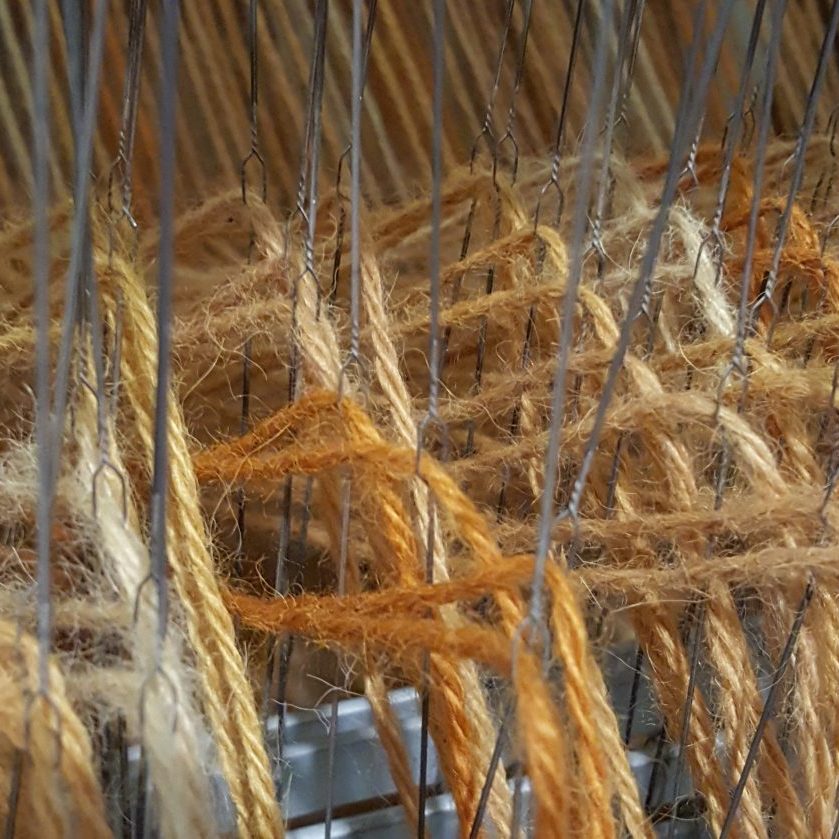
I came across this completely by chance in an Indian grocery (ratan jot रतन जोत in Hindi) a while ago and bought two bags of it, then grabbed two more bags for fellow Guild members. It was only $2.50 a bag, maybe 100g, so too good to miss. That particular shop has stopped selling it, and I’m wondering if it’s since become a prohibited food item: it’s banned for such purposes in the UK.
Anyway, back to the alkanet… I steeped the root in alcohol for five days – a whole bottle of meths, to be precise. This didn’t make it a very cheap experiment, but I had fun.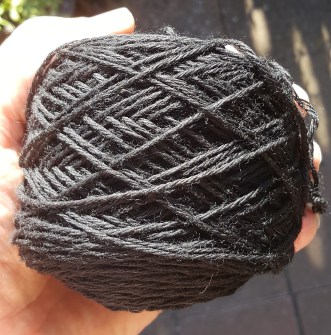
Alum-mordanted yarn was then heated in the strained liquor plus enough water to make a dye bath for an hour, then left overnight to cool. The resulting yarn was blacker than black – a blackboard after it’s been washed at the end of the year, hands after they been sorting through the coal scuttle, fingers after they’ve finished blackening the grate (someone else will have to verify the last two – London was already a smokeless zone by the time I was born). The photo was taken in the evening sun on a 42oC day, so doesn’t really reflect the blackness of the yarn.
I have yet to test for lightfastness, which I understand isn’t high, but will start with a pair of socks if the two balls will stretch to a pair of size 12’s.
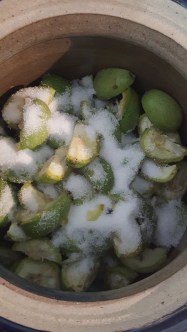 After coming across some walnut trees a few years ago, I decided to try pickling the unripe fruits, then discovered a recipe for nocino. The fruits are cut up, then steeped in vodka, sugar, lemon zest and spices for a month. It only takes a few days for the mixture to start turning black, which got me thinking; if the walnuts can stain anything in sight (hands, chopping boards, counter-tops, etc), maybe they can also dye yarn?
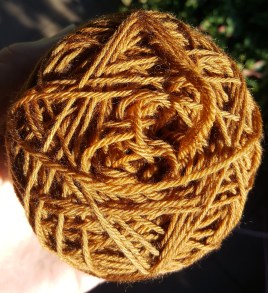 e smell was like Christmas cake from the start of the process to the very end, and one year later the yarn still smells yummy. I might try making something with it if I can bear to stop smelling it.
 Hedgerow weaver